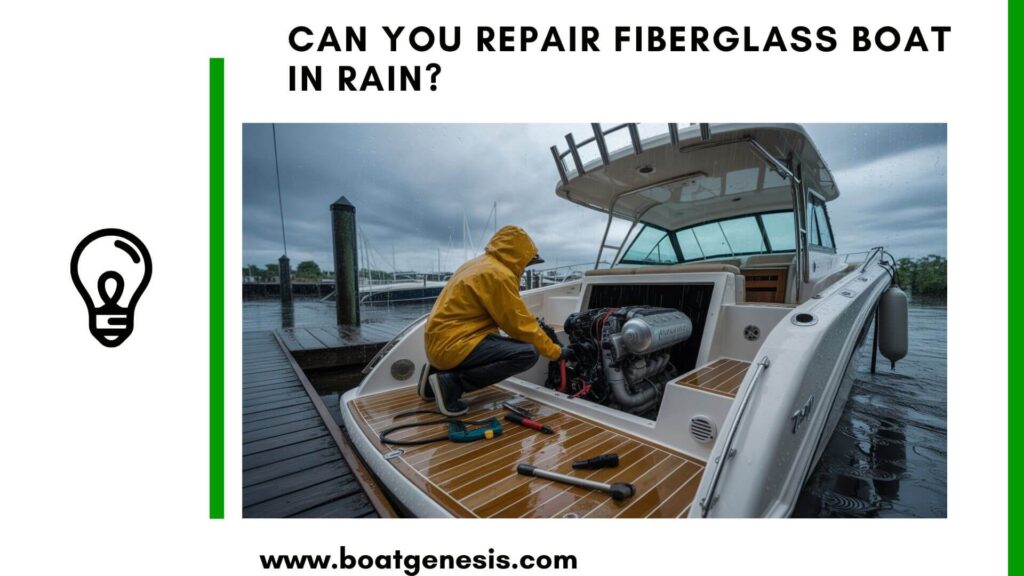
Rain and fiberglass repair don’t mix well. This combination can ruin your boat restoration project.
When water gets into your repair materials or onto the surface you’re working on, it stops the resin from bonding properly to your boat’s hull. This leads to weak spots that can crack or peel away later.
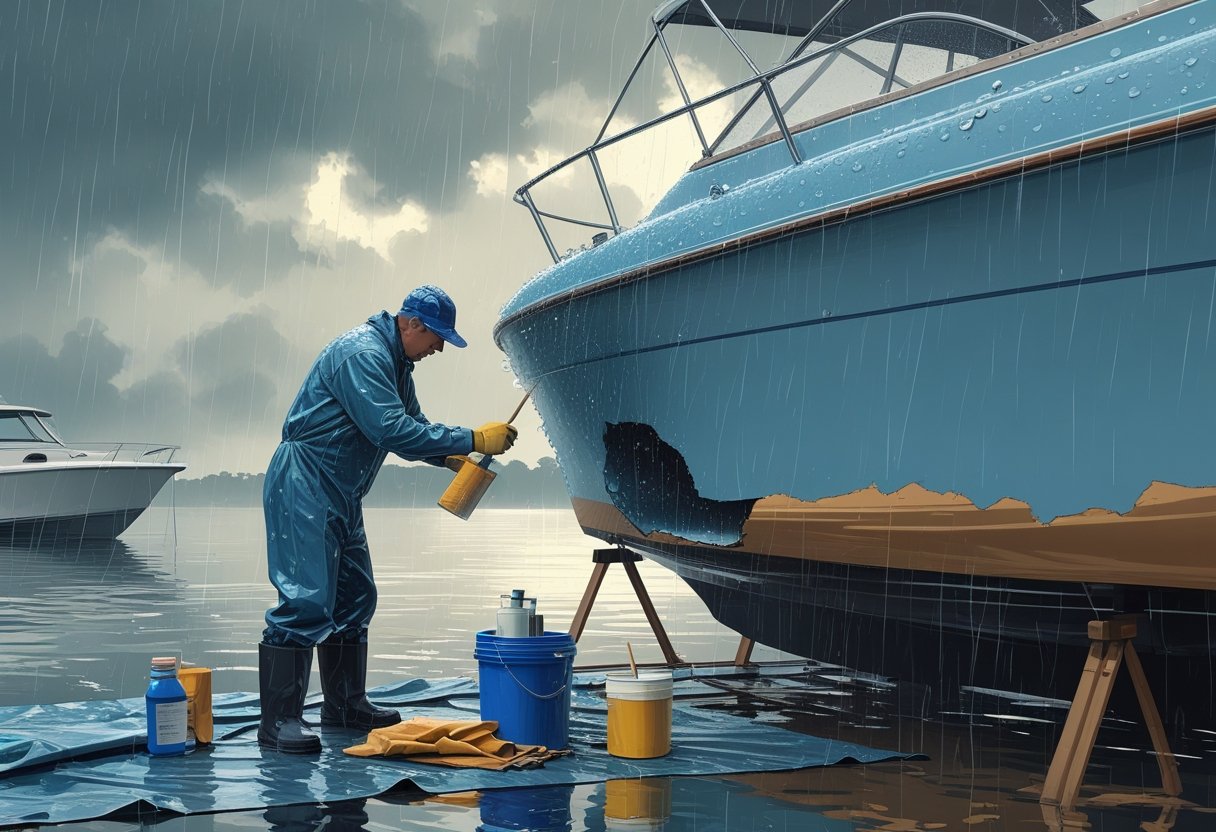
You should not repair fiberglass on your boat in the rain because moisture prevents the resin from curing correctly and creates a poor bond that won’t last. The repair process requires dry conditions for the materials to set up right.
Even light drizzle or high humidity can cause serious problems with your repair work. Understanding why rain creates issues and what you can do about it helps you make smart choices about timing your repairs.
Whether you’re dealing with minor cracks or bigger damage, knowing when to wait and when you might be able to work around wet weather saves you time and money in the long run.
Key Takeaways
- Moisture from rain prevents fiberglass resin from bonding and curing properly
- You need completely dry surfaces and low humidity for repairs to work correctly
- Waiting for good weather conditions prevents failed repairs and wasted materials
- Key Takeaways
- Impacts of Moisture on Fiberglass Repairs
- Risks of Working in Wet Conditions
- Temporary Solutions for Emergency Repairs
- Polyester Resin vs. Epoxy Resin Performance
- Role of Humidity in Curing Process
- Importance of Dry Substrate and Pot Life
- Keeping the Repair Area Dry
- Protective Tents and Tarps
- Necessary Tools and Materials
- Blistering and Delamination Risks
- Adhesion Failures Due to Moisture
- How to Avoid Weak Repairs
- Evaluating Repair Durability
- Safety and Environmental Concerns
- Alternatives to Rainy-Day Fixes
Is It Possible to Repair Fiberglass Boats in the Rain?
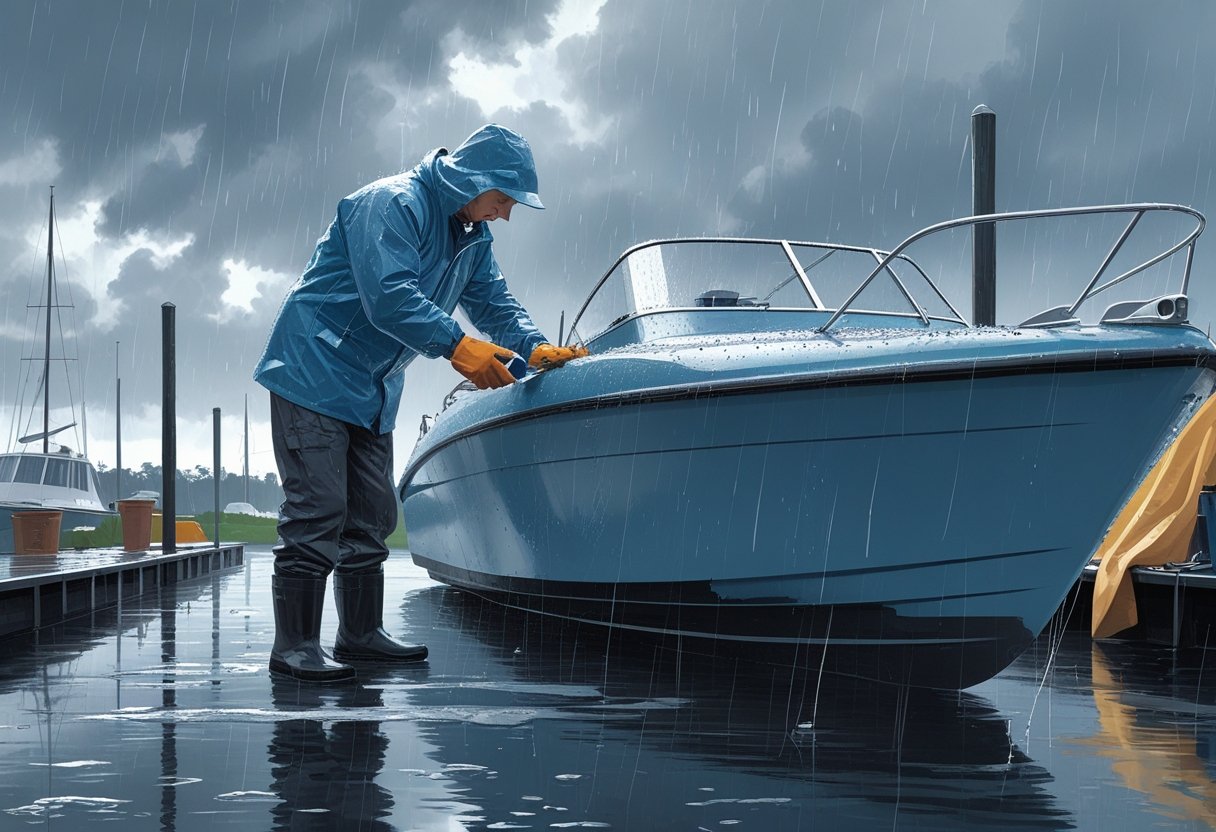
Rain creates serious problems for fiberglass boat repair because moisture prevents proper curing and bonding. You should avoid working in wet conditions whenever possible.
Understanding how water affects repairs and knowing emergency techniques can help you handle urgent situations safely.
Impacts of Moisture on Fiberglass Repairs
Moisture interferes directly with the chemical bonding process that makes fiberglass repairs strong and permanent. When you apply epoxy resin or polyester resin to a wet surface, water molecules prevent the resin from adhering properly to the existing fiberglass.
The resin needs a completely dry surface to create the molecular bonds that give your repair its strength. Rain falling on uncured resin causes even more damage.
Water droplets create dimples and pockmarks in the surface, weakening the repair and leaving an uneven finish. The resin may appear to cure, but it will remain soft or tacky underneath because water disrupts the hardening process.
Most resins require specific humidity levels during curing. Polyester resin used in boat repairs is especially sensitive to moisture and will not cure properly when exposed to rain.
Epoxy resin handles slightly higher humidity better than polyester, but neither type should be used in active rain. Temperature also matters during wet conditions.
Cold rain drops the temperature of your repair area, which slows curing time and increases the chance of moisture contamination.
Risks of Working in Wet Conditions
Attempting structural fiberglass repair in the rain leads to repairs that fail quickly and sometimes dangerously. Water trapped between layers of fiberglass cloth and resin creates delamination, where the layers separate from each other.
This problem weakens the hull structure and can compromise your boat’s safety on the water. Wet conditions make it nearly impossible to achieve proper surface preparation.
You cannot sand or grind a wet surface effectively. Any moisture left in cracks or damaged areas will prevent new material from bonding.
Even if the surface looks dry, humidity in the air can deposit a thin film of water that ruins adhesion. Safety becomes a concern when working with resins in rain.
Wet hands and tools make handling materials difficult, and slippery surfaces increase your risk of accidents. The fumes from polyester resin and marine epoxy become more concentrated in covered areas where you might try to work during rain.
Failed repairs cost you more money and time in the long run. You will need to remove the poorly bonded material and start over once conditions improve.
Want to avoid costly fiberglass boat repair mistakes?
Learn how to inspect damage properly, decide when to DIY, and prevent expensive fiberglass problems before they start.
Temporary Solutions for Emergency Repairs
If you face an urgent leak or damage during rainy weather, you can use temporary waterproof patches until proper repairs are possible. Marine-grade duct tape or specialized waterproof repair tape provides a short-term seal that keeps water out of damaged areas.
These solutions will not hold permanently, but they prevent further damage.
Emergency repair options for wet conditions:
- Waterproof epoxy putty that cures underwater for small holes
- Self-adhesive fiberglass tape for temporary crack coverage
- Marine sealant applied from inside the hull where it stays dry
- Plastic sheeting secured with clamps to protect damaged areas
You can work from inside your boat where surfaces stay dry even during rain. Apply marine sealant or epoxy putty to small cracks or holes from the interior side.
This approach keeps the repair area protected from moisture while you work. Create a temporary shelter over your boat using tarps and frames if you must make repairs during wet weather.
Ensure the damaged area stays completely dry and protected from rain for at least 24 hours after applying resin. Use fans or heaters to control humidity under your shelter.
Remember that all wet-weather repairs are temporary measures. Plan to properly repair fiberglass damage when dry conditions return, removing any emergency patches first.
How Rain Affects Fiberglass Repair Materials and Curing
Rain and moisture create serious problems during fiberglass repair work. Water interferes with how resin bonds to your boat and disrupts the chemical reactions needed for proper curing.
Polyester Resin vs. Epoxy Resin Performance
Polyester resin is the most common choice for boat repairs because it costs less and works well for general fixes. It uses a MEKP catalyst to start the hardening process.
However, polyester resin is highly sensitive to moisture during application and curing. If water contacts polyester resin before it cures, the material can fail to harden properly or create weak spots in your repair.
The curing process is highly sensitive to moisture and can result in uneven curing or prevent the material from setting altogether. Marine epoxy offers better moisture resistance than polyester resin.
The epoxy resin and hardener mixture creates stronger bonds and handles damp conditions better during the cure phase. Epoxy costs more but provides superior strength for structural repairs.
Both resin types need dry conditions for best results. Epoxy tolerates slight humidity better than polyester formulations.
Role of Humidity in Curing Process
Humidity affects how fast your resin cures and the final strength of your repair. High moisture levels in the air slow down the chemical reaction between resin and hardener.
This extended cure time increases the risk of contamination. Temperature and humidity together dramatically affect cure speed.
Combined with your hardener amount, conditions can change cure times from one hour to just a few minutes. Rain adds direct water contact on top of ambient humidity.
This creates a barrier between fiberglass layers that weakens the bond and can cause delamination later.
Importance of Dry Substrate and Pot Life
Your boat surface must be completely dry before you apply any resin. Even small amounts of moisture on the substrate prevent proper adhesion.
Repairing a crack properly requires dry weather and likely a couple of days to complete the various layers. Pot life refers to how long mixed resin stays workable before it starts to harden.
Rain shortens your working time because you need to apply resin quickly and protect it before water exposure. Wet conditions also mean you cannot properly sand and prepare the damaged area beforehand.
Water trapped in cracks or damaged fiberglass will compromise your entire repair job.
Preparation for Effective Fiberglass Repairs During Wet Weather
Working on fiberglass during rain requires creating a completely dry workspace and gathering specialized materials that can handle moisture challenges. Success depends on proper shelter setup and having the right tools ready before you start mixing any resin.
Keeping the Repair Area Dry
Moisture is the enemy of fiberglass repairs. Water prevents resin from curing properly and destroys the chemical bond between layers.
You need to dry the damaged area completely before starting any work. Use a heat gun or hairdryer to evaporate moisture from the repair zone.
Move the heat source slowly across the surface to avoid creating hot spots that could damage the existing fiberglass. Check for dampness by placing your hand on the surface.
It should feel completely dry and slightly warm to the touch. If you’re working on a boat hull, inspect the interior side of the damage area too.
This guide helps boat owners understand fiberglass damage clearly — what matters, what doesn’t, and when repairs are truly necessary, so small issues don’t turn into expensive mistakes.
See What Every Boat Owner Should Know →Water often seeps through cracks and sits between layers. Use fans to circulate air around the workspace.
Good airflow helps moisture evaporate faster and prevents condensation from forming while you work. Point at least two fans at the repair area from different angles.
Protective Tents and Tarps
A quality shelter system is essential for rain repairs. You need a waterproof canopy that extends at least three feet beyond your work area on all sides.
Heavy-duty tarps work better than lightweight plastic sheeting. Look for tarps rated at least 12-mil thickness with reinforced grommets.
Secure them tightly to prevent wind from creating gaps where rain can enter. Frame tents with PVC pipe or metal poles to create a peaked roof.
This prevents water from pooling on top and eventually leaking through. Make sure the lowest point of your tent sits higher than the repair area to stop any dripping.
Seal the ground perimeter with sandbags or weighted boards. Rain can splash up from the ground and introduce moisture to your workspace.
Some boaters use protective tent setups to create fully enclosed repair spaces that block wind-driven rain.
Necessary Tools and Materials
Your fiberglass repair kit needs moisture-resistant components. Standard polyester resin won’t work in damp conditions, so you need epoxy resin designed for wet environments.
Gather these essential items:
- Epoxy resin with wet-cure properties
- Woven fiberglass cloth or chopped strand mat depending on damage depth
- Orbital sander with 80-grit and 120-grit discs
- Acetone in sealed containers
- Chemical-resistant gloves and respirator
- Mixing cups and disposable brushes
- Dehumidifier for enclosed spaces
Keep all materials in sealed plastic bins until you’re ready to use them. Fiberglass cloth and mat absorb moisture from humid air, which weakens the final repair.
Your fiberglass mat should feel dry and crisp, not limp or damp.
Store your resin and hardener at room temperature. Cold resin takes longer to cure and may not harden properly in wet weather.
Some experienced boaters refer to a detailed fiberglass boat repair guide when planning repairs in challenging conditions.
Have extra acetone available for cleanup. You’ll use more than usual because damp conditions require additional surface-preparation steps.
Common Challenges and Mistakes When Repairing in Damp Conditions
Moisture creates serious problems during fiberglass boat repair by interfering with how resins cure and bond to surfaces. Water trapped in your repair can lead to blistering, poor adhesion, and structural weakness that shortens the life of your fix.
Blistering and Delamination Risks
Water trapped between fiberglass layers causes blistering and delamination over time. When you repair in damp conditions, moisture gets sealed inside your repair as the resin hardens.
This trapped water expands and contracts with temperature changes, creating pressure that pushes layers apart.
Osmotic blistering happens when water molecules move through the gelcoat and collect between layers. The water pulls chemicals from the resin, forming a liquid that increases pressure under the surface.
You’ll see small bumps or bubbles appear weeks or months after your repair. Delamination occurs when moisture prevents proper bonding between new and old fiberglass.
The layers separate under stress because they never truly fused. Rain or high humidity during repairs significantly increases these risks.
Adhesion Failures Due to Moisture
Your fiberglass repair depends on chemical and mechanical bonding to work properly. Moisture on the repair surface prevents both types of bonding from occurring properly.
Water creates a thin barrier between your repair materials and the damaged area. Proper surface preparation requires clean and dry conditions for resin to grip the roughened surface.
Even invisible moisture from humidity can prevent the resin from wetting out the fiberglass cloth completely. Polyester and epoxy resins react poorly when mixed with water during application.
The resin becomes cloudy or milky and loses strength. You might not see problems right away, but the repair will fail under normal stress and use.
How to Avoid Weak Repairs
Never start a fiberglass boat repair when rain is forecast or humidity exceeds 70 percent. Check weather conditions for at least 24 hours after you plan to finish your repair.
Essential steps to prevent moisture problems:
- Wait for dry weather and work in temperatures between 70°F and 80°F
- Cover your work area with tarps or move the boat to a covered space
- Use dehumidifiers in enclosed repair areas to reduce ambient moisture
- Test surfaces with a moisture meter before applying resin
- Wipe down repair areas with acetone to remove any condensation
- Allow extra curing time if you must work in less-than-ideal conditions
If you must repair urgent fiberglass damage during humid periods, use a heat lamp to warm and dry the repair area first. Keep the area warm throughout the curing process to help the resin set properly.
Long-Term Considerations and When to Postpone Repairs
Rain creates conditions that compromise repair quality and can lead to failures requiring costly rework. Understanding when moisture levels make repairs impractical protects both your investment and your boat’s structural integrity.
Evaluating Repair Durability
Repairs made in wet conditions rarely achieve the same strength as those completed in dry environments. Moisture trapped in fiberglass layers weakens the bond between resin and cloth, reducing the repair’s tensile strength by up to 40%.
Water contamination prevents proper curing of polyester resin. Even if the surface appears dry, humidity above 85% can introduce enough moisture to cause delamination within months.
Temperature also affects durability during rainy weather. Most resins require temperatures between 60-90°F for proper curing.
Rain often brings cooler conditions that slow or prevent complete hardening. A fiberglass boat repair guide will typically recommend waiting for stable, dry conditions to ensure repairs last for years rather than months.
Safety and Environmental Concerns
Working with fiberglass materials in rain creates health hazards you shouldn’t ignore. Wet conditions make surfaces slippery and increase your risk of falls while grinding or sanding damaged areas.
Rain dilutes uncured resin and washes it into surrounding water or soil. This runoff contains styrene and other chemicals that harm aquatic life and violate environmental regulations in most areas.
Poor visibility during rainy weather makes it harder to spot damage accurately. You might miss cracks or soft spots that need attention, leading to incomplete repairs.
Respiratory protection becomes less effective in wet conditions, exposing you to harmful fumes from resins and acetone.
Alternatives to Rainy-Day Fixes
Temporary solutions can keep your boat protected until conditions improve. Apply marine-grade tape over cracks or holes to prevent water intrusion.
These temporary patches won’t restore strength. They buy you time for proper repairs.
Consider building a simple tarp shelter over the repair area. Leave sides open for ventilation while covering only the work surface.
This approach works for minor gelcoat repair. Avoid using this method for structural work that requires multiple resin layers.
Indoor facilities offer the best alternative. Marina repair bays or storage buildings provide controlled environments with consistent temperature and humidity.
This option costs more upfront. However, you avoid failed repairs and repeated material expenses.
Schedule repairs during dry forecasts lasting at least 48-72 hours for small fixes. Plan for longer periods if you need to address extensive damage.

Warren is the founder of BoatGenesis and brings practical experience in fiberglass boat repair, marine equipment testing, and powerboat building. He has worked on a range of repair and restoration projects and now focuses on creating clear, research-based guides to help boat owners avoid costly mistakes and make smarter maintenance decisions. Learn more about Warren.