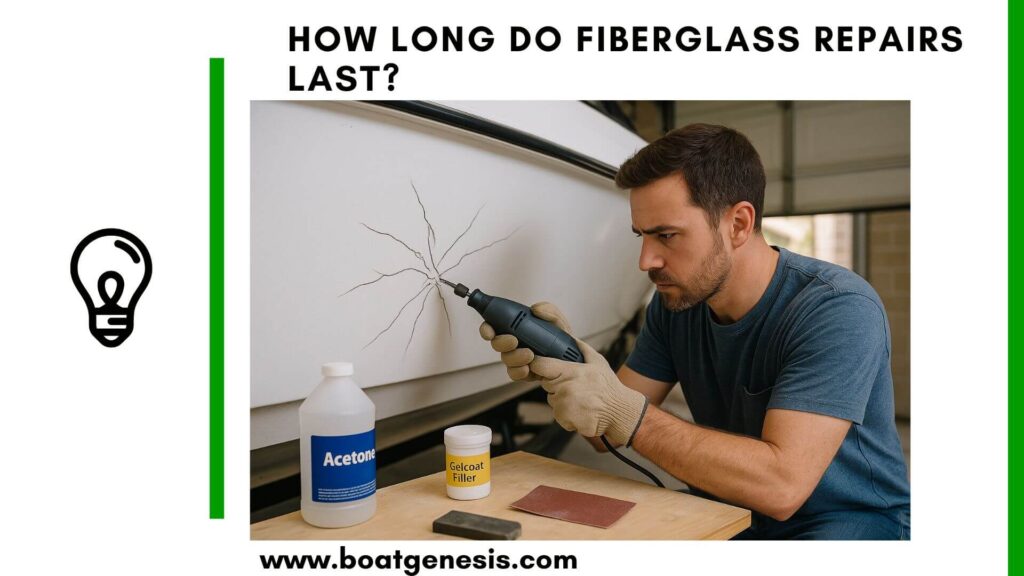
When you invest time and money into fixing damage on your fiberglass boat, you naturally want to know how long those repairs will hold up. The durability of your repair work depends on several factors, from the type of damage you fixed to how well you maintain the patched area afterward.
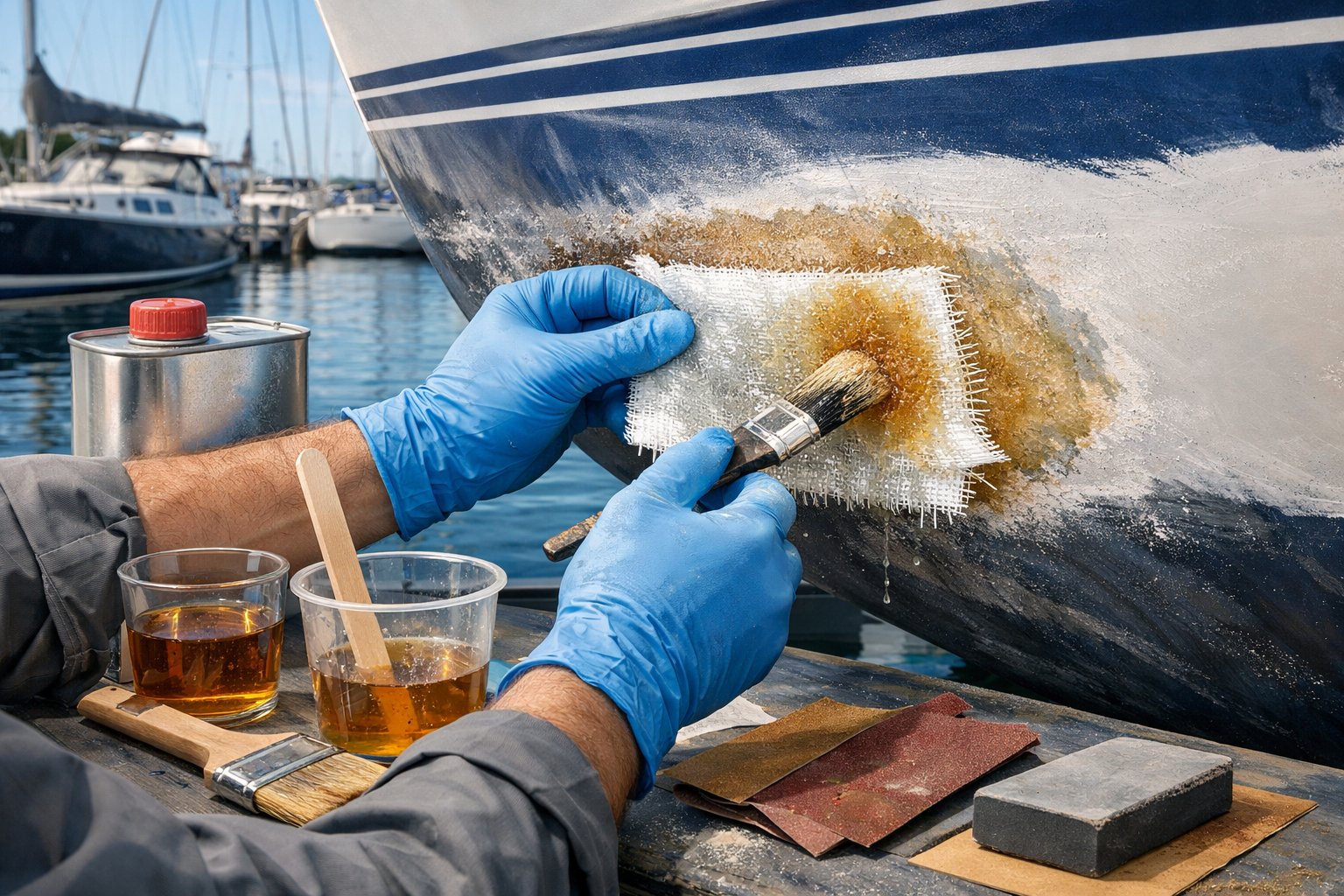
Most properly executed fiberglass repairs last 10 to 20 years or more when done correctly with quality materials and appropriate techniques.
Small cosmetic fixes like gelcoat touch-ups might need attention sooner, while structural repairs using proper resin and layup methods can last as long as the original hull. The key difference lies in the quality of workmanship and the conditions your boat faces after the repair.
Understanding what affects repair longevity helps you make better decisions about maintenance and when to call in professionals. Weather exposure, how often you use your boat, and the care you give repaired areas all play important roles in determining whether your fix lasts a few years or several decades.
Key Takeaways
- Properly done fiberglass repairs typically last 10 to 20 years or longer with correct materials and techniques
- The durability of repairs varies based on the type of damage fixed and the quality of workmanship applied
- Regular maintenance and protection from harsh environmental conditions significantly extend repair lifespan
- Key Takeaways
- Average Durability of Fiberglass Repairs
- Factors That Affect Longevity
- Typical Lifespan vs. Complete Replacement
- Cosmetic Repairs: Gel Coat, Scratches, and Cracks
- Structural Repairs: Hull Damage and Delamination
- Material Choices: Epoxy Resin, Polyester Resin, and Their Impact
- Routine Inspection and Damage Assessment
- Preventing Water Intrusion and UV Damage
- Role of Boat Maintenance, Bottom Paint, and Waxing
- Saltwater Corrosion and Freshwater Exposure
- Winterization and Off-Season Storage
- Impact of Boat Use and Handling
Lifespan of Fiberglass Repairs: What Boat Owners Can Expect
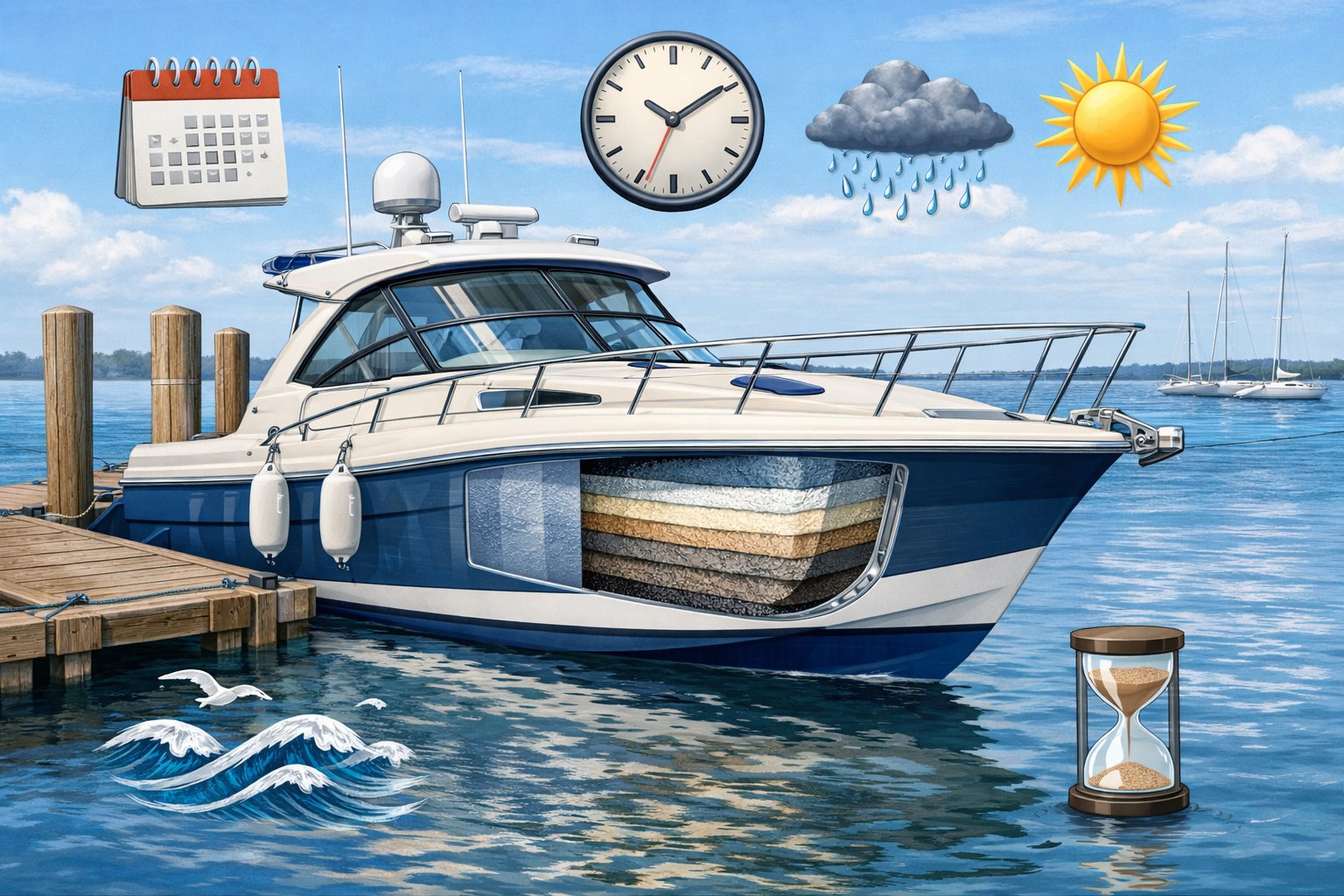
Well-executed fiberglass repairs can last anywhere from 10 to 30 years depending on the quality of work and how you maintain your boat. The type of damage you fix and environmental conditions also play major roles in determining how long repairs hold up.
Average Durability of Fiberglass Repairs
Professional fiberglass boat repair typically lasts 15 to 25 years when done correctly. Surface-level cosmetic repairs often need attention every 10 to 15 years due to UV exposure and normal wear.
Structural repairs that restore your fiberglass hull’s integrity can last even longer. When properly reinforced with multiple layers of fiberglass cloth and resin, these fixes often match the strength of the original construction. Some boats with quality fiberglass repairs remain seaworthy for decades.
The repair method matters significantly. Quick patch jobs may only last 5 to 7 years before requiring attention. In contrast, repairs that follow proper procedures including thorough surface preparation, correct resin ratios, and adequate curing time deliver much better longevity.
Your repair’s location on the boat also affects durability. Areas below the waterline face constant moisture exposure and typically need attention sooner than repairs on upper sections.
Factors That Affect Longevity
Several key factors determine how long your fiberglass repairs last:
Environmental conditions have the biggest impact. Boats stored in covered facilities experience less UV damage and temperature stress than those kept outdoors year-round. Saltwater exposure accelerates wear compared to freshwater use.
Maintenance practices directly influence repair lifespan. Regular cleaning, waxing, and inspections help protect repaired areas. You should check for new cracks or delamination every season.
Quality of materials makes a major difference. Using marine-grade polyester resin and proper hardener ratios ensures strong bonds. Cheap materials or incorrect mixing can cause premature failure.
Repair technique determines structural integrity. Properly performed fiberglass repair includes removing all damaged material, creating proper surface preparation, and applying multiple reinforcement layers. Rushed repairs without adequate curing time between layers won’t last as long.
Want to avoid costly fiberglass boat repair mistakes?
Learn how to inspect damage properly, decide when to DIY, and prevent expensive fiberglass problems before they start.
The severity of original damage also matters. Minor gelcoat scratches need less extensive work than holes or stress cracks affecting the hull structure.
Typical Lifespan vs. Complete Replacement
Understanding when to repair versus replace helps you make smart decisions. Minor cosmetic damage almost always makes sense to repair. Deep structural damage may require more careful evaluation.
Fiberglass boats themselves can remain seaworthy for up to 50 years with proper care. Your repairs should aim to restore similar longevity to affected areas.
You should consider complete replacement when:
- Multiple repairs fail in the same location within 5 years
- Structural damage covers more than 30% of a hull section
- Repair costs exceed 50% of the boat’s current value
- The fiberglass hull shows widespread delamination
Most repairs on fiberglass boats extend usable life by 10 to 20 years without needing replacement. Regular inspections help you catch problems early before they require expensive replacements.
Professional marine surveyors can evaluate whether your existing repairs remain sound or need attention. This assessment becomes particularly important when buying used boats with previous repair history.
Types of Fiberglass Repairs and Their Expected Durability
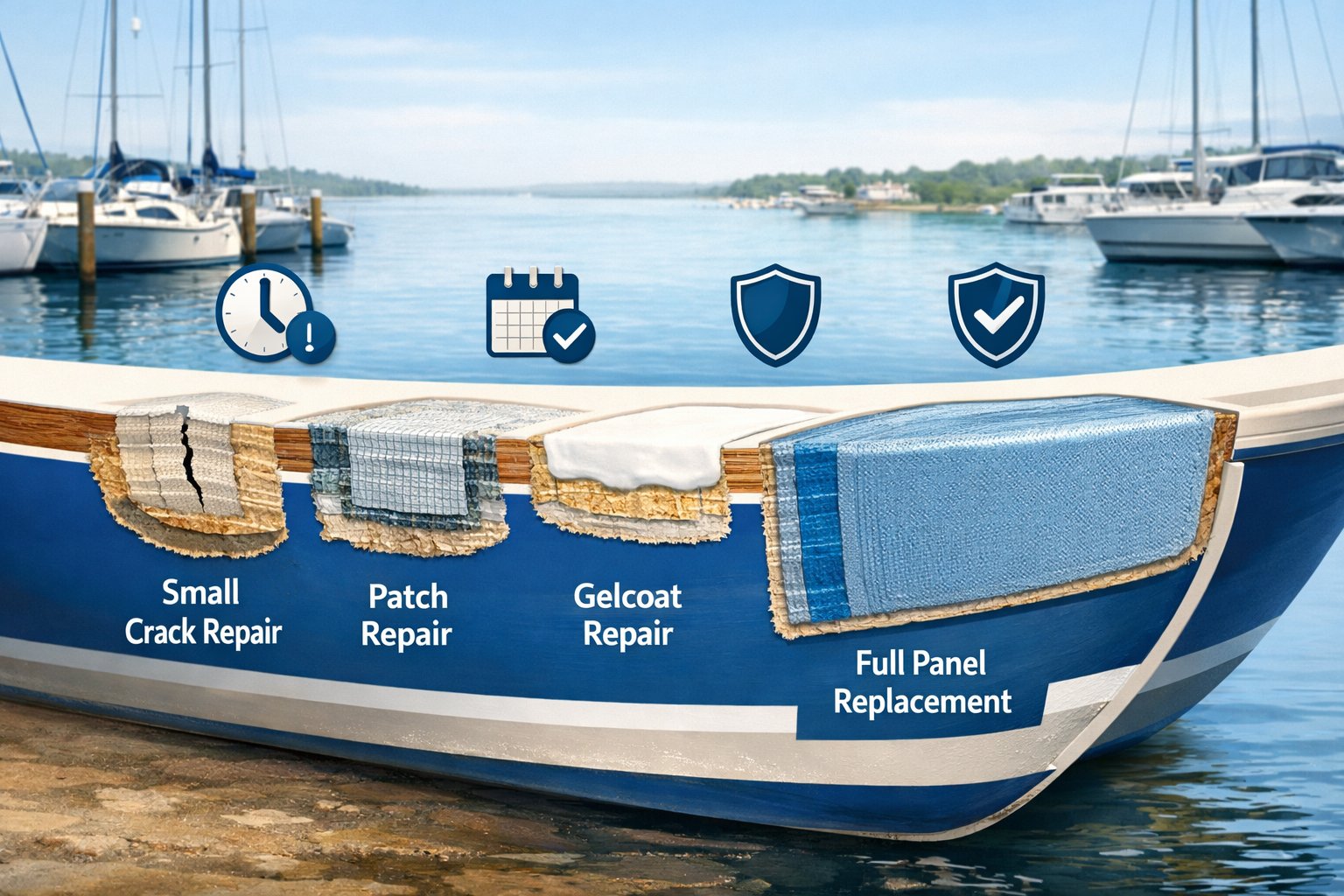
Different fiberglass repairs have vastly different lifespans depending on whether you’re fixing surface cosmetic damage or addressing serious structural issues.
The materials you choose and the repair method you use will determine whether your fix lasts a few years or decades.
Cosmetic Repairs: Gel Coat, Scratches, and Cracks
Gel coat repairs typically last 5 to 10 years when done correctly. The gel coat is the outer protective layer of your boat that gives it color and shine. Small scratches and minor gelcoat cracking don’t affect your boat’s structural integrity, but they can let water seep into the fiberglass underneath if left unrepaired.
A quality fiberglass repair kit for gel coat work includes matching gel coat color, hardener, and finishing compounds. Your repair’s lifespan depends heavily on proper surface preparation and UV protection. Gel coat repairs exposed to constant sun will break down faster than those kept covered or waxed regularly.
You should expect to touch up cosmetic repairs every few years. Deep scratches that go through the gel coat into the fiberglass layer beneath require more extensive work than surface repairs. These deeper fixes can last 10 to 15 years if you properly fill and seal the damaged area.
Structural Repairs: Hull Damage and Delamination
Structural repairs can last 20 to 30 years or more when executed properly. Hull damage and delamination are serious issues that compromise your boat’s safety and seaworthiness.
Delamination occurs when the layers of fiberglass separate from each other, often due to impact or water intrusion.
Your repair method matters significantly for structural work. Scarf sanding creates a tapered edge that increases the bonding surface area, producing stronger, longer-lasting repairs.
The repair relies on adhesive bonding to the original structure rather than chemical bonding, which is why surface preparation is critical.
You’ll need fiberglass mat or chopped strand mat to rebuild damaged areas layer by layer. Each layer should match the thickness and orientation of the original laminate. Adding too much material creates stiff spots that can lead to stress cracks and eventual failure.
Key factors affecting structural repair longevity:
- Proper taper ratio (20:1 to 100:1 for critical repairs)
- Complete removal of damaged material
- Matching original laminate thickness
- Quality resin application without voids or air pockets
Material Choices: Epoxy Resin, Polyester Resin, and Their Impact
Epoxy resin repairs typically outlast polyester resin repairs by 5 to 10 years. Epoxy resin offers superior adhesion and water resistance, making it the better choice for structural repairs. It costs more than polyester resin but provides stronger bonding to existing fiberglass.
Polyester resin works well for cosmetic repairs and less critical areas. It’s easier to work with and more affordable, but it absorbs more water over time. Most production boats are built with polyester resin, so using the same material maintains compatibility.
The resin you choose should match or exceed the strength of the original resin. Epoxy provides better adhesion for secondary bonds, which is how all repairs attach to the primary structure. Your repair will only be as strong as its bond to the surrounding material.
This guide helps boat owners understand fiberglass damage clearly — what matters, what doesn’t, and when repairs are truly necessary, so small issues don’t turn into expensive mistakes.
See What Every Boat Owner Should Know →You should use epoxy resin for repairs below the waterline or in areas that experience constant stress. Polyester resin works adequately for above-waterline cosmetic work where water exposure is minimal.
Maintaining and Extending the Life of Fiberglass Repairs
Proper care after a fiberglass repair determines how long the fix will hold up against marine conditions. Regular inspections, protective measures against moisture and sunlight, and consistent boat maintenance will keep repairs strong for years.
Routine Inspection and Damage Assessment
You should inspect your repaired fiberglass every few months to catch problems early. Look for color changes in the gelcoat, hairline cracks around the repair area, or soft spots that might indicate water intrusion beneath the surface.
Pay special attention to high-stress areas like the hull bottom, transom, and anywhere hardware is mounted. Run your hand over repaired sections to feel for rough patches or delamination.
Regular inspections on fiberglass structures help you spot issues before they become expensive problems. Create a simple checklist that includes checking for:
- Cracks or crazing in the repaired gelcoat
- Discoloration or fading around the repair
- Blisters forming under the surface
- Delamination between layers
Document your findings with photos and notes so you can track changes over time.
Preventing Water Intrusion and UV Damage
Water intrusion is one of the biggest threats to fiberglass repairs. Even small amounts of moisture can weaken the bond between repair materials and original fiberglass, leading to osmotic blistering and structural failure.
Apply a quality marine sealant around hardware and fittings near repaired areas. Keep your boat covered when not in use, or at minimum use a UV-protective tarp over vulnerable sections.
UV damage breaks down gelcoat and resins over time. The sun’s rays cause oxidation that makes repairs appear chalky and weakens the protective outer layer.
Apply marine-grade UV protectant wax every three to four months. Choose products specifically designed for fiberglass boats rather than automotive waxes, as they contain additives that block harmful UV rays more effectively.
Store your boat indoors during off-season periods whenever possible to minimize sun exposure.
Role of Boat Maintenance, Bottom Paint, and Waxing
Proper maintenance and care for fiberglass directly impacts how long repairs last. A comprehensive maintenance routine includes regular cleaning, waxing, and protecting underwater surfaces.
Wash your boat with mild soap and fresh water after each saltwater outing. Salt crystals left on the surface act like sandpaper and degrade both original fiberglass and repairs.
Marine wax creates a protective barrier that repels water and prevents oxidation. Apply wax in thin, even coats using circular motions. Wet sanding with 1000-grit or finer paper before waxing removes light oxidation and helps the wax bond better to the gelcoat.
Bottom paint protects underwater repairs from marine growth and osmosis. Reapply antifouling paint according to manufacturer recommendations, typically once per year. Sand lightly between coats to ensure good adhesion.
Preventative maintenance costs less than major repairs. Budget time each month for basic boat maintenance and repair tasks that keep your vessel in good condition.
Environmental and Usage Factors Influencing Repair Longevity
Where you keep your boat and how you use it directly affects how long fiberglass repairs hold up. The type of water, storage methods, and handling practices all play major roles in whether your repair lasts a few years or several decades.
Saltwater Corrosion and Freshwater Exposure
Saltwater creates harsher conditions for fiberglass repairs than freshwater. Salt deposits can work their way into small gaps in repair work and cause the bond between new and old fiberglass to weaken over time.
The gelcoat on repaired areas is more vulnerable to saltwater corrosion than the original factory finish. You need to rinse your boat with fresh water after every saltwater outing to remove salt crystals.
Freshwater boats face fewer corrosion issues. However, constant water exposure still matters regardless of the water type.
Key differences between water types:
- Saltwater: Requires monthly waxing of repair areas and weekly fresh water rinses
- Freshwater: Needs waxing every 2-3 months with less frequent washing
- Brackish water: Falls between saltwater and freshwater for maintenance needs
Repairs on boats used in saltwater typically need touching up every 5-7 years. Freshwater boats can go 10-15 years between repair updates.
Winterization and Off-Season Storage
Proper winterization protects your fiberglass repairs from temperature-related damage. Water trapped in poorly sealed repairs can freeze and expand, creating new cracks that undo your repair work.
You should store your boat indoors or under a quality cover during winter months. UV rays and extreme temperatures degrade both original fiberglass boat construction and repair areas.
Indoor storage extends repair life by 30-40% compared to outdoor storage. A breathable cover allows moisture to escape while blocking UV damage.
Apply marine wax to all repaired sections before winter storage. This creates an extra barrier against moisture infiltration and temperature swings.
Check repaired areas each spring for any signs of cracking or delamination. Early detection prevents small issues from becoming major problems.
Impact of Boat Use and Handling
How you operate your boat determines how much stress your repairs endure. Hard impacts from waves, groundings, and collisions can cause repairs to fail faster than the surrounding fiberglass.
Frequent high-speed use in rough water puts more strain on repair bonds. Your repairs experience the same forces as the rest of the hull but may not have the same strength as factory fiberglass.
High-stress activities that reduce repair longevity:
- Jumping wakes at high speeds
- Running in shallow water with frequent bottom contact
- Trailer loading and unloading on rough ramps
- Docking without fenders in crowded marinas
You should inspect repair areas after any significant impact. Small stress cracks often appear before major failures occur.
Boats used for calm lake cruising see repairs last 15-20 years. Offshore fishing boats in rough conditions may need repair work redone every 5-8 years.

Warren is the founder of BoatGenesis and brings practical experience in fiberglass boat repair, marine equipment testing, and powerboat building. He has worked on a range of repair and restoration projects and now focuses on creating clear, research-based guides to help boat owners avoid costly mistakes and make smarter maintenance decisions. Learn more about Warren.