The sun destroys boats slowly and silently. While you worry about storms and salt water, UV rays break down the chemical bonds in your fiberglass gelcoat every single day your boat sits exposed. Protecting your fiberglass boat from UV damage requires a combination of regular wax or sealant applications every 2-6 months depending on your climate, physical barriers like covers when not in use, and attention to vulnerable surfaces including vinyl seats and rubber components.
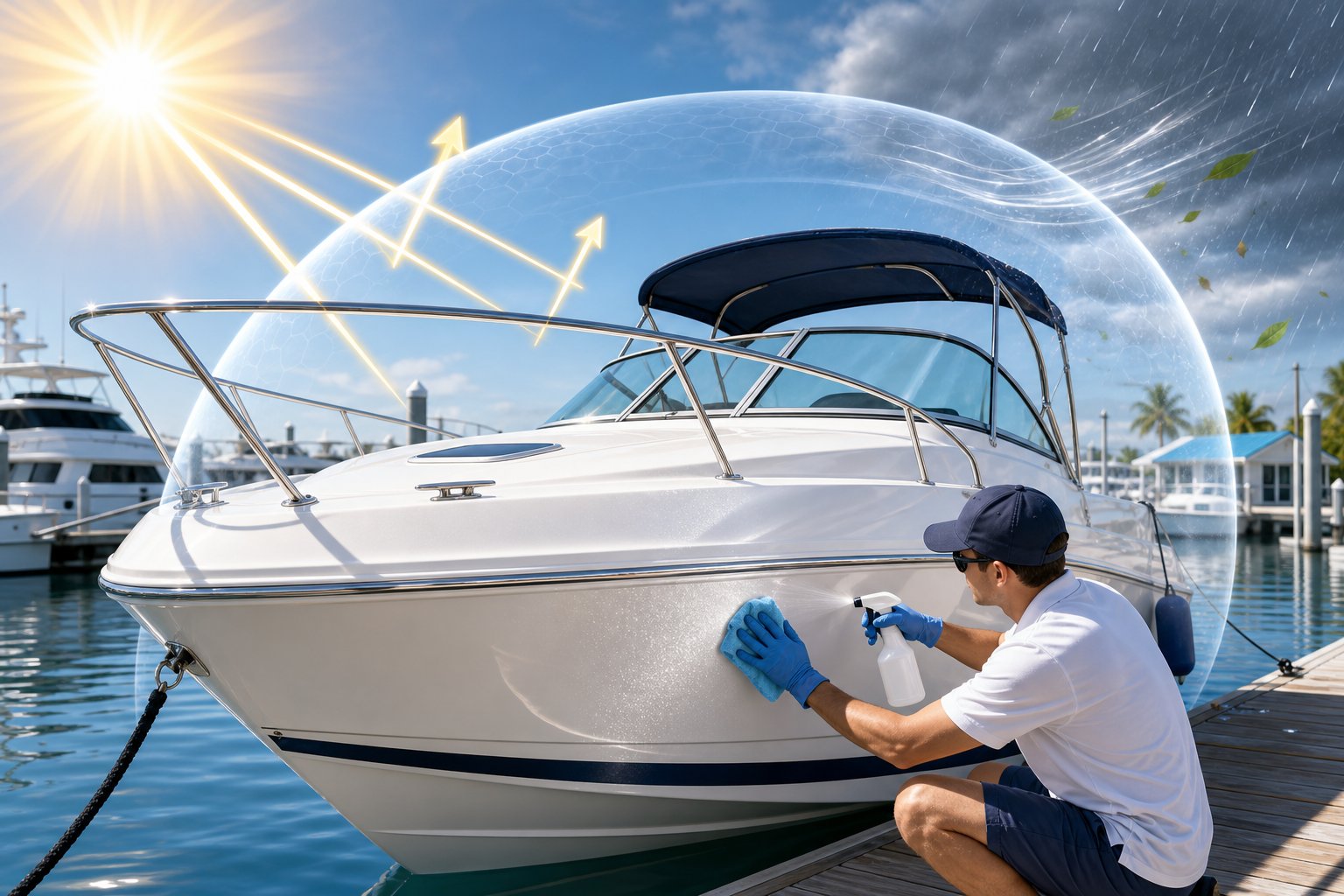
UV damage is not like dirt you can wash off. Once it happens, you are paying for restoration instead of prevention. UV radiation causes gelcoat to fade, chalk, and develop stress cracks by breaking down the polymer chains that give the material its strength. The good news is that proper UV protection prevents these problems before they start, saving you thousands in repair costs.
Your boat faces different UV exposure levels based on where you keep it and how much sun your region gets. A boat under a covered slip needs different care than one sitting on an open trailer in Florida. This guide walks you through exactly how to protect every surface on your fiberglass boat with the right products on the right schedule.
Key Takeaways
- UV damage accumulates invisibly over time and cannot be reversed, only prevented through regular protective treatments
- Different boat surfaces require specific products matched to the material, not one-size-fits-all solutions
- Your reapplication schedule depends on your climate zone and storage type, ranging from monthly for high-UV areas to every six months for moderate climates
Understanding UV Damage and Weathering
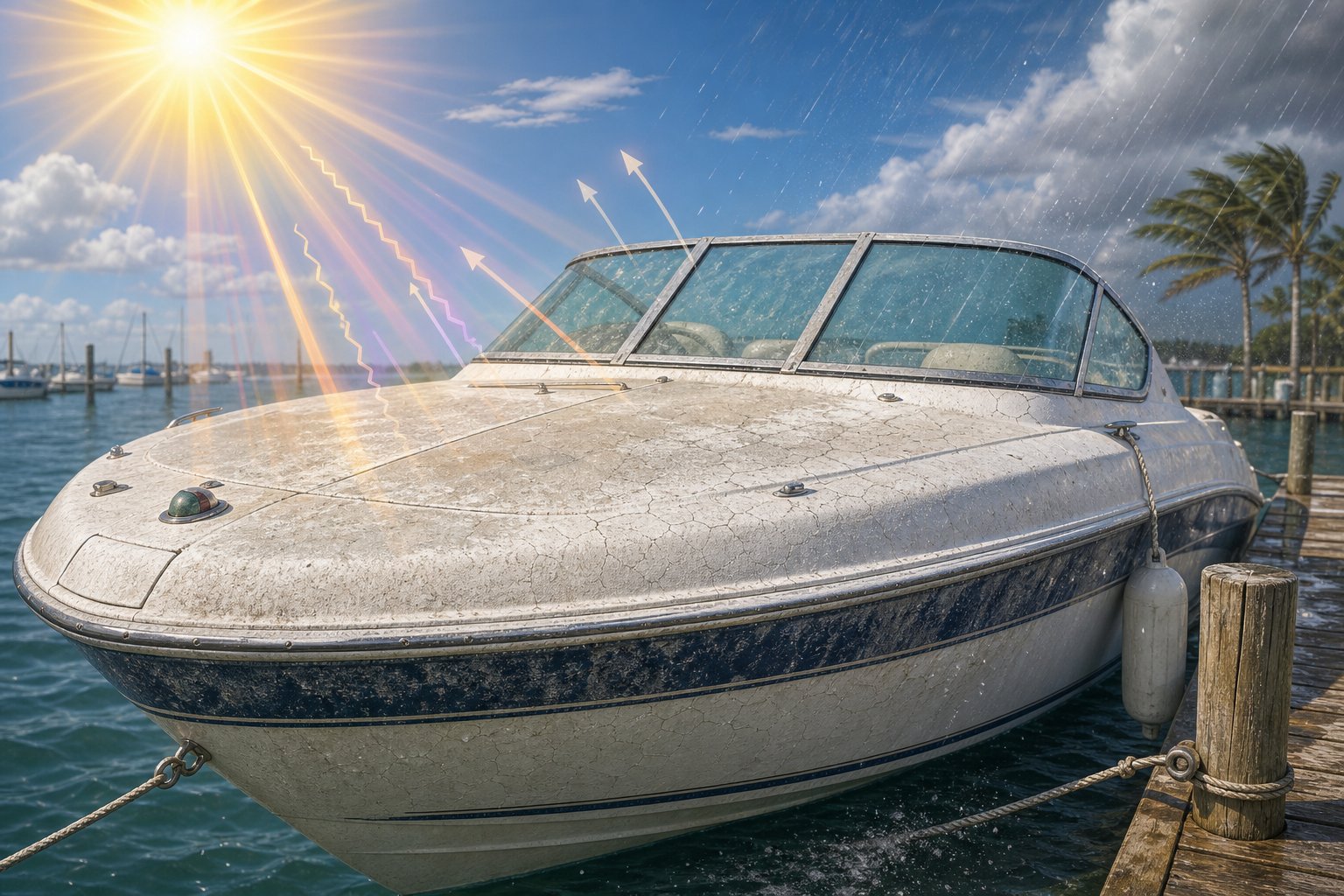
UV rays break down the chemical bonds in fiberglass and gelcoat at a molecular level, causing permanent damage that accumulates over time. Water reflection and weather conditions speed up this process, making boats more vulnerable than land-based equipment.
The Impact of UV Exposure on Fiberglass
UV radiation attacks the polymer chains in your boat’s gelcoat and fiberglass structure. This process, called chain scission, happens when UV photons snap the chemical bonds that give these materials their strength and flexibility.
The damage is cumulative and irreversible. Each hour your boat sits in the sun adds to the total harm, even on cloudy days when up to 80% of UV radiation penetrates through clouds.
Your gelcoat serves as the first line of defense for the fiberglass underneath. When UV breaks down the gelcoat’s surface, it becomes chalky and porous. This exposes the underlying fiberglass to moisture, which can lead to fiberglass weakening and structural cracks.
Water reflection adds roughly 10% more UV exposure on top of direct sunlight. This compounding effect means your boat takes more UV damage than the same materials would on land.
Common Signs of Sun Damage
Chalking appears as a white, powdery residue on your gelcoat when you run your hand across it. This indicates the surface layer has oxidized and broken down.
Fading shows up as a dull, washed-out appearance where your boat’s color has lost its vibrancy. Dark colors like navy and black fade faster than lighter shades.
Crazing creates spider web patterns of fine surface cracks in the gelcoat. These stress cracks form when UV damage makes the material brittle.
You might also notice your gelcoat no longer beads water. When you spray your hull with a hose, the water sheets flat instead of forming droplets. This means your protective wax or sealant has worn off completely.
Vinyl seats become stiff and develop cracks at flex points. Canvas and bimini tops show thread weakening at the seams.
Want to avoid costly fiberglass boat repair mistakes?
Learn how to inspect damage properly, decide when to DIY, and prevent expensive fiberglass problems before they start.
How Weather and Water Accelerate Degradation
Saltwater speeds up UV damage through a cycle of salt crystal formation and moisture retention. When saltwater evaporates on your gelcoat, it leaves behind salt crystals that trap moisture against the surface.
Temperature swings make existing UV damage worse. Your gelcoat expands in heat and contracts in cold, putting stress on already weakened polymer chains. This thermal cycling turns minor surface oxidation into deeper cracks.
Rain and humidity create another problem for UV-damaged gelcoat. Once the protective surface breaks down and becomes porous, water penetrates into the fiberglass layers below. This moisture gets trapped inside, leading to delamination and blistering.
Regular boat maintenance and UV protection products slow this cycle by creating a barrier between your gelcoat and these environmental factors.
Building a Proactive Protection Strategy
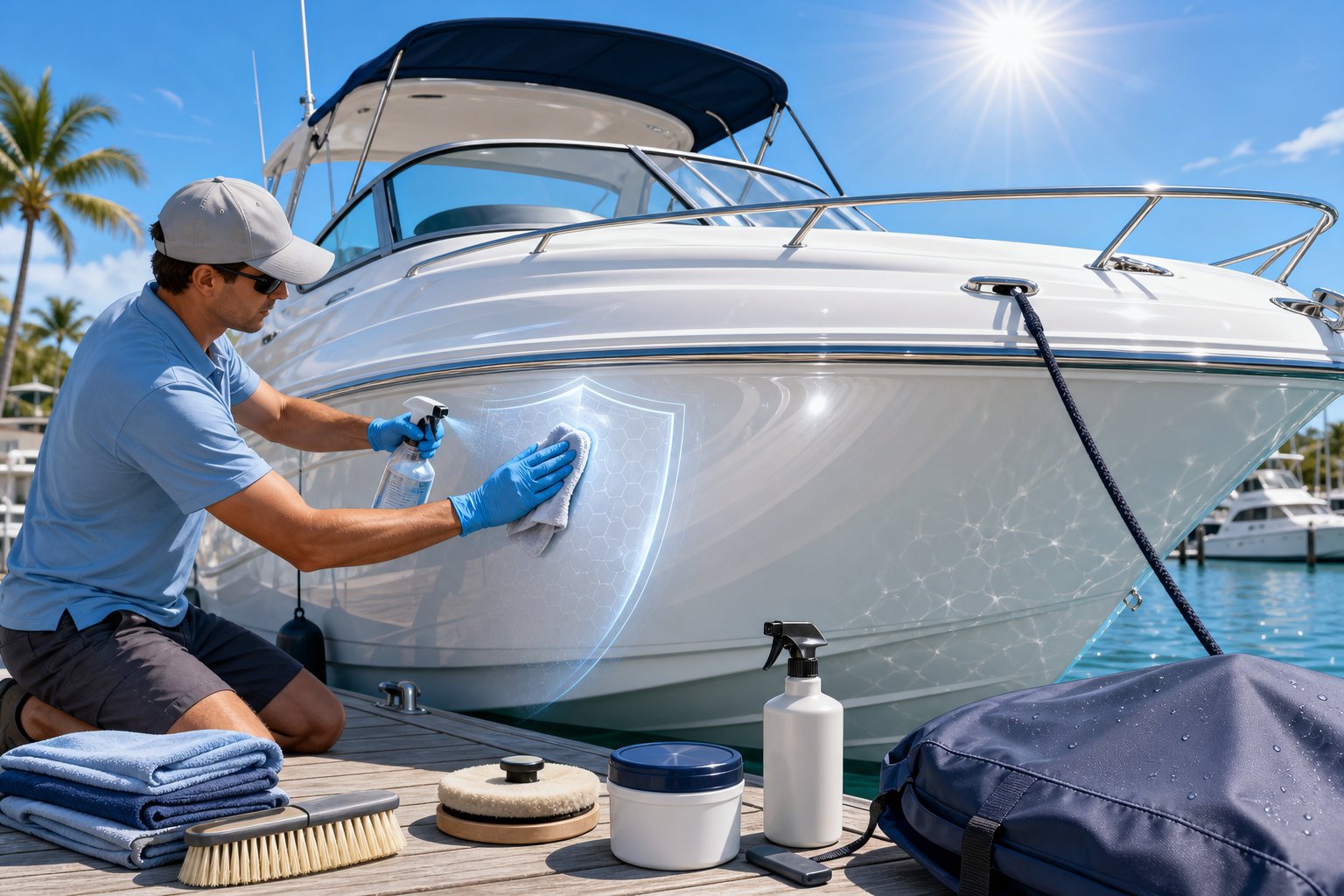
A complete protection plan requires regular cleaning, proper storage, and consistent maintenance checks to keep your fiberglass boat in top condition. These three practices work together to prevent UV damage before it starts.
Routine Cleaning and Inspection
You need to clean your boat regularly to remove salt, dirt, and grime that can trap moisture and speed up UV damage. Use a mild boat soap and soft cloth to wash the gel coat every two to four weeks during boating season.
After each cleaning, inspect your boat’s surface for early warning signs. Look for chalky residue, color fading, or small cracks in the gel coat. Check areas that get the most sun exposure like the bow, deck, and sides of the hull.
Pay special attention to hardware, seams, and fittings where water can collect. These spots are prone to oxidation and UV damage. Catching problems early lets you fix them before they become expensive repairs.
Keep a log of what you find during each inspection. Write down the date, location of any damage, and what action you took. This record helps you track problem areas over time.
Importance of Storage Methods
How you store your boat directly affects how well it resists UV damage. A quality boat cover is your first line of defense when the boat sits unused.
Choose a cover made from marine-grade fabric with UV-resistant properties. The cover should fit snugly without pooling water on top. Make sure it has vents to prevent moisture buildup and mold growth underneath.
Indoor storage in a garage or boat barn provides the best protection from sun exposure. If you must store outside, use shade structures or covered areas to minimize direct sunlight. Even partial shade reduces UV exposure by a significant amount.
During peak sun hours between 10 AM and 4 PM, your boat faces the most intense UV rays. Position your boat or cover to block this exposure whenever possible.
Scheduled Maintenance Checks
Set up a boat maintenance schedule that includes protection tasks at regular intervals. Every month during active season, wash and wax your boat to maintain the protective barrier on the gel coat.
Every three months, apply a dedicated UV protectant spray to high-exposure areas. These products add an extra layer of defense beyond regular wax. Check your boat detailing products to ensure they contain UV inhibitors.
At the start and end of each season, perform a thorough inspection. Remove all dirt and apply a fresh coat of marine wax. Check the gel coat for any damage that developed during storage or use.
Mark these tasks on your calendar with specific dates. Boat maintenance works best when you stay consistent rather than waiting until you notice problems.
Protective Product Options for Fiberglass Boats
Different protective products offer varying levels of defense against UV rays and weathering, with marine waxes providing basic protection, while ceramic coatings deliver longer-lasting shields for your boat’s gelcoat.
Choosing the Best Marine Wax
Marine wax creates a protective barrier on your fiberglass hull that blocks UV radiation and repels water. Quality boat wax should be easy to apply and remove while providing durable protection against saltwater corrosion and temperature changes.
Meguiar’s Flagship Premium Marine Wax stands out as a top choice for fiberglass boats. It contains carnauba wax that produces a deep shine and guards against UV damage. Most marine waxes need reapplication every 2-3 months depending on your boat’s exposure to sun and salt.
This guide helps boat owners understand fiberglass damage clearly — what matters, what doesn’t, and when repairs are truly necessary, so small issues don’t turn into expensive mistakes.
See What Every Boat Owner Should Know →When selecting a boat wax, look for products specifically formulated for marine environments. These waxes contain stronger UV inhibitors than automotive products. Apply wax in thin, even coats using a foam applicator pad, then buff with a microfiber cloth for best results.
Polymer Sealants vs. Ceramic Coatings
Polymer sealants bond to fiberglass surfaces chemically rather than sitting on top like traditional wax. They last 4-6 months and provide good UV protection. Sealants often come in spray formulas that make application faster than paste wax.
Ceramic coatings for fiberglass boats use SiO₂ technology to form a harder, more durable shield. These coatings can protect your hull for 12 months or longer. They create hydrophobic surfaces that make water bead off, which helps prevent water spots and makes cleaning easier.
The main difference comes down to durability and cost. Ceramic coatings require more careful application but deliver superior protection against oxidation and fading. Polymer sealants offer a middle ground between traditional wax and ceramic options, balancing ease of use with enhanced longevity.
Selecting an Effective UV Protectant
UV protectants designed for boat hulls focus specifically on blocking harmful rays that cause gelcoat degradation. These products contain concentrated UV absorbers and stabilizers that prevent chalking and color fade.
Look for UV protectants with these key features:
- SPF rating or UV absorption percentage indicated on the label
- Non-greasy formula that won’t attract dirt and grime
- Compatibility with fiberglass and gelcoat surfaces
- Water resistance to maintain protection in wet conditions
Many protective coatings combine UV blockers with other defensive properties like anti-slip additives for deck areas. Apply UV protectants to clean, dry surfaces and reapply according to manufacturer recommendations, typically every 3-6 months for maximum effectiveness.
Maximizing Gel Coat Longevity
Regular waxing creates a protective barrier that prevents oxidation, while quick repairs to scratches and chips stop minor damage from becoming major problems.
Waxing to Prevent Oxidation
Applying marine wax creates a protective seal that blocks oxygen from reaching your gel coat surface. Without this protection, your fiberglass boat will develop a chalky appearance as the gel coat becomes porous and starts to break down.
You should wax your boat at least once per season, or twice yearly if you keep it in strong sun year-round. Test whether you need to reapply by checking if water still beads on the surface. If water no longer rolls off in droplets, it’s time to wax again.
Choose from three main types of boat wax:
- Pure carnauba wax provides a deep shine but needs reapplication every few months
- Carnauba/polymer blends offer balanced protection and appearance
- Polymer-only formulations last the longest and work best for boats in constant sun
Apply wax in a shaded area using small circular motions. Work in sections and buff each area completely before moving to the next. Never wax over oxidized or stained gel coat, as this seals in the damage instead of protecting clean surfaces.
Addressing Minor Surface Defects and Repairs
Small scratches and chips expose raw gel coat to UV damage and moisture penetration. You need to address these defects quickly before they expand into costly fiberglass boat repair projects.
Inspect your boat regularly for stress cracks around hardware, shallow scratches, and small gouges. Surface-level scratches can often be removed with rubbing compound followed by polish. Deeper damage requires gel coat filler matched to your boat’s color.
Clean the damaged area thoroughly before any repair work. For scratches, start with the least aggressive product that removes the defect. Use rubbing compound only for moderate damage, then follow with successively finer polishes.
Small chips and gouges need gel coat paste applied in thin layers. Sand each layer smooth after it cures, then polish the repair to blend it with the surrounding surface. Protecting your boat’s gel coat and fiberglass through prompt repairs prevents water intrusion that can lead to blistering and delamination.
Advanced Solutions for Enhanced Defense
Modern boat protection goes beyond basic wax applications. Ceramic coatings and layered product systems deliver superior UV protection and water repellency that can last months or even years with proper maintenance.
Hydrophobic and Water Beading Technologies
Ceramic coatings create a chemical bond with your boat’s gelcoat surface. These advanced polymer and ceramic formulas form a hard protective layer that repels water and blocks harmful UV rays. You’ll notice water beading up and rolling off the surface instead of spreading out.
Graphene-based products like 303 Graphene Nano Spray Coating can protect your boat for up to 18 months. The graphene plates align on your hull in a honeycomb pattern that stops UV light and dissipates heat. Water beading is a key indicator that your ceramic coating is working properly.
These hydrophobic technologies make cleaning easier too. Dirt and grime have trouble sticking to the slick surface, so you spend less time scrubbing.
Combining Products for Lasting Protection
Layering compatible products gives you the best defense against UV damage and weathering. Start with a thorough polish to remove oxidation, then apply your primary protection layer.
You can use products like GRP Sealer UV as a secondary coating over wax to seal it in and add extra shine. Some boaters apply a ceramic coating first, then maintain it with UV-protective detergents between applications. Gtechniq’s system includes UV Wash, which helps the ceramic bond last longer.
Your maintenance routine matters as much as the products you choose. Wash your boat regularly with wax-free soap designed for marine use. Reapply protective coatings before they fully wear off rather than waiting for oxidation to appear.
Year-Round Protection and Storage Best Practices
A quality boat cover blocks UV rays and weather damage throughout the year. Proper storage prevents damage like fading, cracking, or structural harm to your boat’s gel coat and fiberglass surfaces.
Covering Your Boat Effectively
Your boat cover acts as the first defense against UV damage when the boat isn’t in use. Choose a cover made from marine-grade fabric with UV-resistant properties and proper ventilation to prevent moisture buildup.
The cover needs to fit snugly without touching the gel coat surface. Covers that rub against the fiberglass in wind create micro-scratches that accumulate over time. Use support poles or a frame system to keep fabric elevated above the surface.
Key cover features to look for:
- UV-resistant marine fabric (600-denier or higher)
- Adjustable straps with quick-release buckles
- Built-in vents to prevent mold and mildew
- Reinforced stress points at corners and tie-downs
Check your cover monthly for tears, loose straps, or water pooling. Remove any standing water immediately. Clean the cover itself several times per season to prevent dirt transfer to your gel coat.
Off-Season Storage Strategies
Winter storage requires different protection than summer covering. Indoor storage in climate-controlled buildings provides complete protection from UV damage, weathering, and temperature extremes.
Before storage, complete a thorough boat maintenance routine. Wash the entire hull with marine soap and apply a UV protectant like ceramic coating or polymer sealant. These products create a barrier that protects gel coat during months of storage.
If indoor storage isn’t available, outdoor covered storage works when done correctly. Use a high-quality cover with proper ventilation and support. Position the boat to avoid direct southern sun exposure when possible.
Pre-storage checklist:
- Deep clean and dry the hull completely
- Apply fresh UV protectant coating
- Remove all organic material that could stain
- Secure cover with proper tension and support
Check your stored boat every 4-6 weeks for moisture, mildew, or cover damage.

Warren is the founder of BoatGenesis and brings practical experience in fiberglass boat repair, marine equipment testing, and powerboat building. He has worked on a range of repair and restoration projects and now focuses on creating clear, research-based guides to help boat owners avoid costly mistakes and make smarter maintenance decisions. Learn more about Warren.