Fiberglass boats have become popular because they resist corrosion and can last for years if you take care of them. Still, fiberglass surfaces attract dirt, grime, oxidation, and stains from saltwater or algae over time.
Regular cleaning protects your boat’s appearance and helps keep its resale value up. A good fiberglass boat cleaner removes tough stains and buildup without scratching the gel coat or causing other damage.
When you pick a fiberglass boat cleaner, check if it’s made for your specific cleaning job, like removing oxidation or just basic washing. Does it need buffing, or do you just rinse it off? Think about whether the formula is safe for water and marine life, especially if you clean the boat while it’s docked.
We tried out several fiberglass boat cleaners to find the ones that work well without lots of scrubbing or risking your boat’s finish.
- Best Fiberglass Boat Cleaners
- Buying Guide
- Frequently Asked Questions
- What cleaner works best for removing oxidation and chalking from a fiberglass gelcoat?
- Which products are safest for frequent washing of fiberglass boats used in saltwater?
- What is the most effective way to remove tough scum lines and waterline stains from a fiberglass hull?
- How do boat cleaner-and-wax combinations compare to using separate wash, polish, and wax steps?
- Are there reliable homemade options for cleaning fiberglass without dulling the gelcoat or stripping wax?
- What should you look for when choosing a fiberglass boat cleaner to avoid damaging decals, seals, or non-skid surfaces?
Best Fiberglass Boat Cleaners
Keeping your fiberglass boat clean protects its finish and helps it hold value as the years go by. We’ve tested and reviewed the top fiberglass boat cleaners so you can find what actually works for your boat.
1. STAR BRITE Instant Hull Cleaner

This gel spray cleaner tackles tough waterline stains and years of buildup without using harsh acids that can mess up your boat.
Pros
- Gel formula clings to vertical surfaces and doesn’t just run off
- Removes stubborn stains like rust and fish blood that other cleaners can’t touch
- Uses oxalic acid, which is safer than hydrochloric or phosphoric acid
Cons
- The spray nozzle sometimes quits before the bottle is empty
- You have to scrub hard and maybe reapply for tough stains
- If you don’t rinse it off fast, it can damage galvanized trailers
The STAR BRITE Instant Hull Cleaner stands out because its thick gel texture stays where you spray it. The cleaner gets more time to break down stains on vertical surfaces, so you don’t waste product.
This stuff handles the brown tannin stains that show up above the waterline when boats sit in slips. It also works on rust marks and organic stains from leaves and algae.
Oxalic acid in the formula breaks down stains without being as aggressive as some other products. The 32-ounce spray bottle makes it easy to apply—just spray it on stained spots and let it do its thing.
On older boats with years of discoloration, you can actually see results within seconds. Some folks have trouble with the spray nozzle breaking before the bottle runs out, which gets annoying if you’re cleaning under the boat and can’t refill easily.
For heavy stains, you’ll need to scrub a fair bit, so it’s not always a magic fix. Watch out for metal trailer parts—the formula can eat away at galvanized surfaces if you leave it on too long.
Always rinse your trailer right after cleaning your hull to avoid corrosion headaches. The STAR BRITE Hull Cleaner works on fiberglass, plastic, and painted surfaces, so you can use it for different types of boats and cleaning jobs—not just the hull.
2. STAR BRITE Non-Skid Deck Cleaner
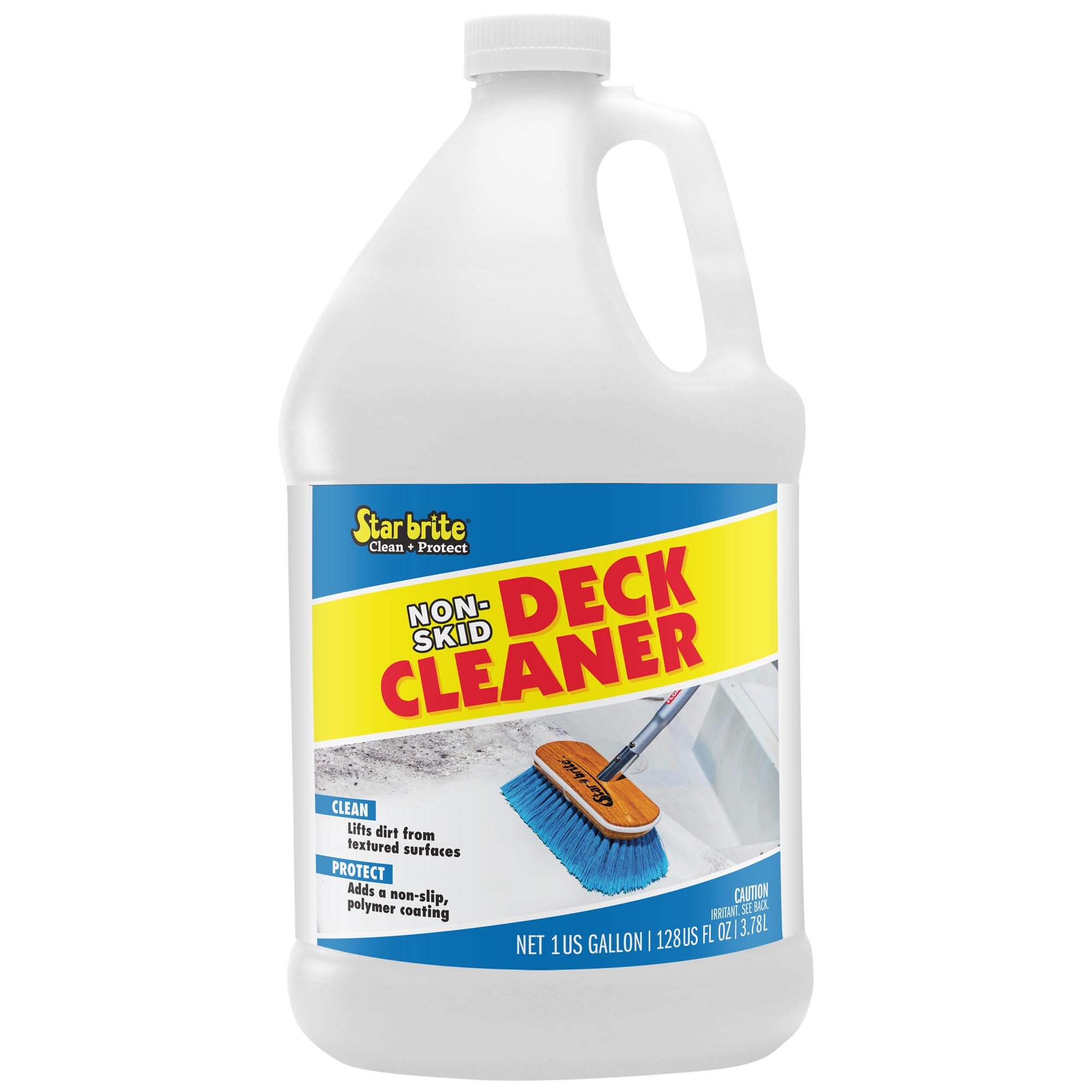
This cleaner helps boat owners remove dirt and stains without a ton of scrubbing, and it adds UV protection too.
Pros
- Removes stains and dirt with just a little scrubbing
- Adds a protective coating that blocks UV rays and repels new dirt
- Works on fiberglass, vinyl, and painted areas
Cons
- You get the best results working in small sections
- Doesn’t always remove every stubborn stain
- The gallon bottle is a bit heavy to lug around
The STAR BRITE Non-Skid Deck Cleaner takes a different route from most boat cleaners. Instead of making you scrub like crazy, it dissolves dirt and grime if you let it sit for a few minutes.
Apply it to wet surfaces and wait three to five minutes before scrubbing. The formula lifts away gray areas and old stains during this short wait.
Many boaters find this less tiring than products that need constant elbow grease. After you rinse it off, it leaves a protective layer on your deck to help block UV rays.
You can use this cleaner on fiberglass, vinyl, rubber, plastic, metal, and painted surfaces. It’s nice not having to worry about damaging anything.
One gallon gives you plenty for several cleaning sessions. The 128-ounce bottle goes a long way, but you’ll get better results if you focus on small areas instead of trying to do the entire deck at once.
The formula is biodegradable and doesn’t have bleach, so it’s safer for the water. It’s unscented and comes as a liquid, so it’s simple to use.
3. STAR BRITE Instant Hull Cleaner
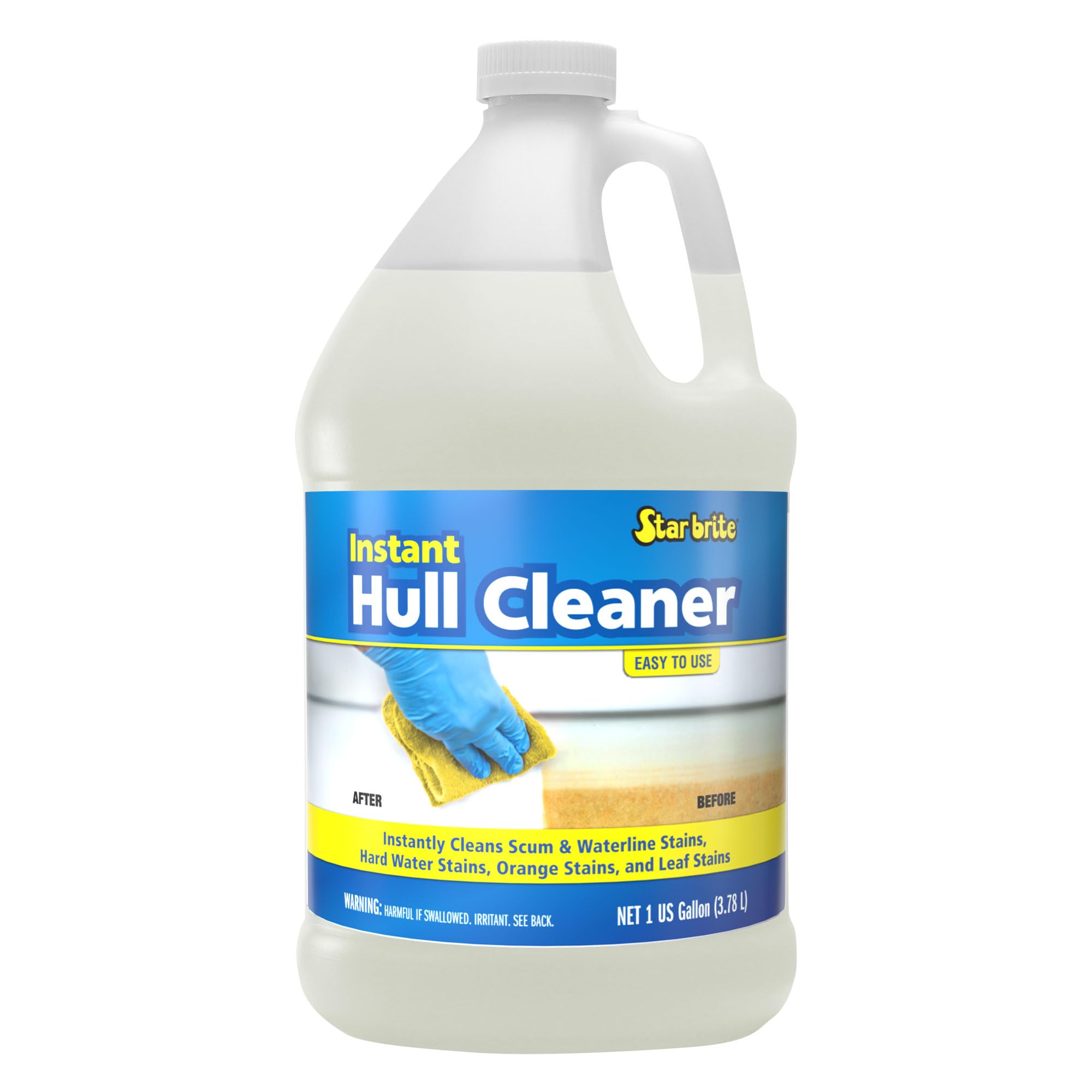
This cleaner makes it easy to remove waterline stains and scum lines. The wipe-on, rinse-off formula works in just a few minutes.
Pros
- Works fast on tough stains, no heavy scrubbing needed
- Oxalic acid formula is safer than harsher chemicals
- Handles rust, fish blood, and algae stains
Cons
- Some stubborn spots might need a second round
- Bottle sometimes leaks during shipping
- You might go through the product fast on really stained boats
The STAR BRITE Instant Hull Cleaner attacks waterline stains so you don’t have to scrub for hours. You just put it on, wait a few minutes, and rinse it off.
The formula dissolves grime like rust marks, fish blood, grass stains, and hard water buildup. It uses oxalic acid instead of harsher chemicals, so it’s a bit gentler on your hands and surfaces.
You can use it on fiberglass, plastic, and painted boat surfaces. The gallon size means you’ll have enough for regular maintenance or bigger jobs.
It works well on scum lines and yellowing that shows up over time. Some areas with heavy stains might need a second application to get totally clean.
People say it gets rid of brown hull marks and algae that other cleaners leave behind. It saves a lot of time compared to rubbing compounds or endless scrubbing.
For boats with serious staining, you might use more product than expected, but for regular cleaning, most folks find it does the job well.
4. Meguiar’s Marine/RV Boat Wash
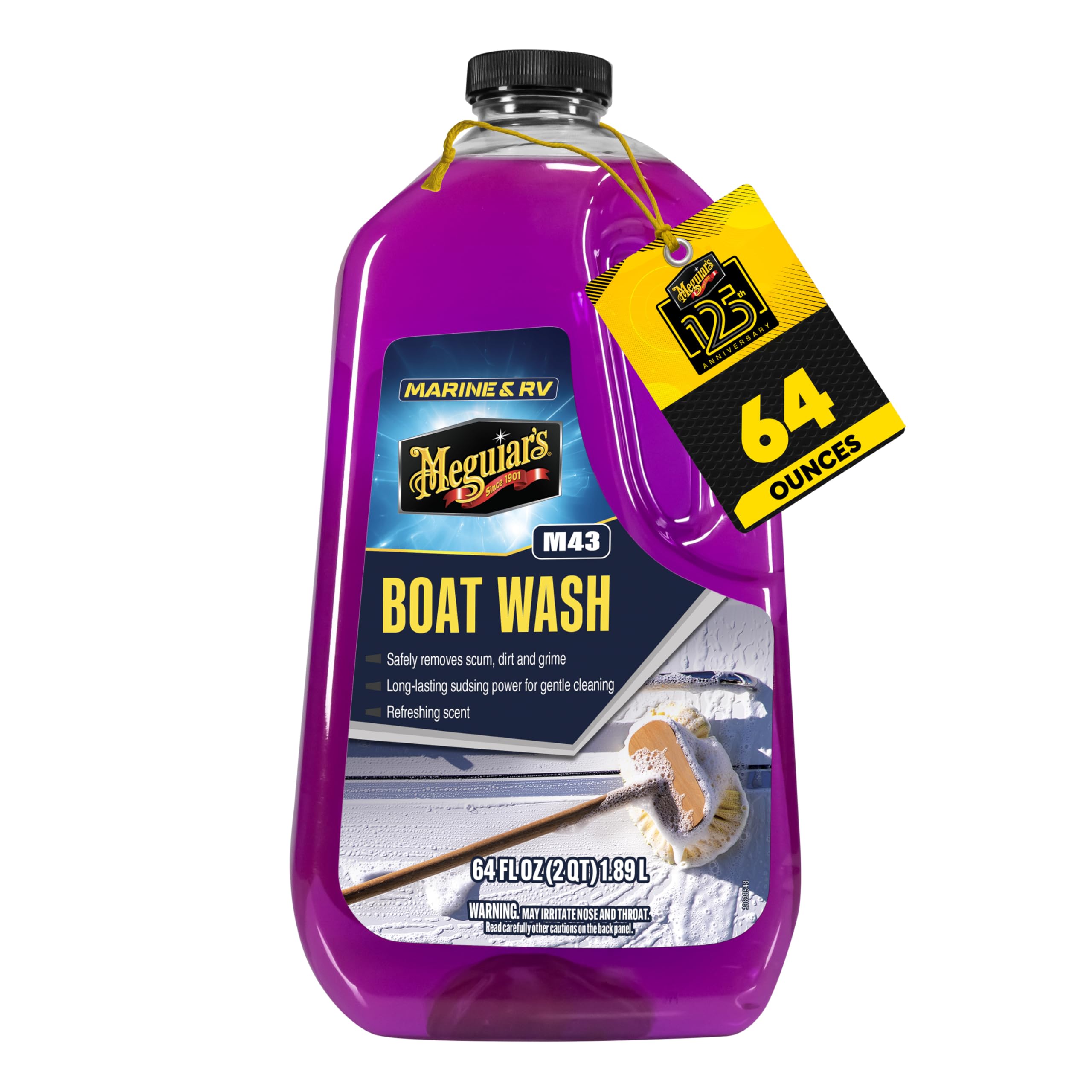
This cleaner tackles dirt and grime while protecting your boat’s wax, so it’s a solid pick for regular upkeep.
Pros
- Works on fiberglass, gel coat, and aluminum without harming them
- Makes suds that last, so you don’t have to keep adding water
- pH-balanced formula cleans without stripping away your wax finish
Cons
- The manufacturer discontinued it, so it might be hard to find soon
- You may have to experiment with how much to dilute it
- The 64-ounce bottle might not last long for big boats or frequent washes
Meguiar’s formula removes dirt and scum without harsh chemicals that strip away protective coatings. Your boat’s finish stays protected and gets clean at the same time.
The soap makes plenty of suds that stick around, so you can work on bigger areas without stopping to reapply. It works on more than just fiberglass—gel coat and aluminum parts are fair game.
The pH-balanced mix won’t hurt delicate surfaces but still cuts through grime. Conditioners in the wash help brighten your boat’s look as you clean, leaving a streak-free finish that stands out at the dock.
With over 2,800 customer ratings and an average of 4.6 stars, a lot of boaters seem pretty happy using this for their regular cleaning routine.
5. Boat Juice Necessity Boat Cleaner Kit

This kit packs both cleaning power and UV protection together. It’s a solid pick if you want to keep your boat maintenance simple.
Pros
- Combines cleaning and ceramic protection in one step
- Cleans wet or dry surfaces, so you get some flexibility
- Orange creamsicle and pina colada scents—way better than harsh chemicals
Cons
- Some folks don’t love the exterior spray scent
- The orange-scented formula doesn’t always match the green version’s performance
- Heavily soiled spots might need more elbow grease
The Boat Juice kit features separate formulas for inside and outside surfaces. You get a 32-ounce exterior spray that knocks out water spots and mineral deposits, while leaving a ceramic coating behind.
The interior spray balances cleaning strength and UV protection for your seats and vinyl. You can use the exterior cleaner on a wet or dry boat, which honestly saves a bit of hassle.
Spray it on, wipe with a microfiber towel, then flip and buff. The ceramic layer leaves things glossy and helps fight off future water spots.
The interior formula works on upholstery, carpet, vinyl, and foam flooring without causing damage. Some boaters rave about the scents, though the orange creamsicle isn’t everyone’s favorite. The kit tosses in two microfiber towels to get you started.
Both formulas are made in the USA and safe for a bunch of boat surfaces. The ceramic protection adds a nice touch by building a layer that goes beyond just cleaning.
6. Boat Juice 2-in-1 Cleaner & Protectant
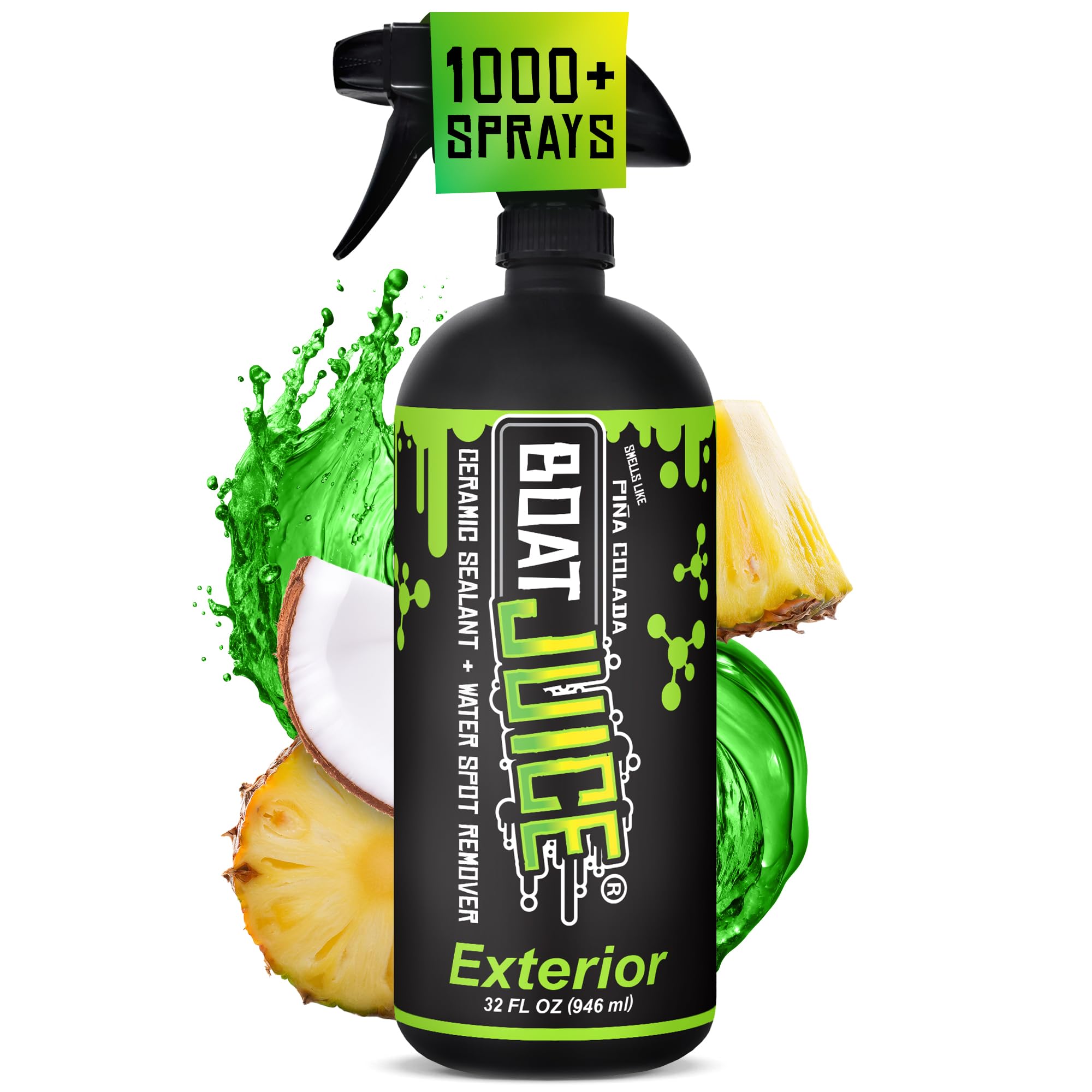
This cleaner makes sense if you want to clean and protect your fiberglass boat without buying a shelf full of products.
Pros
- Cleans and adds ceramic protection in one spray
- Removes hard water spots and mineral deposits—no heavy scrubbing needed
- Tropical piña colada scent is a nice bonus
Cons
- Stubborn stains might need some scrubbing
- Works best on lighter dirt, not caked-on grime
- Ceramic layer needs regular reapplication
The Boat Juice 2-in-1 Cleaner & Protectant keeps boat care simple by combining cleaner and ceramic sealant in one bottle. You just spray it on and wipe it off—no buckets, no rinsing, just quick work. The formula covers both wet and dry surfaces.
This stuff tackles hard water spots and mineral deposits after lake or saltwater trips. The SiO2 ceramic formula puts up a barrier that repels water and blocks UV rays. Your boat looks glossy and gets a bit of extra sun and oxidation protection.
You can use it on gelcoat, fiberglass, glass, chrome, vinyl, and plastic. It’s not just for boats—jet skis, pontoons, and trailers work too. The scent is tropical, so at least it doesn’t smell like a science experiment.
The 32-ounce bottle lasts through several cleaning sessions. For lighter cleanups between deep scrubs, this spray holds its own. The ceramic coat helps water bead up and makes the next cleaning a little easier.
7. Escentile Instant Boat Hull Cleaner
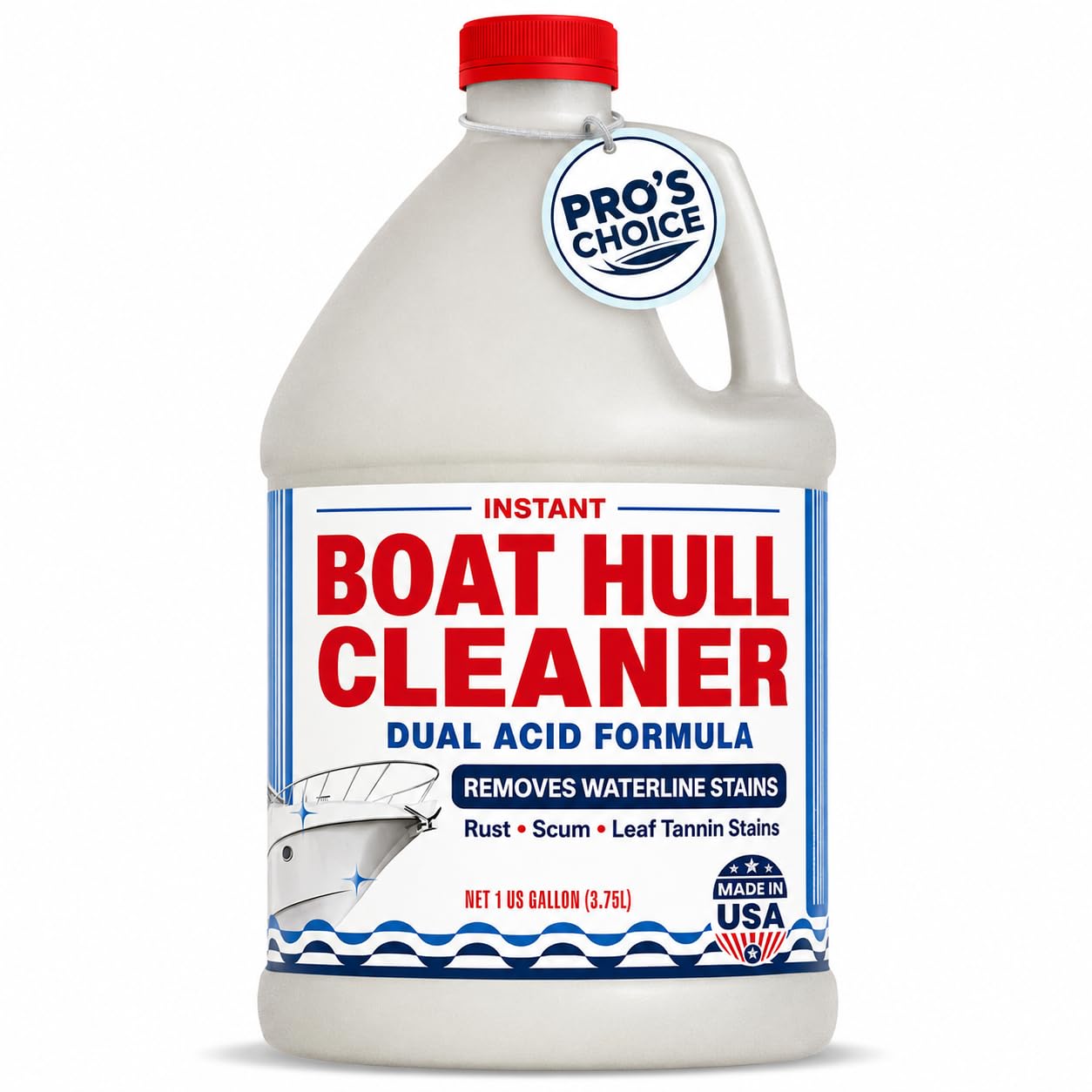
This cleaner works fast on waterline stains and scum. For heavy buildup, you’ll probably need to scrub a bit.
Pros
- Acts fast—most stains start fading in minutes
- Safe for fiberglass, gel coat, and painted hulls
- Made in the USA with a professional-grade dual-acid formula
Cons
- Heavy lime or thick buildup might not come off completely
- Can leave some grit that needs scrubbing
- Some users say it only removes about 80% of stains
The dual-acid formula tackles waterline stains, rust, and even fish blood with little effort. You apply it with a sponge or spray bottle and let it do its thing for a couple of minutes.
This product is built for tough marine deposits but stays gentle enough for different boat surfaces. It works on fiberglass hulls, gel coat, painted surfaces, and chrome trim.
Sealed aluminum trailers won’t get damaged during use. The formula is versatile and handles both fresh and saltwater boats.
Results depend on what kind of stains you’re fighting. Light to moderate waterline stains and scum usually come off easily. Heavier lime buildup or thick deposits might need extra scrubbing or more than one round.
The one-gallon container lasts for several cleaning sessions. It’s a professional-grade cleaner from a family-owned American company. If you run into problems, their customer support can help.
Buying Guide
When you’re shopping for a fiberglass boat cleaner, a few factors really matter. The right cleaner makes your job easier and protects your boat’s finish.
Type of Cleaner
Not all cleaners do the same thing. Some focus on dirt and grime, while others go after oxidation or stains. Figure out what your boat needs most before you hit “buy.”
| Cleaner Type | Best For |
|---|---|
| All-Purpose | Regular maintenance and light cleaning |
| Heavy-Duty | Tough stains, oxidation, and neglected surfaces |
| Wax & Polish | Shine and protection after cleaning |
| Acid-Based | Hard water stains and mineral deposits |
Formula Considerations
If you care about the environment, check if the cleaner is biodegradable. Some marinas even require eco-friendly products.
Look for pH-balanced formulas. Harsh chemicals can wear down your boat’s gelcoat over time, and that’s just not worth the risk.
Application Method
Think about how much effort you want to put in. Some products need scrubbing, while others spray on and rinse off.
Spray-on cleaners act fast but might not handle tough stains. Paste or cream formulas usually work better on stubborn spots, but they take longer.
Safety Features
Always check the label for safety info. Pick something that’s gentle on your skin and won’t fill your boat with nasty fumes.
Choose cleaners that won’t mess up metal hardware, rubber seals, or other boat parts.
Size and Value
Bigger containers usually cost less per ounce, but you’ll need space to store them. Figure out how much cleaner you’ll actually use based on your boat’s size and cleaning habits.
Frequently Asked Questions
Getting rid of oxidation takes different products than day-to-day washing. If you boat in saltwater, you’ll need to be extra careful. Stain removal tricks change depending on where the stain is, and picking the right cleaner helps you protect every surface while getting things really clean.
What cleaner works best for removing oxidation and chalking from a fiberglass gelcoat?
For serious oxidation on fiberglass gelcoat, heavy-duty rubbing compounds do the trick. They use fine abrasives to strip away the damaged outer layer and reveal fresh gelcoat underneath.
Follow up with a polishing compound to bring back the shine. The rubbing compound removes oxidation but can leave the surface dull, so polishing is key.
For lighter chalking, marine oxidation removers use chemicals instead of abrasives. They’re less aggressive but still effective.
Which products are safest for frequent washing of fiberglass boats used in saltwater?
pH-neutral boat soaps designed for marine use are the safest for regular saltwater washing. They’ll get rid of salt without stripping wax or damaging the gelcoat.
Look for biodegradable options that rinse off cleanly. Salt-removing boat washes target mineral deposits that car soaps usually miss.
Wash your boat after every saltwater trip to keep salt from building up. Leaving salt on surfaces speeds up oxidation and corrosion, and nobody wants that.
What is the most effective way to remove tough scum lines and waterline stains from a fiberglass hull?
Waterline stain removers use acids or solvents to break down the mix of algae, minerals, and oils that create scum lines. These products are made for the job.
Apply the cleaner to a dry hull and let it sit as long as the label says. Most need a little contact time before you scrub and rinse.
A medium-bristle brush helps work the cleaner into textured gelcoat without scratching. For stains that have built up over a few seasons, you might need to repeat the process.
How do boat cleaner-and-wax combinations compare to using separate wash, polish, and wax steps?
Combination cleaner-wax products save time but don’t protect as well as separate products. They lay down a thin layer of wax during washing, but dedicated marine wax lasts longer.
The three-step method—washing, polishing, then waxing—gives better results on boats that need extra care. Polish takes care of light oxidation that wash-and-wax combos just can’t handle.
You can use combination products for touch-ups between full detailing sessions. They help stretch out the protection from your last wax job without eating up your whole afternoon.
Are there reliable homemade options for cleaning fiberglass without dulling the gelcoat or stripping wax?
A mixture of white vinegar and water works for light cleaning and tackling water spots. Just mix equal parts in a spray bottle and use it for regular maintenance washes.
Baking soda paste can lift some stains if you use a gentle touch. Stir baking soda with a splash of water until it turns into a paste, then rub it on with a soft cloth.
Dish soap mixed with water does basic cleaning, but it can strip wax if you use it too often. Homemade cleaners work best for quick touch-ups, not as a full replacement for quality marine products.
What should you look for when choosing a fiberglass boat cleaner to avoid damaging decals, seals, or non-skid surfaces?
Check if the cleaner says it’s safe for use on graphics and vinyl decals. Harsh solvents or acids might make decals lift, fade, or even crack, and nobody wants that headache.
Pick products that mention they’re okay for rubber seals and gaskets. Some cleaners with petroleum distillates will dry out or ruin the rubber around hatches and windows before you know it.
Try out any new cleaner on a tiny, hidden spot of your non-skid surfaces first. Certain cleaners can leave non-skid areas slippery or weirdly discolored—definitely not something you want underfoot.

Warren is the founder of BoatGenesis and brings practical experience in fiberglass boat repair, marine equipment testing, and powerboat building. He has worked on a range of repair and restoration projects and now focuses on creating clear, research-based guides to help boat owners avoid costly mistakes and make smarter maintenance decisions. Learn more about Warren.