Keeping your boat looking its best starts with knowing how to clean a fiberglass boat the right way. Fiberglass is durable and low-maintenance, but without proper care, it can develop oxidation, stains, and a dull finish over time.
Cleaning a fiberglass boat involves three main steps: washing with pH-balanced boat soap to remove surface dirt, restoring the finish with compound or polish to eliminate oxidation and stains, and protecting the gelcoat with marine wax to shield it from UV damage and future buildup.
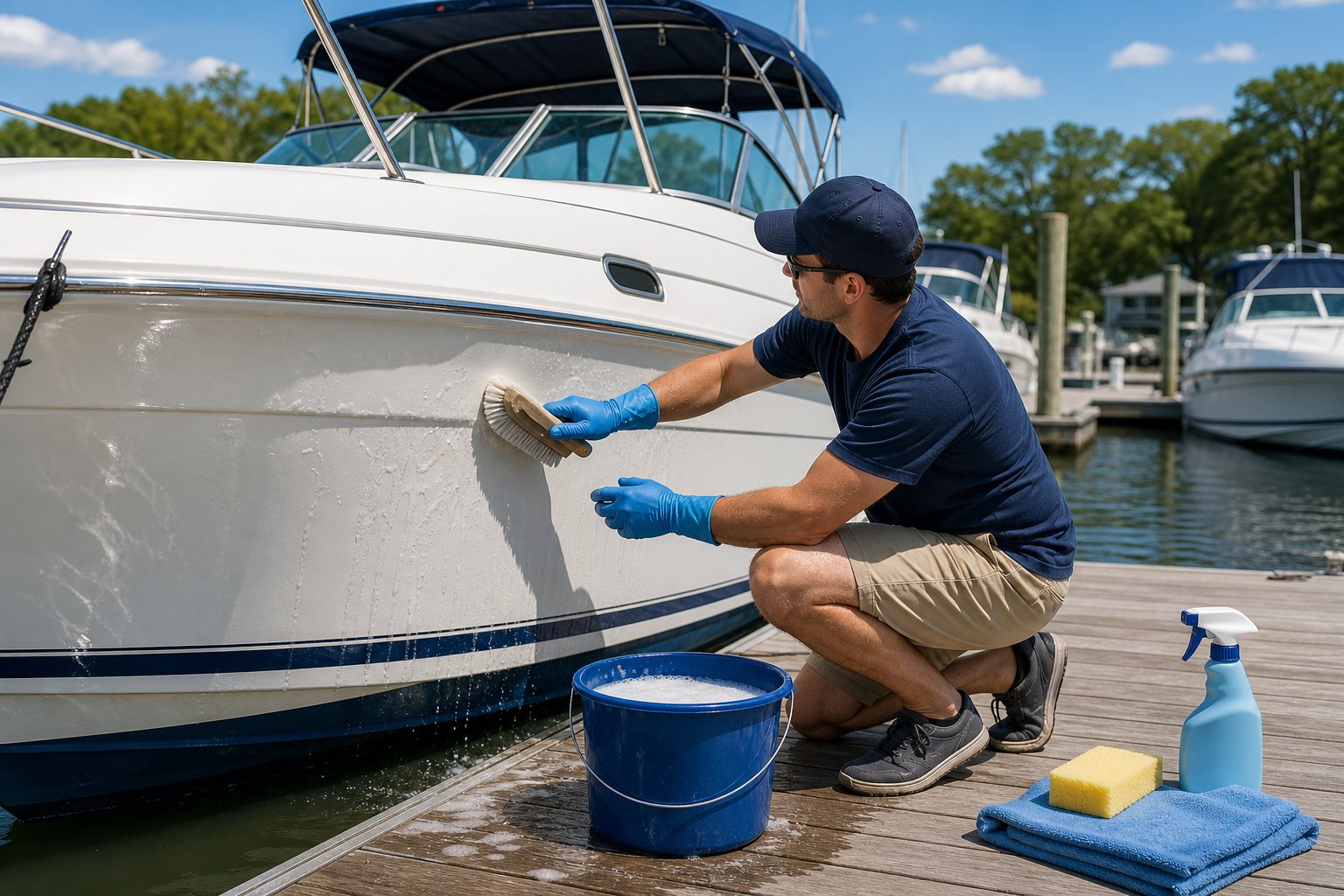
The process of cleaning fiberglass boats requires the right tools and products to avoid damaging your boat’s finish. Using household cleaners or abrasive brushes can strip away protective wax and scratch the gelcoat. This guide walks you through each stage of cleaning your fiberglass boat, from the initial rinse to the final coat of protection.
Learning how to clean a fiberglass boat effectively saves you money on professional detailing and keeps your vessel looking great for years. With the right approach, you can tackle everything from everyday dirt to stubborn waterline stains and restore that showroom shine.
Key Takeaways
- Always rinse your boat with fresh water before washing to remove abrasive particles that can scratch the gelcoat
- Work from top to bottom using pH-balanced boat soap and soft-bristled brushes to prevent re-contaminating clean areas
- Apply marine wax or sealant after cleaning to protect the gelcoat from UV rays and make future cleaning easier
- Preparing Your Boat and Gathering Cleaning Supplies
- Effective Rinsing and Washing Techniques
- Tackling Stains, Marks, and the Waterline
- Restoring Shine: Polishing and Compounding
- Protecting Your Boat: Waxing and Sealants
- Maintaining Your Fiberglass Boat for Long-Term Results
- Frequently Asked Questions
- What is the best way to clean and protect a fiberglass boat hull?
- Which cleaners are safe to use on fiberglass without dulling the gelcoat?
- How can tough oxidation be removed from fiberglass to restore shine?
- What methods work best to remove yellowing and waterline stains from the hull?
- How can a homemade cleaner be made that won't damage fiberglass or hardware?
- When should waxing or polishing be done, and what products provide the best finish?
Preparing Your Boat and Gathering Cleaning Supplies
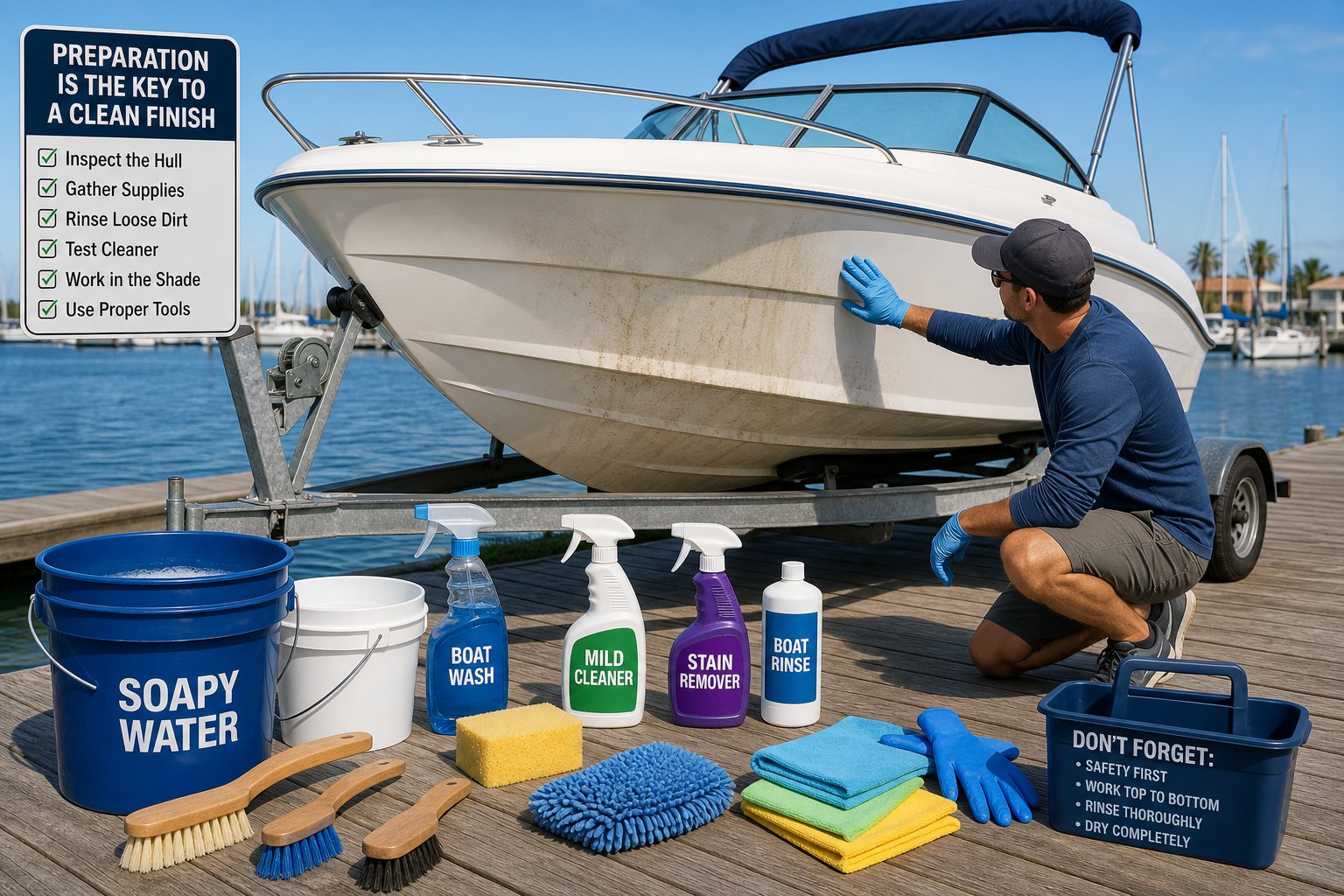
Getting your supplies ready before you start makes the job faster and protects your fiberglass from damage. You need the right tools, cleaners designed for marine use, and proper safety gear to do the work correctly.
Identifying Essential Cleaning Tools
You need several basic tools to clean fiberglass boat surfaces without causing scratches. Start with a soft scrub brush that has gentle bristles designed for marine gelcoat. Hard bristles will leave marks on your hull.
Get at least six to eight microfiber towels for drying and buffing. Microfiber cloths work better than regular rags because they absorb more water and won’t scratch the surface. You will go through them quickly as they get dirty.
A hose with spray nozzle gives you control over water pressure for rinsing. You need at least two buckets for the wash process. One bucket holds soapy water while the other holds clean rinse water. This two-bucket method keeps dirt from getting back onto your boat.
Add non-abrasive scouring pads to your kit for stubborn spots. These pads remove scuff marks and waterline stains without damaging the gelcoat.
Choosing the Right Boat Cleaners
Regular household cleaners strip protective wax from your boat and can damage fiberglass. You need pH-balanced marine soap made specifically to clean fiberglass boat surfaces. Dish soap removes all the wax protection your hull needs.
Look for biodegradable fiberglass boat cleaner products that won’t harm the water. These boat cleaners work just as well as harsh chemicals but are safer for the environment.
For tough stains at the waterline, you need specialized hull cleaners. Oxalic acid-based products remove organic stains and algae buildup. Rust stains near metal hardware require a different formula designed to dissolve iron oxide.
Safety Precautions and Personal Protection
Chemical cleaners can irritate your skin and eyes even when they are labeled as mild. Wear waterproof gloves every time you work with boat cleaners. Your hands will stay protected from both chemicals and prolonged water exposure.
Safety glasses keep soap and dirty water out of your eyes. This matters most when you are scrubbing overhead areas or working on windy days. Make sure you have good ventilation when using any acid-based stain removers. Read the product label before you start to check if dilution is needed.
Effective Rinsing and Washing Techniques
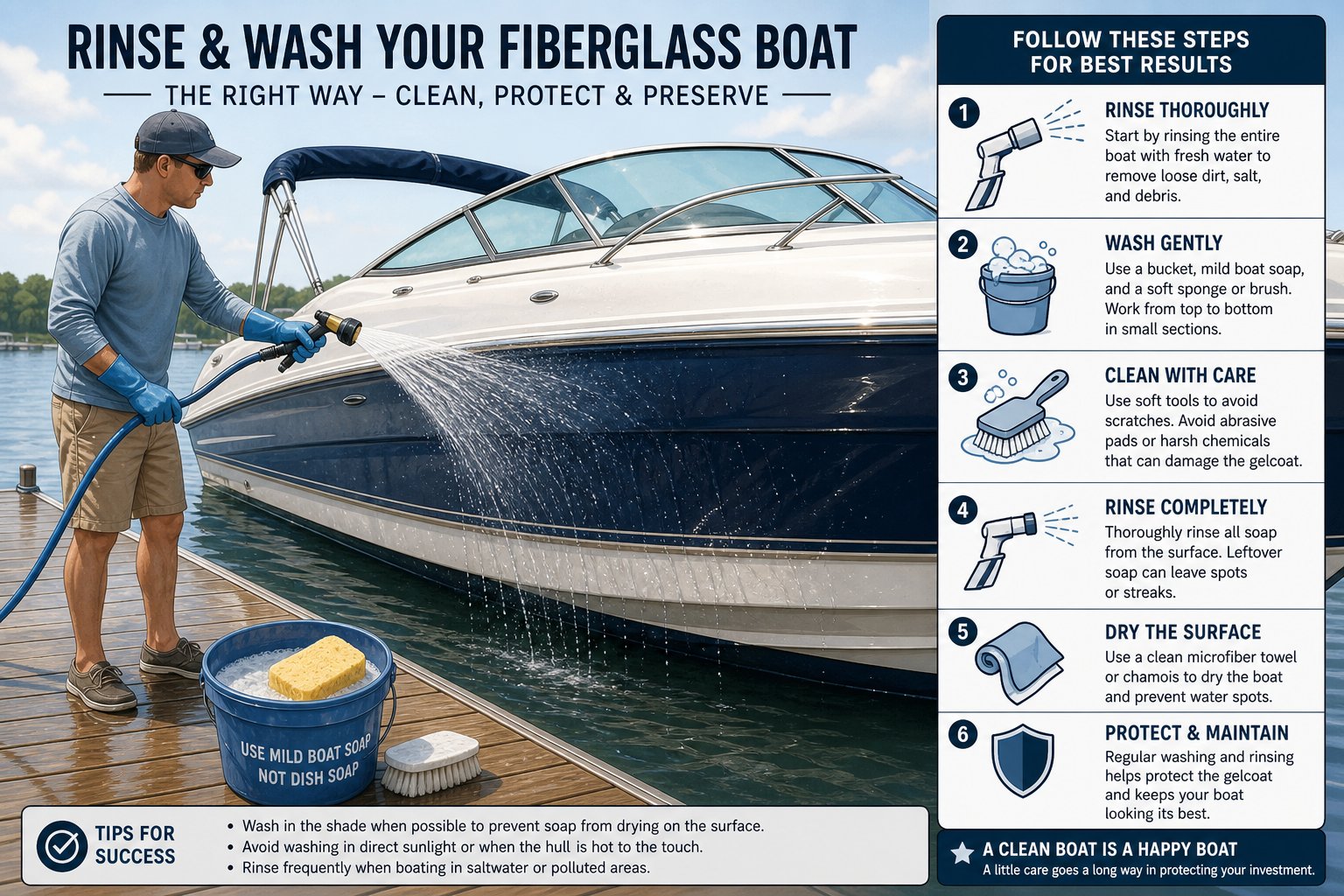
Starting with a proper freshwater rinse and using the right soap prevents scratches while making the cleaning process more effective and easier on your gelcoat.
Importance of a Pre-Rinse and Freshwater Rinse
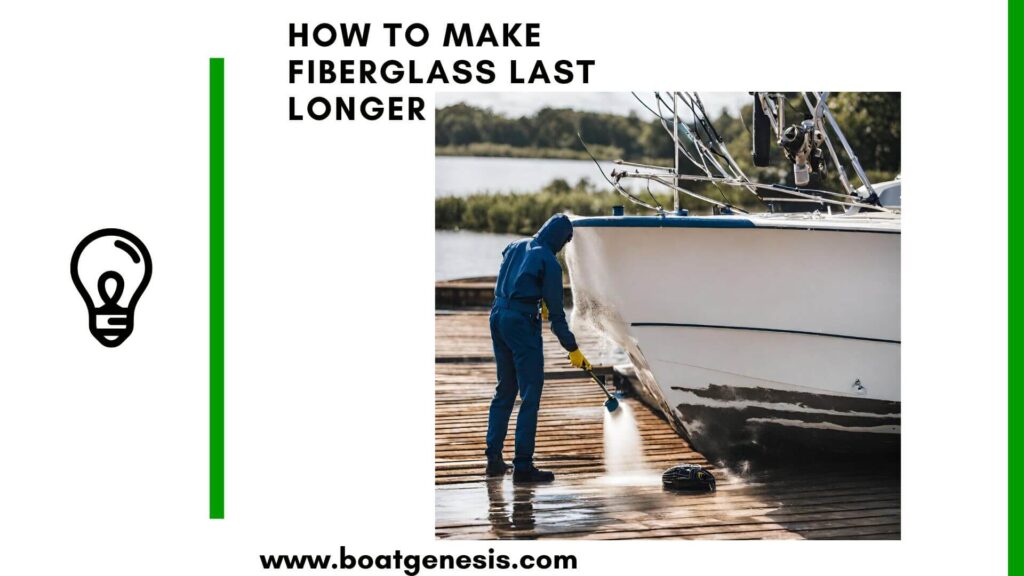
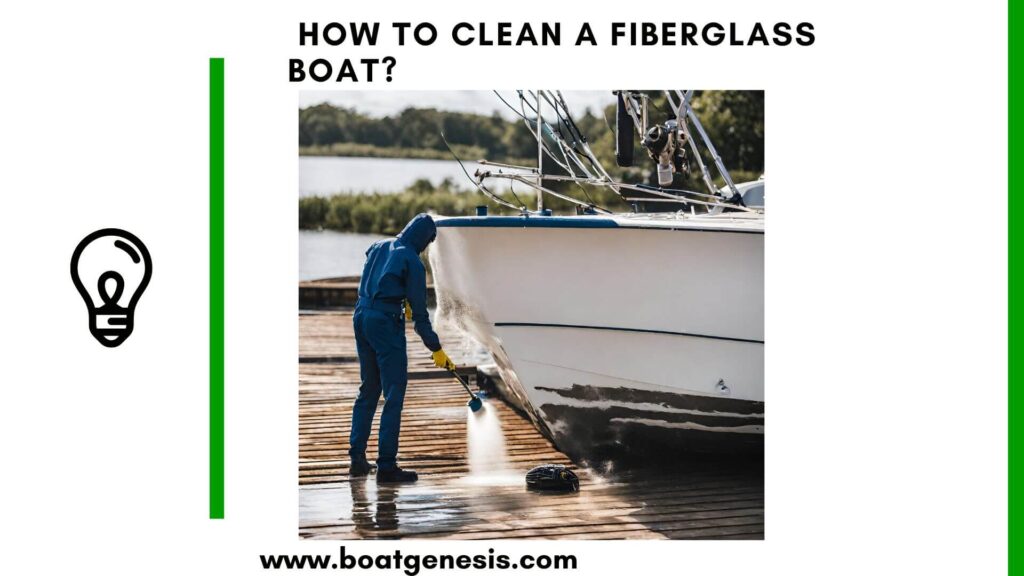
A pre-rinse removes loose debris before you start scrubbing. Salt crystals, sand, and dust sit on your boat’s surface after every trip. When you skip the rinse and go straight to washing, you drag these abrasive particles across the gelcoat with your brush or towel.
This grinding action damages the finish by creating small scratches and swirl marks. Use a hose with spray nozzle to spray down the entire boat from top to bottom. Start at the highest points and work your way down so gravity helps carry away the grime.
The freshwater rinse after washing is just as important. It removes all soap residue and any remaining salt or minerals that could leave water spots or streaks when they dry.
Selecting the Best Boat Soap
Your boat needs a pH-balanced boat soap made specifically for marine use. Regular dish soap or household cleaners strip away protective wax and can damage the gelcoat over time. A quality boat wash is formulated to break down salt, fish oils, and marine grime without removing the wax layer you applied.
Look for a concentrated formula that you can dilute according to the job. These marine soaps maintain the right pH balance to clean effectively without being too harsh. Avoid products with heavy abrasives or acidic ingredients for routine washing.
Mix the boat soap in your bucket according to the label directions. Too much soap creates excessive suds that are harder to rinse away completely.
Want to avoid costly fiberglass boat repair mistakes?
Learn how to inspect damage properly, decide when to DIY, and prevent expensive fiberglass problems before they start.
Two-Bucket Method for Minimizing Swirls
The two-bucket method keeps dirty water from going back onto your clean boat. Fill one bucket with your soapy boat wash solution and the other with clean freshwater for rinsing. When you scrub a section of the boat, dirt transfers to your brush or mitt.
Rinse your cleaning tool in the clean water bucket first to remove most of the grime. Then dip it into the soapy bucket to reload with fresh cleaning solution. This simple step stops you from spreading dirt and abrasive particles around.
Change out both buckets regularly during the cleaning process. Once the rinse bucket gets murky or the soap bucket fills with debris, dump them and refill with fresh water and soap.
Scrubbing and Washing with Tools
Use a soft scrub brush with a long handle for most fiberglass surfaces. The soft bristles clean without scratching while the long handle lets you reach the hull and deck easily. Work in small sections about four feet square at a time.
Apply your boat soap to one section and scrub using gentle circular motions. Don’t let the soap dry on the surface, especially on sunny days. Rinse each section completely with your hose before moving to the next area.
Microfiber towels work well for wiping down smaller areas or drying after rinsing. Keep a stack of clean microfiber towels handy for the final dry to prevent water spots. For textured non-skid areas, you may need a brush with slightly stiffer bristles to get into the grooves where dirt hides.
Tackling Stains, Marks, and the Waterline
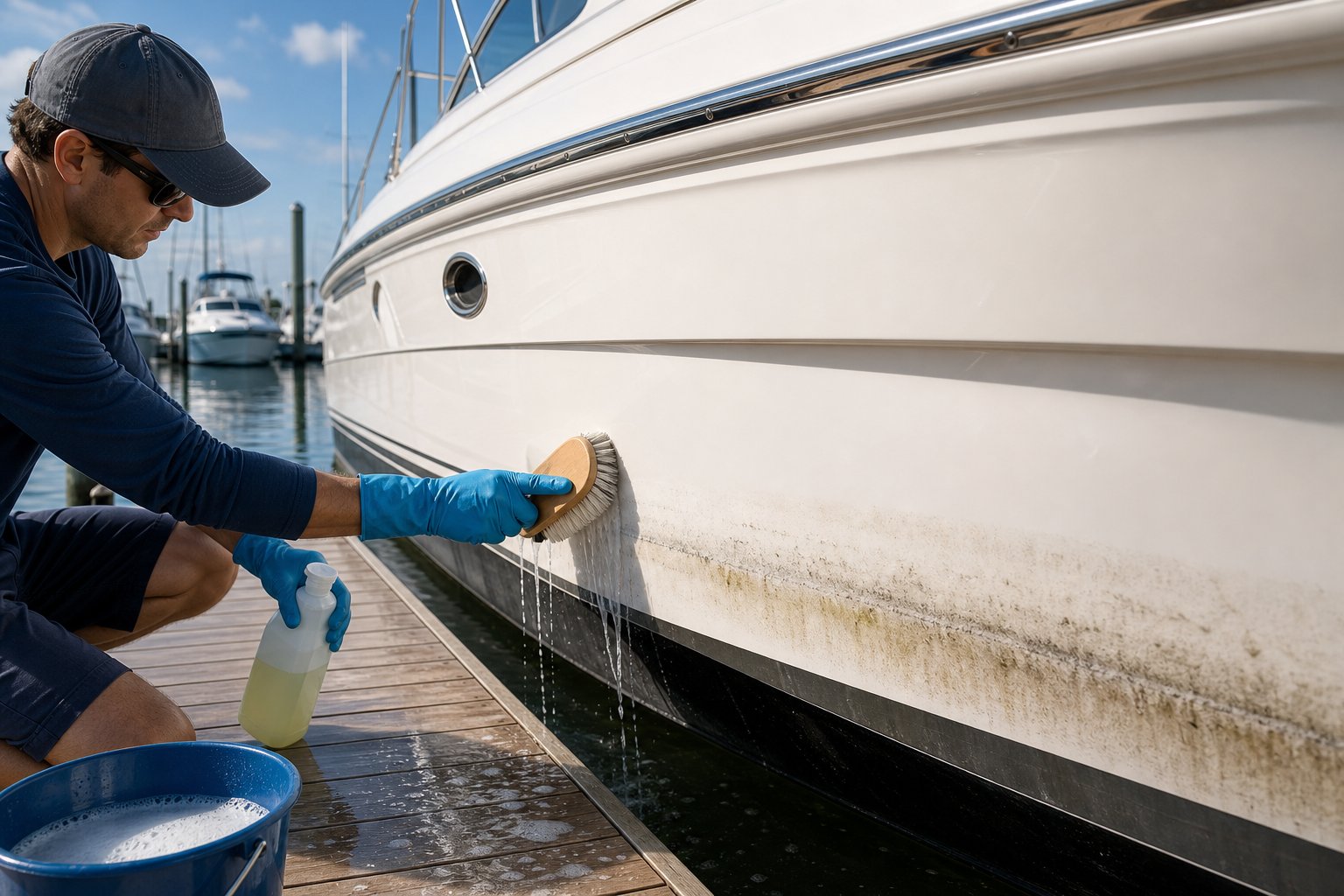
Waterline stains form from minerals, algae, oil, and scum that bake onto your boat’s gelcoat over time. These brown or yellow marks require acid-based cleaners and proper technique to remove without damaging your hull.
Addressing the Boat Mustache
The brown discoloration along your boat’s waterline is known as the boat mustache or ICW mustache. This stain comes from tannic acids in freshwater, metallic salts, algae growth, and pollution that chemically react with your fiberglass.
The stain gets darker and more embedded over time. You’ll often see it build up in layers with dirt, black dots, fuzzy growth, and greasy scum. Light brown stains are easier to remove than dark gray or black buildup.
Don’t use abrasive cleaners like Ajax or Comet on these stains. They can scratch and thin your gelcoat. The shiny outer layer of gelcoat is thin and vulnerable to damage from gritty scrubbing.
Using a Fiberglass Stain Remover
Fiberglass stain removers contain acids that dissolve the minerals and organic matter causing discoloration. Most products use oxalic acid, phosphoric acid, or hydrochloric acid as their active ingredient.
Common acid types and what they remove:
- Oxalic acid – Dissolves rust, metallic salts, and some organic stains
- Phosphoric acid – Breaks down mineral deposits and algae
- Hydrochloric acid – Removes heavy staining but has strong fumes
Apply the stain remover to your hull and let it sit for the time recommended on the bottle. This is usually between one and five minutes. Use a soft sponge or foam brush to work the cleaner into stubborn spots. Rinse thoroughly with fresh water when done.
Applying a Hull Cleaner
Hull cleaners come in four types: gels, liquids, powders, and sprays. Gel cleaners work best because they stick to vertical surfaces without running off.
Pour or brush the gel onto your waterline stain. The colored gel makes it easy to see where you’ve applied it. Wait two to three minutes before scrubbing lightly with a soft pad.
Powder cleaners mix with water to create a paste you can control. Spray cleaners cover large areas quickly but may run before they can work. Liquid cleaners are effective but harder to apply evenly on curved hull surfaces.
Always wear gloves and eye protection when using hull cleaners. Work in a well-ventilated area because acid fumes can be harsh.
DIY vs. Commercial Fiberglass Cleaners
Commercial fiberglass boat cleaners are formulated specifically for marine stains and gelcoat. They balance cleaning power with gel coat safety. Products tested by marine publications removed waterline stains in one to five minutes with minimal scrubbing.
DIY solutions using household products like vinegar or lemon juice are weaker than marine cleaners. They work on fresh, light stains but struggle with built-up discoloration. You’ll need to apply them multiple times and scrub harder.
Regular cleaning and waxing prevents deep staining and makes future cleanup easier. A well-maintained hull with good wax protection resists stain buildup better than oxidized gelcoat. Commercial cleaners give you faster results with less physical effort than homemade alternatives.
Restoring Shine: Polishing and Compounding
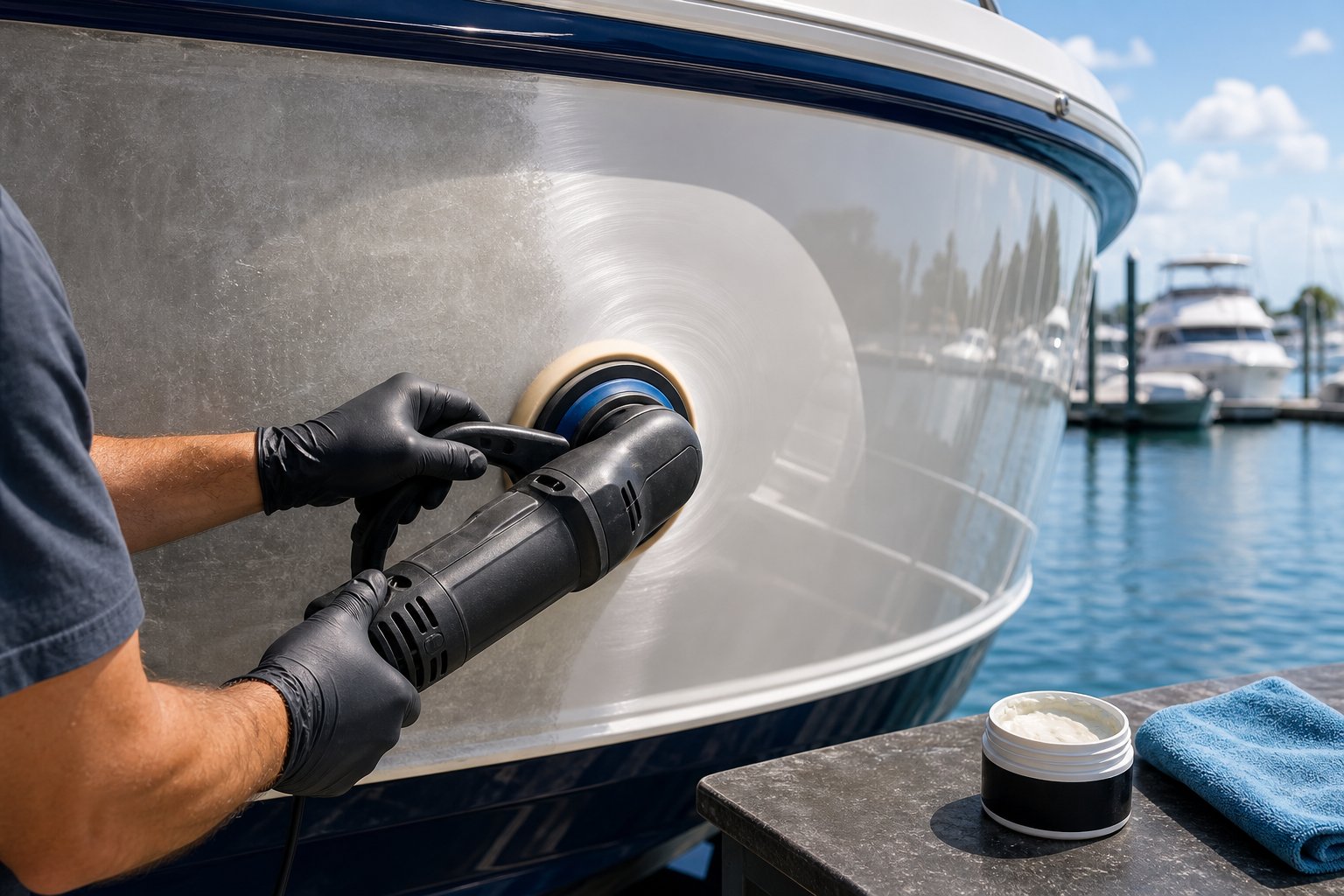
After cleaning your fiberglass boat, you may need to address oxidation and dullness with specialized products. Rubbing compounds remove heavy oxidation, while marine polish creates the final glossy finish.
When and How to Use a Rubbing Compound
A rubbing compound works best when your boat’s gelcoat looks chalky, faded, or heavily oxidized. You should use a cutting compound for severe cases and a lighter all-purpose compound for mild oxidation.
Apply the compound with a power buffer or by hand using a foam applicator pad. Work in small 2-foot by 2-foot sections to maintain control. Spread a thin layer of compound on the surface before turning on your buffer.
Use a circular motion with medium pressure if working by hand. With a power buffer, keep the pad flat against the surface and move slowly across each section. Stop when the compound turns clear and the surface feels smooth.
Important application tips:
- Work in the shade to prevent the compound from drying too quickly
- Keep the surface wet with compound during buffing
- Clean your applicator pad frequently to remove buildup
- Wipe away residue with a clean microfiber cloth before it dries
The process of restoring faded fiberglass requires patience and the right technique for your boat’s condition.
Marine Polish for Finishing Touches
Marine polish creates a protective layer and brings out a deep shine after compounding. Unlike rubbing compounds, polish contains finer abrasives that smooth minor imperfections without aggressive cutting.
Apply polish the same way you applied compound, working in small sections. Use a clean foam pad or microfiber applicator to spread a thin, even layer. Buff the polish until it hazes, then wipe it off with a soft cloth.
You can apply polish by hand or with a power buffer set to a lower speed. Most fiberglass boat care routines require two coats of polish for optimal results.
Polish also fills in tiny scratches that compounding might leave behind. Your boat should have a mirror-like finish when you’re done. Reapply polish every few months to maintain protection and shine between major cleaning sessions.
Protecting Your Boat: Waxing and Sealants
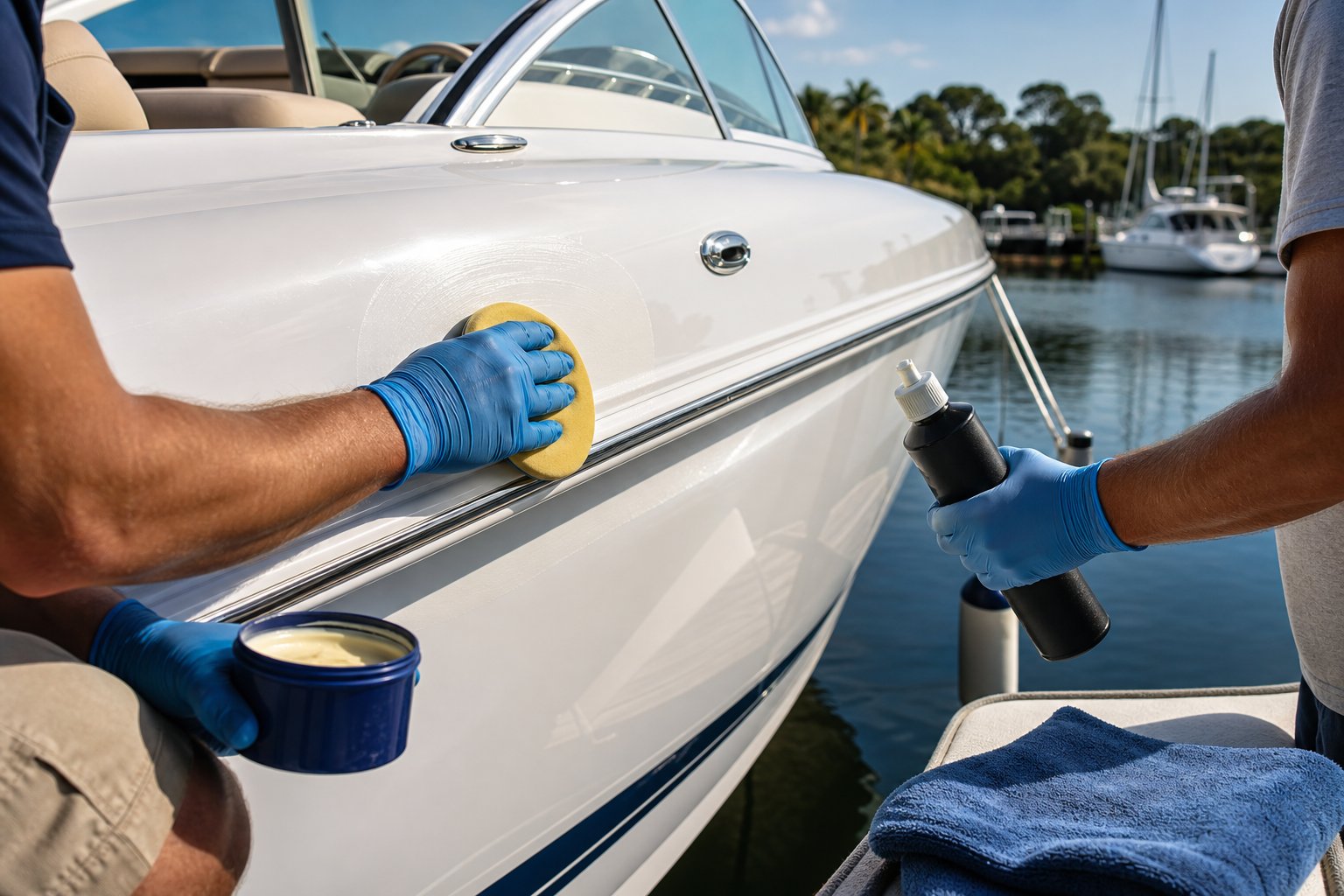
After cleaning and restoring your fiberglass boat, applying the right protective layer keeps the gelcoat safe from UV damage and makes future cleaning much easier. Marine wax and polymer sealants each offer specific advantages depending on your priorities for shine, durability, and how often you want to reapply protection.
Selecting the Right Marine Wax
Traditional marine wax contains carnauba wax, which creates a warm, deep shine that many boat owners prefer. This type of boat wax excels at bringing out rich color and gloss on your fiberglass gelcoat.
This guide helps boat owners understand fiberglass damage clearly — what matters, what doesn’t, and when repairs are truly necessary, so small issues don’t turn into expensive mistakes.
See What Every Boat Owner Should Know →The trade-off is durability. Most carnauba-based waxes last about two to three months before you need to reapply them. If you boat in harsh saltwater conditions or keep your vessel in direct sun, you might need to wax more frequently.
Paste wax requires more effort to apply but typically delivers the best shine and lets you control exactly how much product you use. Liquid wax spreads easier and works well for larger boats where time matters. Both types protect your gelcoat, so pick based on your preference for application ease versus maximum gloss.
Benefits of a Polymer Sealant
Polymer sealants bond chemically with your gelcoat rather than sitting on top like traditional wax. This creates a harder protective barrier that typically lasts six months or longer, which means less frequent applications for fiberglass boat care.
These synthetic products resist UV rays more effectively than natural wax. They also shed water better and make it harder for grime and salt to stick to your hull.
The main drawback is appearance. While polymer sealants produce a sharp, clean shine, some boaters feel they lack the warm depth of carnauba wax. You can also apply a thin coat of wax over a polymer sealant if you want both long-lasting protection and maximum gloss.
How to Apply Boat Wax for Lasting Protection
Start with a completely clean, dry surface in shade or on an overcast day. Direct sunlight causes wax to dry too quickly, making it difficult to buff and potentially leaving streaks.
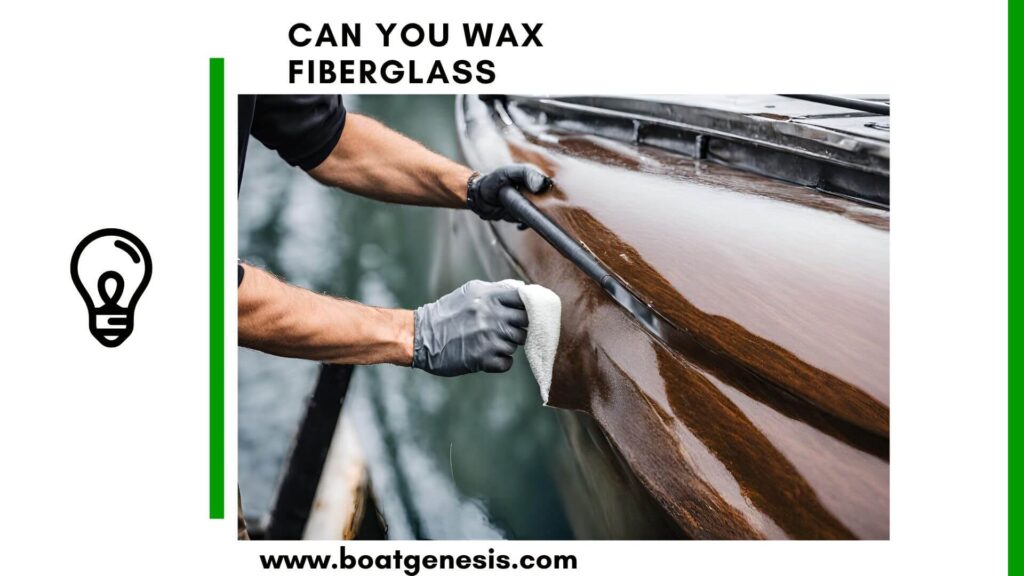
Apply a thin, even coat using a foam applicator pad or microfiber cloth. Work in small two-by-two-foot sections using circular motions. Less is more—a thick layer doesn’t protect better and just makes buffing harder.
Let the wax haze over according to the product instructions, usually five to ten minutes. Test by swiping your finger across the surface; if it leaves a clear streak, the wax is ready to buff. Use a clean microfiber towel to remove the haze with light pressure and overlapping strokes.
Apply wax or sealant every three to six months depending on the product type and your boat’s exposure to sun and salt. Regular waxing prevents oxidation by blocking the UV rays that break down gelcoat over time.
Maintaining Your Fiberglass Boat for Long-Term Results
A consistent maintenance routine keeps your fiberglass boat in top condition and protects your investment. Regular cleaning schedules, proper storage practices, and avoiding common errors will extend the life of your boat’s finish.
Recommended Cleaning Frequency
You should rinse your fiberglass boat with fresh water after every use, especially if you’ve been in saltwater. Salt deposits can quickly damage the gelcoat if left to sit on the surface.
Perform a thorough cleaning with specialized boat cleaners every two to four weeks during active boating season. This frequency prevents buildup of grime, algae, and oxidation that can permanently stain your boat.
Monthly maintenance tasks:
- Deep clean the hull with fiberglass-specific cleaner
- Inspect for scratches or damage
- Clean all hardware and fittings
- Wash and protect non-skid surfaces
Apply wax or polish to your fiberglass boat every three to six months. This protective barrier shields against UV rays and environmental damage. More frequent waxing may be needed if your boat stays in the water year-round or faces harsh weather conditions.
Storage and Ongoing Fiberglass Care
Store your boat under a quality cover when not in use to protect it from sun damage and weather. UV rays break down the gelcoat over time, leading to fading and oxidation.
Choose a well-ventilated storage location that prevents moisture buildup. Trapped moisture creates ideal conditions for mold and mildew growth on fiberglass surfaces and interior materials.
For winterization, clean your boat thoroughly before storing it for the season. Remove all water from systems and apply a fresh coat of wax for added protection during storage months.
Long-term storage checklist:
- Clean and dry all surfaces completely
- Apply protective wax coating
- Use breathable boat cover
- Elevate boat to prevent flat spots on trailer tires
- Check cover periodically for water accumulation
Inspect your fiberglass regularly for small cracks or chips. Address minor damage immediately before it spreads and requires costly repairs.
Tips for Avoiding Common Cleaning Mistakes
Never use household cleaners on your fiberglass boat’s hull. These products contain harsh chemicals that strip protective coatings and damage the gelcoat permanently.
Avoid cleaning your boat in direct sunlight. Heat causes cleaning products to dry too quickly, leaving streaks and spots that are difficult to remove.
Always rinse thoroughly after applying any boat cleaning product. Residue left on the surface can cause discoloration and attract more dirt. Use plenty of fresh water to ensure complete removal.
Common mistakes to avoid:
- Using abrasive scrubbing pads or brushes with stiff bristles
- Skipping the rinse step between cleaning and waxing
- Mixing different cleaning products together
- Pressure washing at too high a setting
Use only soft-bristle brushes and microfiber cloths on fiberglass surfaces. Hard materials create scratches that dull the finish and make future cleaning more difficult. Test any new product on a small, hidden area first to ensure it won’t damage your boat’s surface.
Frequently Asked Questions
Boat owners face specific challenges when maintaining fiberglass surfaces, from choosing safe cleaners to restoring faded gelcoat. These common questions address the practical steps needed to keep your hull clean, protected, and looking its best.
What is the best way to clean and protect a fiberglass boat hull?
The most effective approach combines regular washing with proper protection products. Start by rinsing your hull with fresh water after every outing to remove salt, dirt, and organic buildup before it bonds to the surface.
For routine cleaning, use a pH-neutral marine soap with a soft microfiber mitt or wash pad. Work from top to bottom, washing the deck first and saving the dirtiest waterline areas for last. This prevents dragging grime across clean sections.
After washing and drying the hull, apply a marine wax or polymer sealant to create a protective barrier. Fiberglass boat hulls need protection every three to six months depending on sun exposure and how often you use the boat. The wax layer slows UV damage and makes future cleaning easier because dirt releases before it can stain the gelcoat.
Inspect your hull during each cleaning session for chips, cracks, or blisters. Finding these problems early prevents them from spreading into more expensive repairs.
Which cleaners are safe to use on fiberglass without dulling the gelcoat?
Marine-specific soaps formulated for gelcoat surfaces are your safest choice for regular cleaning. These pH-balanced products remove salt and grime without stripping protective wax or drying out the finish.
Avoid household dish soaps and kitchen degreasers. They contain harsh chemicals that remove wax and can dull your gelcoat over time with repeated use.
For waterline stains and mineral deposits, use dedicated hull cleaners designed for fiberglass. Oxalic acid products work well on rust stains and yellowing, while lime removers handle hard calcium buildup. Apply these stronger cleaners to wet surfaces in small sections, agitate with a soft brush, and rinse thoroughly.
Never use bleach, undiluted acids, or abrasive kitchen scrubbers on your hull. These products can discolor the finish, leave permanent scratches, and damage nearby vinyl or hardware.
How can tough oxidation be removed from fiberglass to restore shine?
Oxidized gelcoat requires mechanical refinement because the damaged outer layer must be physically removed. Start with the least aggressive approach that will work for your hull’s condition.
For light to moderate oxidation, try a one-step cleaner wax or light polish applied by hand or with a dual-action polisher. If the gelcoat is heavily chalky and leaves residue on your hand, you’ll need a marine rubbing compound on a foam cutting pad.
Work in two-foot square sections using overlapping passes. Keep your pad clean and inspect your progress under good lighting after each pass. Removing oxidation from fiberglass boats requires stopping once gloss returns to avoid removing more material than necessary.
After compounding, follow with a finer polish to restore clarity and remove any haze. Finish by applying wax or sealant to protect the newly exposed gelcoat from UV damage.
Dual-action polishers are safer for most boat owners because they’re less likely to overheat edges or create swirl marks compared to rotary machines.
What methods work best to remove yellowing and waterline stains from the hull?
Waterline stains typically come from multiple sources that need different treatments. Organic scum from algae creates brown or yellow bands, while mineral deposits leave white crusty buildup.
For yellow tannin stains and rust marks, use an oxalic acid-based hull cleaner. Wet the hull first, apply the product in manageable sections, and don’t let it dry on the surface. Agitate with a soft brush or microfiber pad, then rinse completely.
Calcium and lime removers designed for marine use handle hard white deposits better than general cleaners. Gel formulas work well on vertical surfaces because they cling longer without running off.
After removing stains, wash the section again with boat soap to ensure no cleaner residue remains. If stains return quickly, check for underlying problems like leaking metal fittings or corroded sacrificial anodes.
How can a homemade cleaner be made that won’t damage fiberglass or hardware?
A simple mixture of white vinegar and water can handle light cleaning and mineral deposits safely. Mix equal parts distilled white vinegar and fresh water in a spray bottle for routine spot cleaning.
For a gentle all-purpose wash, combine one cup of mild liquid soap with one gallon of warm water. This solution removes light dirt without the harsh degreasers found in household detergents.
Baking soda mixed with water into a paste works well for scrubbing non-skid surfaces and isolated stains. Apply the paste, let it sit for a few minutes, scrub gently, and rinse thoroughly.
Keep in mind that homemade solutions have limitations. They won’t match the effectiveness of marine-specific products for heavy oxidation, stubborn waterline staining, or protective waxing. For serious cleaning tasks, commercial marine products are worth the investment.
When should waxing or polishing be done, and what products provide the best finish?
Polish only when your gelcoat shows oxidation, fading, or light scratches that washing alone won’t remove. Polishing removes a thin layer of material to restore clarity, so you shouldn’t do it more often than necessary.
Wax should be applied after the hull is completely clean and any oxidation has been corrected through polishing. Apply wax or sealant at least once or twice per season, or every three to six months for boats kept in the water year-round.
Carnauba-based marine waxes work well on light-colored hulls and boats stored under cover. Polymer sealants generally last longer and resist water spotting better on dark hull sides. Both types create a sacrificial layer that protects against UV damage and makes dirt release easier during washing.
Apply thin, even coats using a foam applicator pad. Let the product haze according to the label instructions, then buff with clean microfiber towels. Thick coats don’t provide better protection and only make removal harder.
Never apply wax to non-skid deck surfaces, through-hull fittings, or areas that will receive repairs soon. The residue interferes with adhesion and creates

Warren is the founder of BoatGenesis and brings practical experience in fiberglass boat repair, marine equipment testing, and powerboat building. He has worked on a range of repair and restoration projects and now focuses on creating clear, research-based guides to help boat owners avoid costly mistakes and make smarter maintenance decisions. Learn more about Warren.