Fiberglass hull damage sneaks up on any boat owner—sometimes it’s a careless docking, sometimes it’s underwater debris, and sometimes it’s just the grind of time. When you notice cracks, scratches, or soft spots, your mind probably jumps straight to, “How much is this going to set me back?”
Expect to pay anywhere from $500 to $1,000 for minor gelcoat repairs and $2,000 to $5,000+ for heavy-duty structural work. The final price depends on the size of the damage, how complicated the fix is, where you live, and whether you hire a pro or try to DIY.
Some tiny scratches might only cost $75 to $200, but a full-blown transom replacement? That could run $2,500 to $8,000.
Understanding what actually drives these costs helps you budget and avoid nasty surprises. Some jobs are totally doable at home, but when it comes to structure, you really do need a pro.
It’s not just about saving cash—it’s about not sinking your boat, literally or figuratively.
Key Takeaways
- Minor gelcoat repairs: $500 to $1,000; major structural damage: $2,000 to $5,000 or more
- Labor runs $75 to $150 per hour; material costs depend on quality and type
- DIY can save you money on small stuff, but leave structural repairs to professionals
- Key Takeaways
- Extent of Fiberglass Damage
- Type and Location of the Repair
- Labor and Materials
- Professional vs. DIY Repairs
- Gelcoat Scratches and Chips
- Cracks, Gouges, and Holes
- Osmotic Blistering and Delamination
- Core and Structural Issues
- Material Costs: Fiberglass, Gelcoat, and Resin
- Labor Charges and Shop Rates
- Additional Services and Hidden Fees
- Insurance and Warranty Considerations
- Small Gelcoat Touch-Ups
- Moderate Fiberglass Hull Repairs
- Large Structural and Hull Projects
- When DIY Makes Sense
- Required Tools and Kits
- Common Mistakes to Avoid
- Evaluating Shop Experience and Reputation
- Getting Estimates and Comparing Services
- Ensuring Quality and Longevity of Repairs
Factors Affecting Fiberglass Hull Repair Costs
Your repair bill depends on how bad the damage is, where it’s located, and who’s doing the work. Materials, labor, and the complexity of the job all come into play.
Extent of Fiberglass Damage
Bigger, deeper hull damage always means higher costs. Minor gelcoat scratches and chips usually run $500 to $1,000 per spot.
Surface scratches only mess with the gelcoat, not the structure. These are usually the cheapest to fix.
Deep gouges that cut into the laminate cost more—think $500 to $1,500 for every one to two square feet.
If you’re dealing with holes, cracks through several layers, or busted stringers, brace yourself. Major repairs can hit $2,000 to $5,000 or more.
Common damage repair ranges:
- Small gelcoat chip: $75 to $150
- Medium gouge (1-3 inches): $150 to $400
- Small hole (under 6 inches): $400 to $1,000
- Large hole (6-12 inches): $800 to $2,500
Type and Location of the Repair
The spot on your boat matters. Below-waterline fixes need perfect waterproofing, so they’re pricier than above-waterline jobs.
Transom repairs are notorious wallet-busters. Partial jobs are $2,000 to $5,000, but full replacements can climb to $15,000.
If the damage is tucked in a tight corner or on a curve, expect to pay more. Techs need extra time in those awkward spots.
Osmotic blistering is its own headache. You’ll pay $150 to $300 per foot of boat length for that, mostly due to grinding and barrier coats.
For cored hulls, core damage costs $100 to $300 per square foot. That’s because the repair means opening up the hull, replacing soggy core material, and putting it all back together.
Labor and Materials
Most shops charge $75 to $150 an hour for labor. Where you live and the shop’s reputation can bump this up or down.
Marine-grade stuff isn’t cheap, but it lasts. Polyester resin is the go-to for above-waterline repairs if you’re on a budget.
Epoxy resin costs two or three times as much as polyester, but it’s way better at keeping out water. For below-waterline repairs, it’s honestly worth the splurge.
Material costs:
- Quality gelcoat paste: $50 to $100 per quart
- Fiberglass cloth: $5 to $15 per yard
- Polyester resin: $30 to $50 per gallon
- Professional repair kit: $75 to $150
Complex fixes need more time for every layer to cure. If you rush it, the repair won’t hold—so patience (and more labor hours) is part of the price.
Want to avoid costly fiberglass boat repair mistakes?
Learn how to inspect damage properly, decide when to DIY, and prevent expensive fiberglass problems before they start.
Professional vs. DIY Repairs
DIY repairs save you labor costs, but you’ll need to buy your own materials and tools. A basic gelcoat kit goes for $30 to $75.
For minor scratches, you can get away with $5 to $15 per foot in materials. Chips under an inch? Maybe $25 to $50 in DIY supplies.
The upside of hiring a shop: they guarantee the work and can match colors like pros. Most shops will give you a free estimate before you commit.
But if the damage is structural, don’t wing it. It’s not worth risking your boat’s safety. Fixing a botched DIY job often costs more than just hiring someone right away.
Types of Fiberglass and Gelcoat Damage
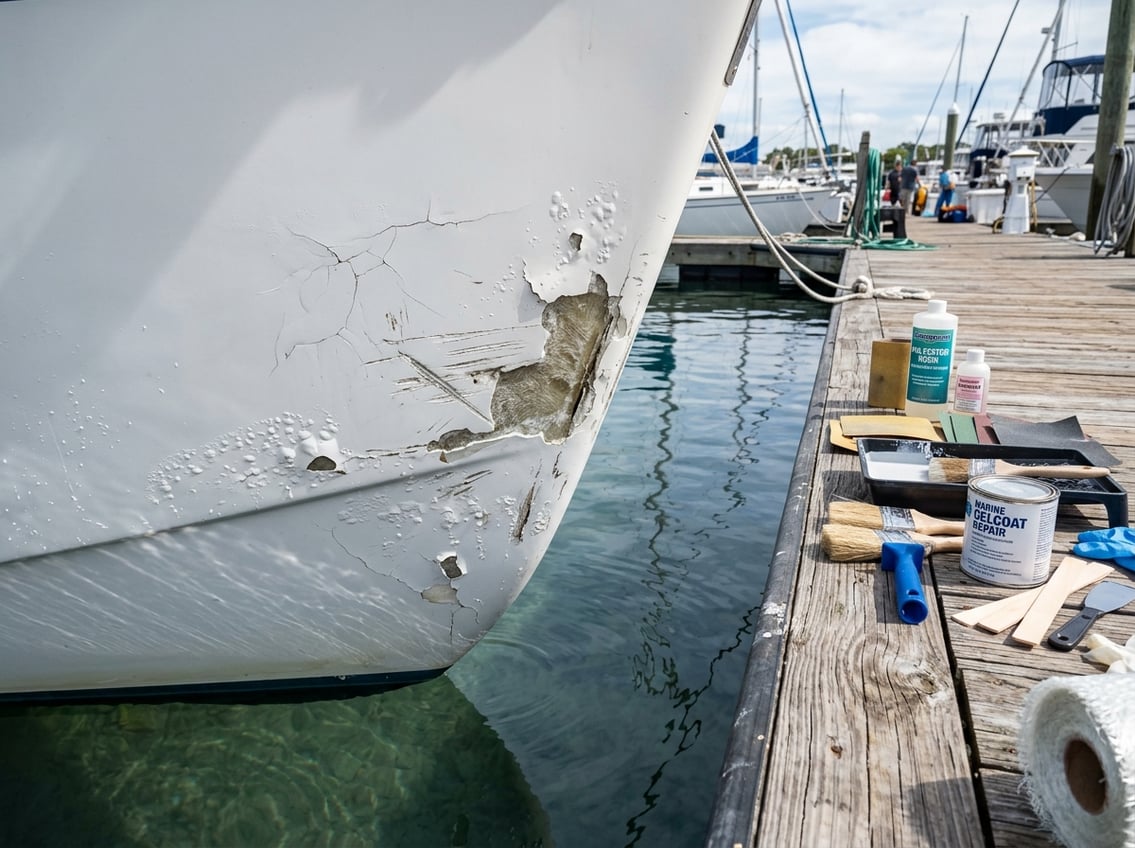
Boat hull damage falls into a few clear buckets—surface gelcoat problems and deeper structural issues. Knowing which is which helps you gauge how tough (and expensive) the repair will be.
Gelcoat Scratches and Chips
Minor gelcoat scratches only mess with the outer hull layer, not the fiberglass laminate underneath. These usually show up as scuffs, dock rash, or shallow marks that don’t go deep.
If the scratch is chalky or white and not showing fiberglass strands, it’s probably just gelcoat. Spider cracks—a web of tiny lines—are another common annoyance.
Common gelcoat damage includes:
- Light scratches from bumping the dock
- Chips from hitting floating junk
- Spider cracks from age or flexing
- Scuffs and minor abrasions
Gelcoat chips look like little divots but don’t expose the fiberglass. Fixing these means using gelcoat paste with hardener, color-matched to your boat. Not rocket science, but it takes a steady hand.
Cracks, Gouges, and Holes
If damage goes through the gelcoat into the fiberglass, you’re looking at a bigger job. Deep gouges show the woven fiberglass cloth that gives your hull strength.
Cracks that reach the laminate can spread if ignored. Each damage type takes a different fix, and that impacts both cost and complexity.
Damage severity levels:
| Damage Type | Depth | DIY Friendly |
|---|---|---|
| Surface gouge | Gelcoat only | Yes |
| Deep crack | Into laminate | No |
| Small hole (under 3″) | Through hull | Maybe |
| Large hole (3″+) | Through hull | No |
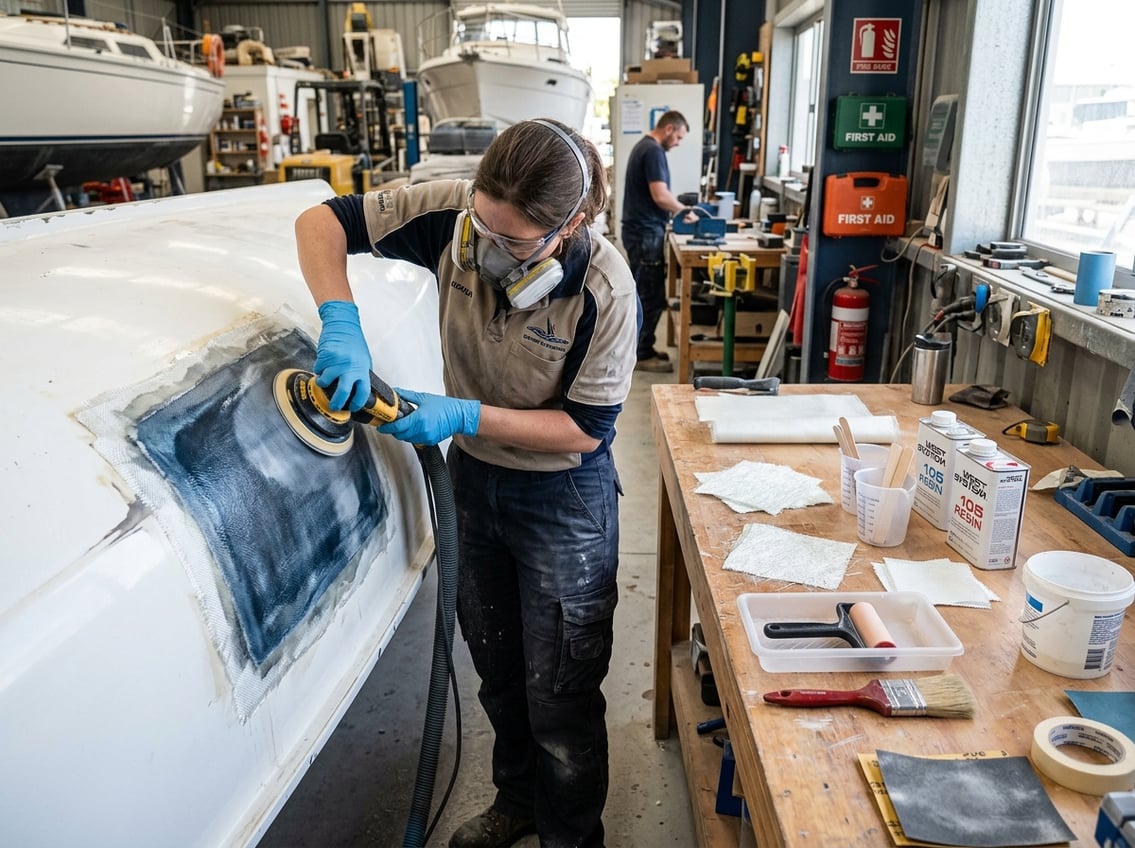
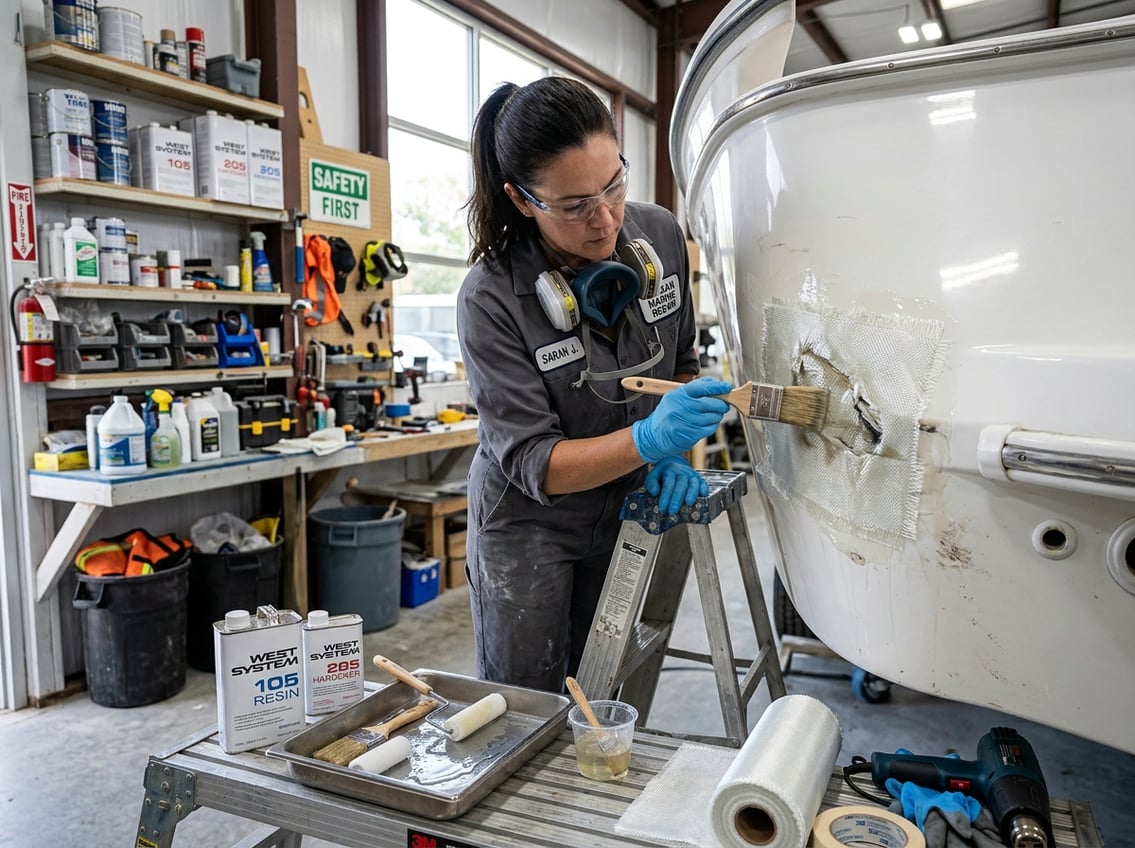
If you find a hole, you’ll need to layer up fiberglass cloth and resin to rebuild the hull before finishing with gelcoat. For holes bigger than a golf ball, you’ll need several layers—each one adds to the time and price.
Osmotic Blistering and Delamination
Osmotic blisters pop up when water sneaks past the gelcoat and gets trapped between fiberglass layers. The result? Bubbles filled with acidic gunk that just keep growing.
Sometimes you’ll see a few small blisters, sometimes the whole hull below the waterline is covered. Severe cases mean grinding out the damage and rebuilding with fresh barrier coats.
Delamination happens when fiberglass layers separate—usually from water or a hard knock. If you tap the hull and hear a hollow thud instead of a sharp sound, that’s a warning sign.
This really weakens the hull and jacks up repair costs if you let it go. Water trapped between layers keeps breaking down the resin and spreading the damage further.
Core and Structural Issues
Structural damage hits the big stuff—stringers, transoms, deck cores. You’ve got to cut through the outer hull to get at these, which is a major job.
If your transom is rotten from water or engine stress, you’ll need to remove and rebuild it with marine plywood or composite. Same goes for floor and stringer repairs—lots of labor, lots of hours.
Core rot sets in when foam or balsa cores soak up water and break down. You’ll feel soft spots underfoot or see flex where it should be stiff.
Critical structural areas:
- Transom (where the motor mounts)
- Stringers (long support beams)
- Deck core (the sandwich inside your deck)
- Hull-to-deck joint
These repairs are expensive because they mean tearing out big sections, replacing the core, and relaminating the hull. You really need a pro for this stuff—cutting corners here isn’t worth the risk.
Cost Breakdown: Materials, Labor, and Additional Expenses
Repairing a fiberglass hull hits you in three main areas: materials, labor, and extra expenses that sneak up fast. If you know what goes into each part, you’ll have a better shot at budgeting and dodging surprises when the bill lands.
Material Costs: Fiberglass, Gelcoat, and Resin
Basic gelcoat repair kits usually run $30 to $75. You get gelcoat paste, hardener, mixing cups, and spreaders—enough for small surface jobs.
Bigger damage? You’ll need more. Fiberglass cloth costs $5 to $15 per yard, and polyester resin is $30 to $50 per gallon. Full fiberglass repair kits with everything included run $75 to $150.
High-end materials don’t come cheap, but they’re worth it. Expect to pay $50 to $100 per quart for quality gelcoat, and you might need $15 to $30 in color tints to match your hull. Sandpaper (all those grits) adds $20 to $40.
Honestly, cheap materials are a false economy. Low-end gelcoat yellows or chalks, and you’ll be back fixing it again sooner than you’d like.
Labor Charges and Shop Rates
Shops usually charge $75 to $150 per hour depending on where you are and their skill level. Coastal shops tend toward the high end.
Your labor cost depends on how bad the damage is:
This guide helps boat owners understand fiberglass damage clearly — what matters, what doesn’t, and when repairs are truly necessary, so small issues don’t turn into expensive mistakes.
See What Every Boat Owner Should Know →- Minor gelcoat scratch: $75 to $200
- Chip repairs: $50 to $150 per chip
- Small hole (2-3 inches): $200 to $500
- Medium hole (football-sized): $500 to $1,500
- Large structural repairs: $1,500 to $5,000+
Transom replacement comes in at $2,500 to $8,000. Swapping stringers costs $2,000 to $6,000. Floors? That’s $3,000 to $10,000 or more—yikes.
Complex jobs like engine rebuilds get billed by the hour, plus flat rates for certain parts. Always get a few quotes—prices jump all over the place.
Additional Services and Hidden Fees
Shops often tack on a 25% to 50% markup on materials for sourcing, handling, and waste. That markup can hide in your estimate if you’re not careful.
They’ll bill diagnostic time separately from repairs. Shops need to see the real damage before quoting you. Color matching for visible spots takes extra time and skill, and that’ll show up on your bill, too.
If the shop travels to you, expect travel fees. Below-waterline repairs often mean hauling the boat, which adds hundreds—or thousands. Some repairs need special equipment rentals, and you’ll foot that bill as well.
Insurance and Warranty Considerations
Boat insurance often covers fiberglass damage from accidents. Check your deductible and coverage before you start—sometimes the deductible is higher than the repair for minor stuff.
Most professional shops offer warranties from 90 days to a year. That covers their workmanship, not new damage. Get the warranty details in writing before you sign off.
DIY repairs usually void your boat’s warranty. Material makers might offer limited warranties on gelcoat and resin, but only for defects—not if you mess up the application.
Typical Price Ranges for Common Repairs
Fiberglass boat repair costs swing wildly depending on how bad the damage is and how complicated the fix gets. Quick gelcoat work starts at $75. Full-on structural hull repairs? You might be looking at $10,000 or even more.
Small Gelcoat Touch-Ups
Minor gelcoat scratch repair usually runs $75 to $200 with a pro. These fixes handle scratches, scuffs, and chips that don’t cut into the fiberglass itself.
If you want to do it yourself, plan to spend $30 to $75 on a basic kit. That gets you gelcoat paste, hardener, cups, and spreaders.
Single chip repairs cost $50 to $150 each at a shop. Spider cracks and hairline crazing fall in here, too. Labor for these cosmetic jobs runs $75 to $150 per hour.
Costs stay low because these are quick, light repairs. You’re mostly paying for someone’s eye for color-matching and a finish that blends in nicely.
Moderate Fiberglass Hull Repairs
Moderate hull repairs hit $500 to $1,000 per area just for labor. Small holes under 3 inches? Expect $200 to $500 at a shop.
Football-sized holes cost $500 to $1,500. You’ll need fiberglass cloth, resin, and a few layers to get the structure back in shape.
A DIY fiberglass repair kit sets you back $75 to $150. If you want pro-grade materials, you’ll spend more—$50 to $100 per quart for gelcoat and $30 to $50 per gallon for resin.
Surface delamination and deeper gouges that hit the laminate fall into this range. You’ll need both the structural fix and gelcoat work to finish the job right.
Large Structural and Hull Projects
Major repairs start at $1,500 and can easily top $5,000. Transom replacement runs $2,500 to $8,000—it’s a big job with hardware removal and rebuilding the core.
Stringer replacement costs $2,000 to $6,000. Floor replacement can hit $3,000 to $10,000 or more. These require gutting interior components.
Big cracks, fractures, or below-waterline hits mean you need real expertise to keep things watertight. Hourly shop rates apply, but it’s the total hours that kill you.
Major hull damage from collisions or running aground can push fiberglass repair into five figures. These jobs need engineering know-how, special tools, and weeks—sometimes months—of labor.
DIY Fiberglass Hull Repair: Pros, Cons, and Cost Savings
If you’re handy, fixing fiberglass yourself can save you hundreds on small cosmetic jobs. But structural repairs? That’s a whole different ballgame—best left to the pros. The trick is knowing your limits and having the right supplies ready.
When DIY Makes Sense
You can tackle surface gelcoat repairs if the damage is just on the outer layer. Small scratches, chips, and dock rash are fair game for DIY. Materials cost $50–$200, versus $100–$400 for a pro.
Buffing and polishing can fix light gelcoat scratches that haven’t hit fiberglass. Chips under an inch? A repair kit does the trick. Spider cracks are doable, but if you don’t fix the cause, they’ll likely return.
Don’t try to fix deep gouges or anything structural yourself. If the fiberglass laminate is exposed, call in a pro. Core damage means cutting out and rebuilding the hull—definitely not a beginner job. Anything below the waterline must be watertight, and that’s tough without experience.
Required Tools and Kits
For basic gelcoat fixes, grab an orbital buffer, wet/dry sandpaper (several grits), rubbing compound, and polish. You’ll need color-matched gelcoat paste, masking tape, and gloves, too.
If you’re patching deeper damage, add these:
- Epoxy or polyester resin with hardener
- Fiberglass cloth or mat (pick the right weight)
- Mixing cups and stir sticks
- Acetone for cleaning and prep
- Dust mask and safety glasses (you’ll be grinding)
Minor fixes usually cost under $500 in materials. A full repair kit is $75–$150 and covers most needs. Pro-grade stuff costs more but gives you a better finish.
Common Mistakes to Avoid
Color matching is a pain. Your hull’s gelcoat fades in the sun, so new gelcoat rarely matches, even if you buy the same color. You won’t know how it’ll look until it’s cured, which is kind of annoying.
People often slap on gelcoat too thick. You need to build it up in thin layers and let each cure. Rush it, and you’ll get soft spots or a repair that fails.
If you don’t prep the surface right, repairs won’t stick. Clean the area, sand it well, and don’t skip the acetone wipe—leftover gunk kills adhesion.
Bad conditions ruin repairs, too. Resin cures differently depending on temperature and humidity. Don’t work in direct sun, under 60°F, or when it’s muggy. Honestly, a controlled workspace makes all the difference.
Choosing a Professional Boat Repair Service
Picking the right shop for fiberglass hull work? Look at their past projects, compare detailed quotes, and make sure they use materials that actually last. Sometimes, it’s worth paying a bit extra for peace of mind.
Evaluating Shop Experience and Reputation
Try to find shops that focus on fiberglass boat repair, not just general marine stuff. Ask how long they’ve been fixing hulls and which types of boats they usually see in the shop.
Dig into online reviews—Google, boating forums, wherever folks share their experiences. Look for comments about workmanship quality and whether the repairs actually lasted.
If you can, ask for references from people who had similar damage fixed. A reputable shop won’t hesitate to connect you with past clients.
Check if the technicians have any certifications or manufacturer training. Marine composite certifications usually mean the crew knows their way around proper layup techniques and solid repair methods.
If you get the chance, swing by the shop. A place that’s clean, organized, and ventilated—with good equipment—usually signals they care about their work.
Getting Estimates and Comparing Services
Try to get at least three written estimates before you decide. Each quote should spell out labor hours, materials, and extras like painting or bottom work.
Make sure the estimate tells you what resin they’ll use and how they’ll handle color matching for gelcoat repair. Good shops will talk you through how they blend new gelcoat with your old, maybe sun-faded, hull.
Ask if the estimate covers prep work, fairing, and finishing. Some shops only quote the patch job and tack on the rest later—kind of sneaky, honestly.
Compare hourly labor rates, but don’t just chase the lowest price. Shops charging $75 to $150 per hour might reflect real differences in skill or material quality. Sometimes you get what you pay for.
Ask how long the repair will take. If they rush the fiberglass work and skip proper curing time between layers, you could end up with a mess that fails way too soon.
Ensuring Quality and Longevity of Repairs
Ask what warranty or guarantee comes with the repair. Most professional shops stand behind structural work for at least a year or two—if they don’t, that’s a red flag.
Check that they use marine-grade materials designed for your environment. Saltwater boats need epoxy resins and vinylester barriers, which freshwater boats might not.
Get specifics about their layup schedule for structural repairs. They should apply multiple layers of cloth, making sure each layer is fully wet-out and cured before moving on.
See if they’ll sand and blend the repair area to match the hull. Good finishing work makes repairs nearly invisible and helps keep water out.
Ask about their prep process for below-waterline damage. These spots must be completely watertight and usually need extra barrier coats. If they seem vague here, that’s worth questioning.

Warren is the founder of BoatGenesis and brings practical experience in fiberglass boat repair, marine equipment testing, and powerboat building. He has worked on a range of repair and restoration projects and now focuses on creating clear, research-based guides to help boat owners avoid costly mistakes and make smarter maintenance decisions. Learn more about Warren.