Understanding fiberglass boat repair cost is essential for boat owners who want to budget for maintenance, repairs, or restoration projects
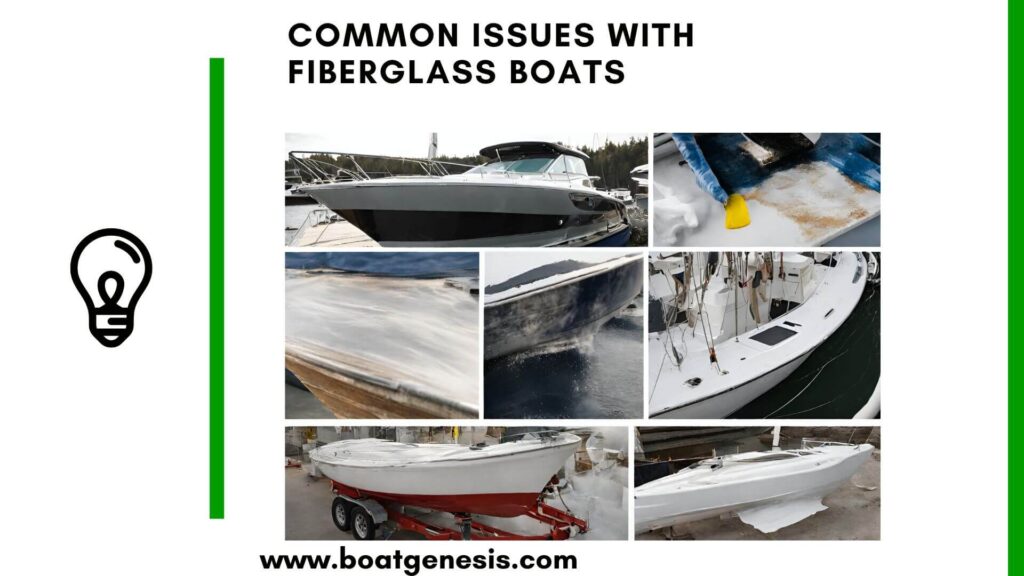
Fiberglass damage on your boat can happen from normal use, accidents, or just age creeping up.
Fiberglass boat repair costs usually run from $500 to $1,000 or more per damaged area for minor gelcoat repairs. If you’re dealing with major structural work, expect $2,000 to $5,000 or more.
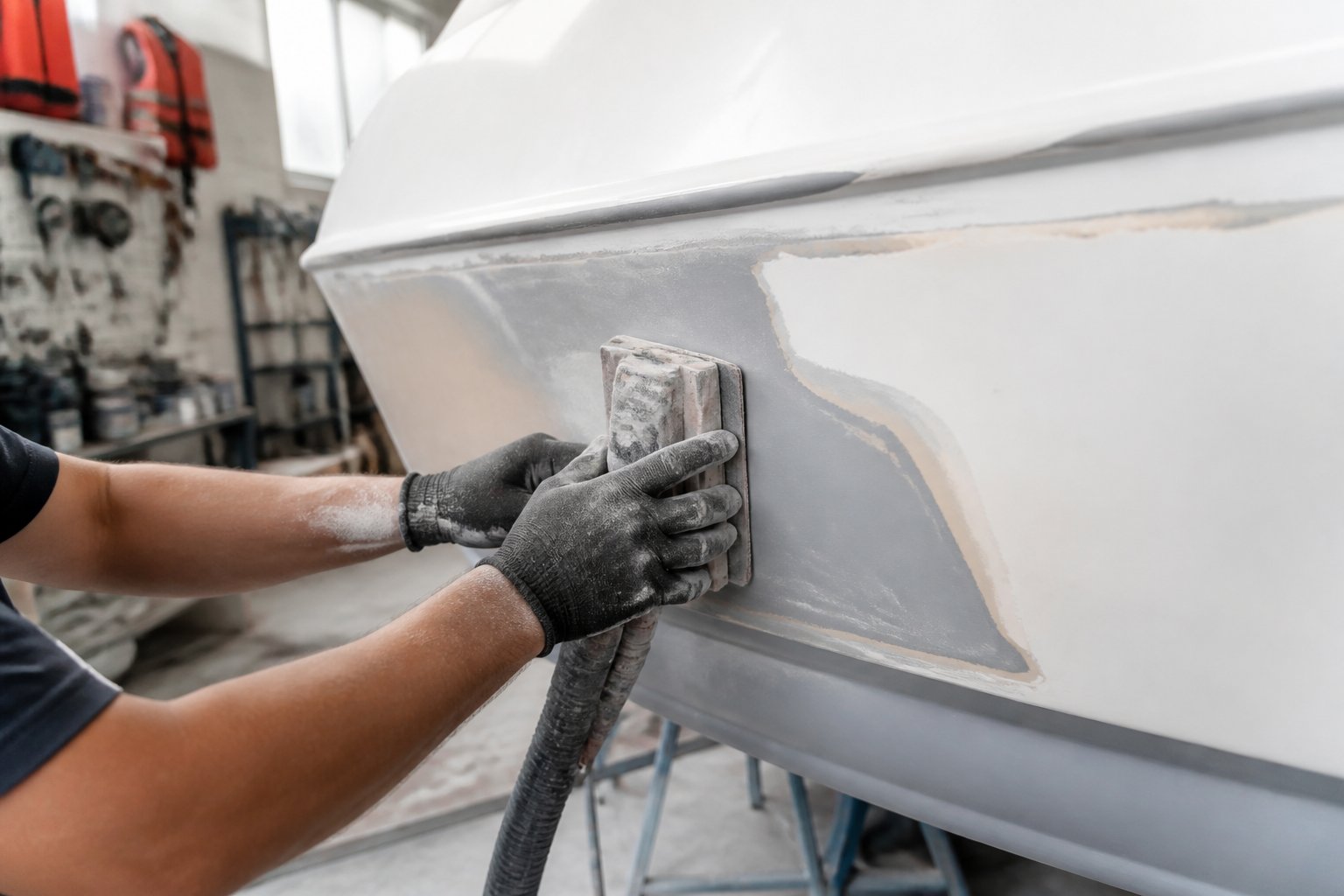
The price you end up paying depends on a bunch of factors. The size of the damage matters a lot, and there’s a big difference between surface fixes and deeper structural repairs.
Your location, the shop you pick, and whether you do it yourself all play a role in the total cost. There’s no single answer, which can be kind of frustrating.
If you understand what drives fiberglass repair pricing, it’s easier to budget and make smarter calls. Small jobs can be DIY-friendly, but big repairs almost always need a pro.
Knowing the basics helps you avoid overpaying and keeps your boat in decent shape—without draining your wallet.
Key Takeaways
- Repair costs can swing a lot—minor fixes often stay under $1,000, but major structural work easily tops $5,000
- DIY repairs save money on small stuff, but you’ll want a pro for complex or structural repairs
- Labor, materials, boat size, and extras like painting or blister treatment all add up in your final bill
- Key Takeaways
- Gelcoat Scratches and Chips
- Spider Cracks and Surface Issues
- Osmotic Blistering and Delamination
- Major Structural Damage
- Repair Complexity and Extent
- Labor Hours and Technician Expertise
- Materials and Resin Quality
- DIY Repair Kits and Material Expenses
- Professional Assessment and Shop Rates
- Fiberglass Cloth and Laminates
- Gelcoat, Resins, and Fillers
- Influence of Boat Size and Location
- Structural Reinforcement and Advanced Repairs
- Damage Evaluation and Measurement
- When to Seek a Professional Assessment
- What factors most affect the price of fixing hull damage on a fiberglass boat?
- How much does a typical gelcoat scratch or small chip repair usually cost?
- What is the average cost to repair a crack or hole in a fiberglass hull?
- How do repair shop labor rates and location influence the final price estimate?
- When is it more cost-effective to pay for professional repairs instead of using a DIY repair kit?
- How can I get an accurate repair estimate, and what details should I provide to the shop?
Types of Fiberglass Damage and Their Costs
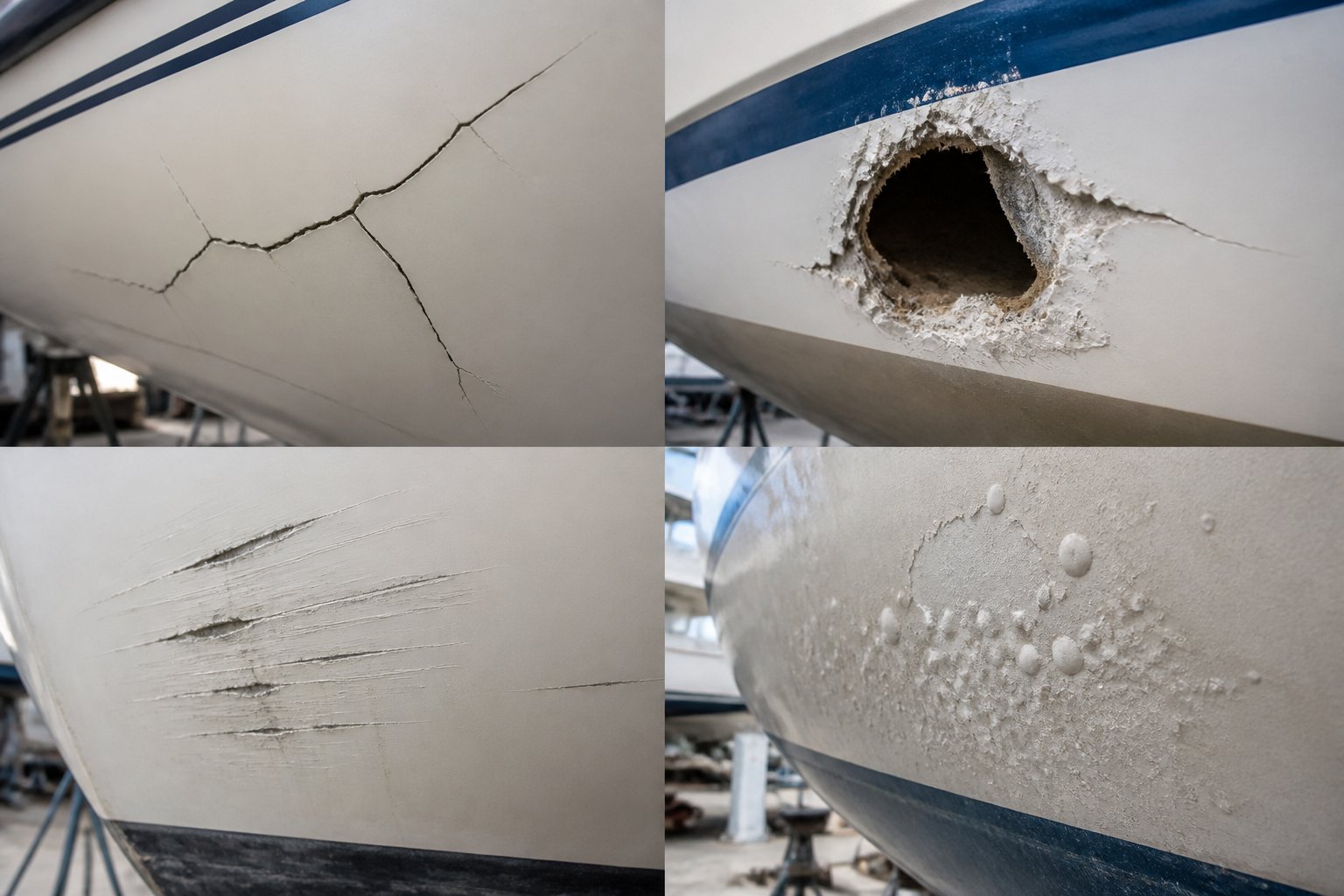
Fiberglass boat damage ranges from cosmetic annoyances to serious structural headaches. Costs jump from $50 for a scratch up to $10,000 or more for major hull repairs.
Gelcoat Scratches and Chips
Gelcoat scratches are probably the most common fiberglass issue out there. These only hit the thin outer layer of your hull.
Light scratches and scuffs usually cost $25 to $50 per foot if you hire someone. If you’re up for the DIY route, you can fix minor scratches with compound and wet sanding for $5 to $15 per foot in materials.
Gelcoat chips and gouges are a step up—they expose the fiberglass underneath and need quick attention. Small chips under an inch cost $75 to $150 at a shop, while gouges between one and three inches run $150 to $400.
DIY gelcoat repair costs:
- Small chip: $25 to $50
- Medium gouge: $50 to $100
- Large area per square foot: $75 to $150
Matching your gelcoat color is the real challenge with DIY. Sun and weather fade the color over time, so getting it right without experience can be tough.
Spider Cracks and Surface Issues
Spider cracks look like tiny webs in your gelcoat. They’re usually just in the surface, but sometimes they hint at deeper problems.
Professional spider crack repair runs $200 to $500 per cluster. The tech grinds out the cracks, fills them with color-matched gelcoat, and blends everything in.
Spider cracks tend to come back if you don’t fix the underlying cause. Hull flexing, bad storage, impact, or just old gelcoat can all be culprits.
I wouldn’t recommend DIY spider crack repairs unless you really know what you’re doing. Getting the grinding depth, materials, and blending right is tricky. Bad repairs can actually make things worse.
Osmotic Blistering and Delamination
Osmotic blistering happens when water gets through the gelcoat and forms bubbles under your bottom paint. This so-called “boat pox” only gets worse if you ignore it.
Blister repair costs depend on how bad things are, usually $150 to $300 per foot of boat length. For a 35-foot boat with minor blisters, expect $1,750 to $3,500. If you need full gelcoat removal, it can hit $7,000 to $14,000.
Repairing blisters means grinding away the bad gelcoat, letting the hull dry out—sometimes for weeks—and then applying new epoxy barrier coats. Older boats (pre-1985) are more prone to this thanks to dated construction methods.
Delamination is when fiberglass layers separate, usually from water getting in or impact. You’ll feel soft or spongy spots in the hull. This is a big deal and needs a pro right away.
Major Structural Damage
Structural fiberglass damage cuts through the hull’s protective layers and hits the load-bearing parts. This isn’t just cosmetic—your boat’s safety is on the line.
Want to avoid costly fiberglass boat repair mistakes?
Learn how to inspect damage properly, decide when to DIY, and prevent expensive fiberglass problems before they start.
Deep gouges into the laminate cost $500 to $1,500 for each one or two square feet. Small punctures under six inches run $400 to $1,000, while larger holes (six to twelve inches) can cost $800 to $2,500.
Transom repairs are especially pricey. Partial transom repair: $2,000 to $5,000. Full transom replacement: $5,000 to $15,000. If you need core replacement in cored hulls, it’s $100 to $300 per square foot.
Major repair costs:
- Stringer repair: $500 to $2,000 per stringer
- Keel attachment: $2,000 to $8,000
- Core damage (soft spots): $1,000 to $10,000+
Don’t try to fix structural damage yourself. You need to cut out damaged sections, rebuild the laminate, and make sure the fix is watertight—definitely a pro job.
Key Factors Influencing Fiberglass Repair Pricing
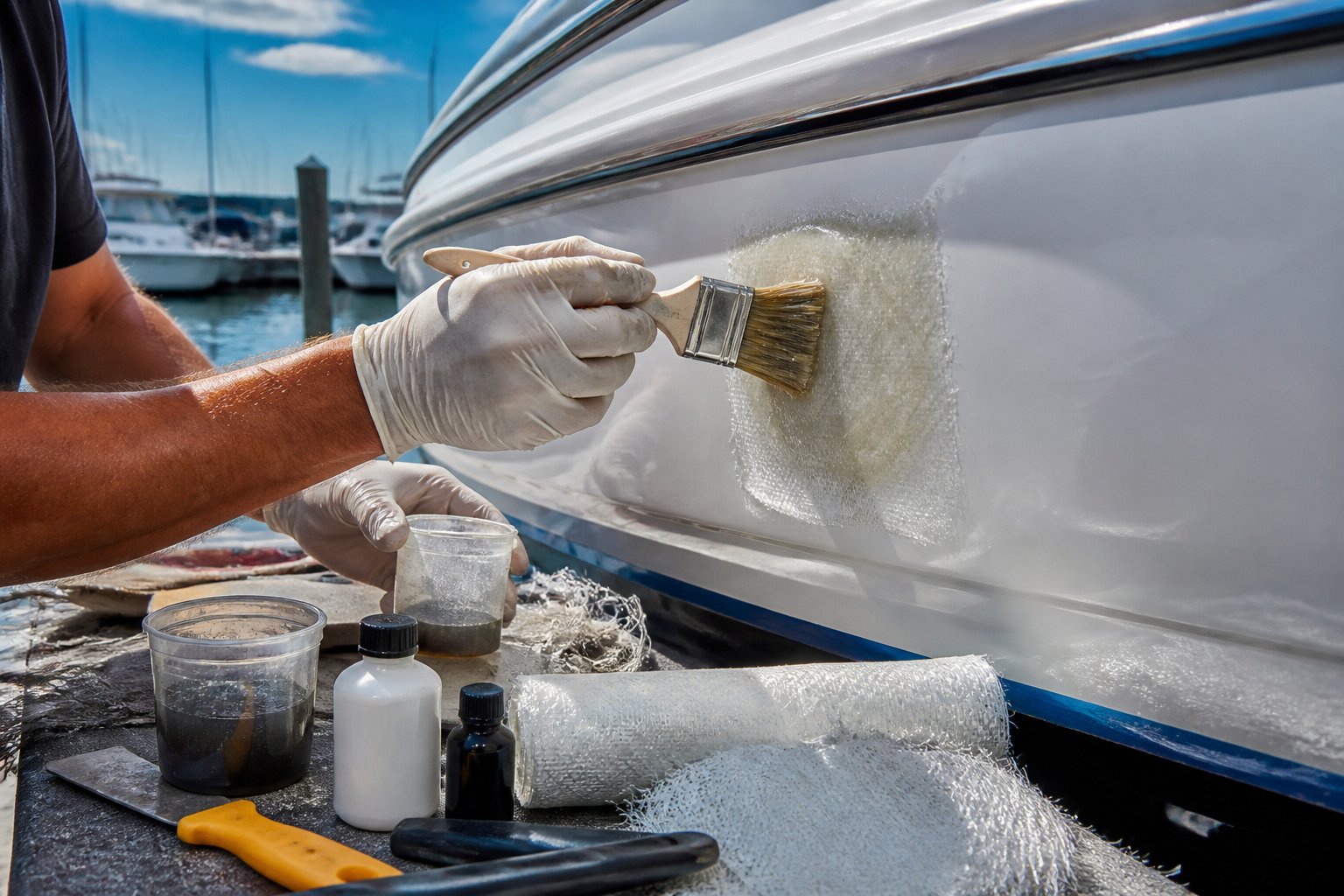
What’s the real driver behind fiberglass boat repair costs? It mostly comes down to how tricky the damage is, how many hours the tech puts in, and the materials used. Knowing these details makes it easier to judge estimates and decide what’s worth it.
Repair Complexity and Extent
Complexity has a huge impact on your bill. Surface scratches that just mess up the gelcoat usually run $100 to $400, but deep gouges into the laminate can cost $500 to $2,500 or more.
Structural repairs take a lot more effort. A marine tech has to grind out all the damage, prep the surface, and layer on new fiberglass with resin. If the core is damaged, it gets even more complicated—removing skins, replacing the core, and rebuilding everything.
Where the damage sits matters too. Below-waterline repairs need to be flawless and watertight. Tight corners or curved hull sections are just harder and slower to fix well.
Labor Hours and Technician Expertise
Labor hours make up a big chunk of your fiberglass repair bill. Skilled marine techs charge $75 to $150 per hour, depending where you are and the shop’s reputation.
Simple gelcoat repairs might only take a couple hours. Structural jobs can stretch out for days or even weeks. Each fiberglass layer needs time to cure, and rushing just weakens the repair.
Experienced techs are worth the extra cost. They know how to match faded gelcoat and blend repairs so they disappear. Honestly, you get what you pay for here.
Materials and Resin Quality
The shop’s material choices matter for both cost and how long the repair lasts. Marine-grade resins cost more, but they hold up better against water and sun.
Polyester resin is the budget pick and works for most fixes. Epoxy resins cost 2–3 times more, but they’re stronger and more moisture-resistant. Marine-grade materials really do last longer in saltwater.
Good gelcoat paste runs $30 to $100 per quart, depending on brand and color. Fiberglass cloth, resin, hardeners, and finishing compounds all add up. Pro shops usually roll these into their estimates, but DIYers have to buy everything separately.
Costs for DIY Versus Professional Fiberglass Repairs
DIY fiberglass repairs cut labor costs but require buying all your own materials and tools. Professional repairs cost more up front, but you get expert assessment and a guarantee. Shop rates usually fall between $75 and $150 an hour.
DIY Repair Kits and Material Expenses
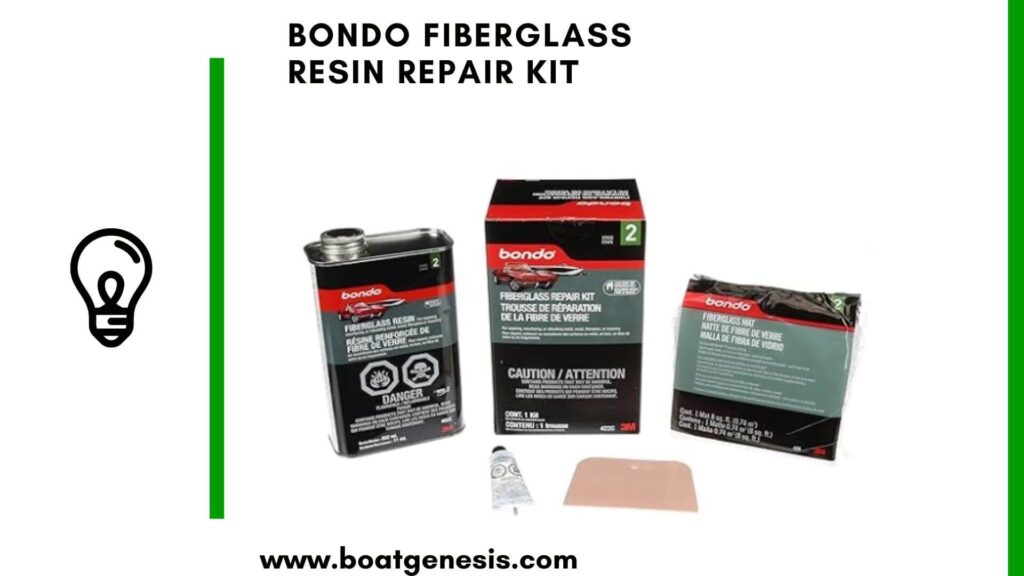
A basic gelcoat repair kit costs $30 to $75. You’ll get gelcoat paste, hardener, mixing cups, and spreaders—enough for minor scratches and chips.
If you’re facing more serious damage, you’ll need a full fiberglass repair kit. Those run $75 to $150 and include fiberglass cloth, resin, and rollers.
Pro-grade materials cost more but usually give better results:
- Quality gelcoat: $50 to $100 per quart
- Fiberglass mat or cloth: $5 to $15 per yard
- Polyester resin: $30 to $50 per gallon
- Coloring agents: $15 to $30
- Sandpaper sets: $20 to $40
Materials for a shop repair might only run $250, but cheap kits often leave you with gelcoat that yellows or chalks too soon. On the bright side, you can use leftover supplies for next time—because, let’s face it, boats always need a little something.
Professional Assessment and Shop Rates
Minor gelcoat scratch repair usually runs between $75 and $200 at a professional shop. If you just need an individual chip fixed, expect $50 to $150 per chip.
Small holes, say 2 to 3 inches wide, cost $200 to $500 to fix. Move up to a football-sized hole and you’re looking at $500 to $1,500.
Large structural repairs start at $1,500 and can blow past $5,000. Transom replacement falls between $2,500 and $8,000, while stringer replacement usually sits in the $2,000 to $6,000 range.
Most shops will give you a free estimate for damage assessment. Definitely get several quotes since fiberglass boat repair cost can swing wildly from place to place.
Pros bring real color-matching skills and the right gear. They also guarantee the work holds up, especially for repairs below the waterline.
Common Materials, Kits, and Tools for Repairs
Fixing fiberglass boats calls for materials that work together to restore both structure and looks. You’ll see all sorts of cloth, resins, gelcoat, and fillers—each designed to handle marine conditions.
Fiberglass Cloth and Laminates
For anything beyond a surface scratch, you need fiberglass cloth or laminate. Fiberglass cloth comes in different weights, measured in ounces per square yard.
Light cloth—like 4 to 6 ounces—handles small patches and detail work. Medium cloth at 8 to 10 ounces is the go-to for most repairs. Heavy cloth (18 to 24 ounces) brings the muscle for bigger structural jobs.
Complete fiberglass repair kits usually include pre-cut cloth, epoxy resin, spreaders, mixing sticks, and gloves. These kits save you from chasing down all the separate parts.
Chopped strand mat’s another option for building up thickness fast. Layering multiple pieces with resin lets you rebuild damaged spots to full strength.
Gelcoat, Resins, and Fillers
Polyester resin and marine-grade resin are the backbone of most fiberglass repairs. Polyester resin is cheaper and works fine above the waterline. Marine-grade epoxy resin sticks better and keeps water out, so it’s the pick for below-waterline jobs.
A gelcoat repair kit typically comes with gelcoat paste, hardener, mixing cups, and tools. Matching your boat’s gelcoat color is tricky since sun and time fade it out.
This guide helps boat owners understand fiberglass damage clearly — what matters, what doesn’t, and when repairs are truly necessary, so small issues don’t turn into expensive mistakes.
See What Every Boat Owner Should Know →You’ll want fillers to smooth things out before applying gelcoat. Microballoons are great for light fairing, while colloidal silica fills bigger gaps. Mix these with resin to make pastes you can sand smooth after they cure.
Understanding Labor, Additional Services, and Cost Multipliers
Labor and repair complexity drive most of your fiberglass boat repair bill. The size of your boat and the kind of damage you’re facing both make a big difference.
Influence of Boat Size and Location
Bigger boats cost more to fix, plain and simple. Professional labor rates usually run $95 to $150 per hour, depending on where you are and how fancy the shop is.
Large boats eat up more time and materials, even for the same damage. A crack on a 20-footer might take two hours, but the same crack on a 40-footer could take four. More area, more hassle.
Damage tucked away in hard-to-reach places like the bilge or tight corners adds labor hours. Techs end up struggling with tools in cramped spots, which slows everything down.
Coastal shops generally charge more than inland ones. If you’re in a popular boating market, expect to pay a premium for skilled fiberglass techs.
Structural Reinforcement and Advanced Repairs
Structural reinforcement is a whole different beast from surface patches. When the hull’s at risk, techs must layer on fiberglass cloth and resin to bring back strength.
These advanced repairs need specialized skills and way more labor. A structural hull repair can run from $2,000 to over $10,000, depending on how bad things are.
If the core material’s shot, the job gets even trickier. The tech has to pull out the damaged core, dry the spot, and install new material before laying on fresh fiberglass.
Materials for structural work cost more than basic gelcoat fixes. You’ll need marine-grade epoxy, different weights of fiberglass cloth, and sometimes carbon fiber for the heavy-duty spots.
How to Accurately Assess and Estimate Repair Needs
Getting a real sense of your fiberglass damage helps you plan your budget and dodge surprise costs. Measuring right—and knowing when to call an expert—can save both time and cash.
Damage Evaluation and Measurement
Start by cleaning the damaged spot with soap and water. Dirt hides the real damage, making things look either better or worse than they are.
Measure length, width, and depth for each spot. Use a ruler or tape for size and a fingernail or pick tool for depth. Jot down these numbers with the location on your boat.
Snap clear photos from different angles. Toss a coin or ruler in the shot for scale. These pics help when you get quotes from shops or deal with insurance.
Tap around the damaged area with your knuckles. A solid sound means the fiberglass is fine. If it sounds hollow or dull, you might have delamination or core issues under the surface. Mark any weird spots.
Check if the damage is just in the gelcoat or if it’s gone into the laminate. Surface scratches or chips stay in the gelcoat. White fibers mean it’s hit the structural laminate.
When to Seek a Professional Assessment
Call a marine tech right away if you find soft spots, big cracks, or any damage below the waterline. These can mess with your boat’s safety. A pro can catch hidden problems you might overlook.
If the damage covers more than a square foot or cuts through several fiberglass layers, you’re in expert territory. Structural fixes need real know-how to restore strength.
Get a pro’s opinion on spider cracks that keep spreading. Usually, that means deeper flex or stress issues, not just surface stuff. A marine tech can figure out what’s causing the cracks.
If you’re just not sure how bad the damage is or what to do, schedule an assessment. Most shops charge $50 to $150 for a detailed look. That upfront spend can save you big headaches and gives you solid repair estimates from the start.
Frequently Asked Questions
Repair costs swing based on how deep the damage goes, the area involved, and whether you’re dealing with just gelcoat or deeper fiberglass layers. Labor rates jump around by region, and matching faded gelcoat colors can make pro repairs pricier.
What factors most affect the price of fixing hull damage on a fiberglass boat?
Depth of damage is usually the biggest cost driver. Surface scratches that only mess up gelcoat are much cheaper to fix than anything that cuts into the structural laminate.
Size matters too—a tiny chip under an inch costs way less than a big gouge covering a few square feet.
Where the damage is located also changes things. Below-waterline repairs need to be watertight and take more care. Tight corners or curves eat up extra time and require special tools.
Color matching can get expensive if the repair is visible. Gelcoat fades from UV, so matching the current shade isn’t easy. Custom or metallic colors are even trickier than plain white.
The way your boat’s built matters, too. Cored hulls with foam or balsa between fiberglass layers need more work if water gets into the core.
How much does a typical gelcoat scratch or small chip repair usually cost?
Surface scratch removal runs $25 to $50 per foot if you hire a pro. That covers wet sanding, compounding, and buffing—no new gelcoat needed.
Small chips under an inch usually cost $75 to $150 for professional repair. The tech fills the chip with color-matched gelcoat paste, sands it smooth, and blends it in.
If you want to DIY, minor scratches cost $5 to $15 per foot with compound and polish. Chip repair kits run $25 to $50, but nailing the color match is tough without practice.
Medium gouges (one to three inches) run $150 to $400 at a shop. They take more time since you need multiple gelcoat layers and careful blending.
What is the average cost to repair a crack or hole in a fiberglass hull?
Deep gouges into the laminate typically cost $500 to $1,500 for a one- to two-square-foot area. The tech grinds out the damage, lays new cloth and resin, and finishes with gelcoat.
Small holes or punctures under six inches run $400 to $1,000 with a pro. That covers removing the bad fiberglass, building up new layers, and finishing with gelcoat.
Bigger holes (six to twelve inches) jump to $800 to $2,500, depending on where and how deep the damage is. Below-waterline repairs cost more—they have to be totally watertight.
Spider cracks or stress cracks cost $200 to $500 per cluster. These web-like cracks in the gelcoat usually signal flexing or stress, so proper repairs deal with the root cause too.
How do repair shop labor rates and location influence the final price estimate?
Labor rates really depend on where you live. Major coastal cities and big boating areas charge more per hour than rural spots.
Most fiberglass shops bill $75 to $150 per hour for labor. Top-tier techs in busy markets might ask $125 to $200 per hour, especially for tricky color matching or structural fixes.
Shops with higher overheads—like climate control and good ventilation—charge more, but you get better curing and lasting repairs.
If the shop comes to you, expect to pay travel fees. Mobile repair services usually tack on $50 to $150 for travel, plus their standard hourly rate.
Timeline matters too; gelcoat and resin need proper curing between steps. Rushed jobs that skip curing often fail and end up costing more to fix down the line.
When is it more cost-effective to pay for professional repairs instead of using a DIY repair kit?
Professional repairs really make sense when the damage shows on your boat’s exterior, and color matching matters. If you want the repair to look invisible, you’ll need someone with experience blending faded gelcoat colors—DIY kits just can’t pull that off.
When damage goes deeper, right through the gelcoat and into the fiberglass laminate, it’s time to call in a pro. The boat’s integrity relies on proper layup techniques and picking the right materials, and let’s be honest, most of us boat owners just don’t have that expertise.
Trying to fix large damaged areas on your own? That’s a real headache without the right tools. Pros use orbital buffers, spray equipment, and climate control to get those big sections looking smooth and even.
Below-waterline repairs have to be completely watertight, and that’s not something you want to gamble with. Even a tiny leak can turn into expensive core damage over time, which nobody wants to deal with.
For minor scratches in places no one sees, you can usually handle the repair yourself. Small chips on rub rails, keel guards, or other less visible spots are perfect for DIY fixes.
Gelcoat repair kits are great for learning or practicing on old boats or in hidden spots. Picking up those skills helps you understand what the professionals are actually doing—and maybe makes you a little less nervous about future repairs.
How can I get an accurate repair estimate, and what details should I provide to the shop?
First off, snap some clear photos of every damaged spot. Get a few close-ups to show the depth, and then zoom out for wider shots so the shop can see where everything sits on the boat.
Grab a quick measurement of each damaged area. If you’re not sure how deep it goes, try running your fingernail or a coin along the spot—can you feel rough fiberglass, or is it just surface-level?
Let the shop know your boat’s make, model, and year. Different manufacturers use different construction methods, and that really does change how repairs should be handled.
If you know how the damage happened, mention it. Impact damage and stress cracks aren’t the same thing, and the shop will appreciate the heads-up if there might be hidden issues underneath.
And don’t forget—ask for a written estimate. It’s always better to have the details in writing, just in case anything gets muddled later on.

Warren is the founder of BoatGenesis and brings practical experience in fiberglass boat repair, marine equipment testing, and powerboat building. He has worked on a range of repair and restoration projects and now focuses on creating clear, research-based guides to help boat owners avoid costly mistakes and make smarter maintenance decisions. Learn more about Warren.