
Boat delamination can turn your relaxing days on the water into a serious problem that needs attention. When the layers of fiberglass in your boat’s hull or deck start to separate, you need to know what it will cost to fix before the damage gets worse.
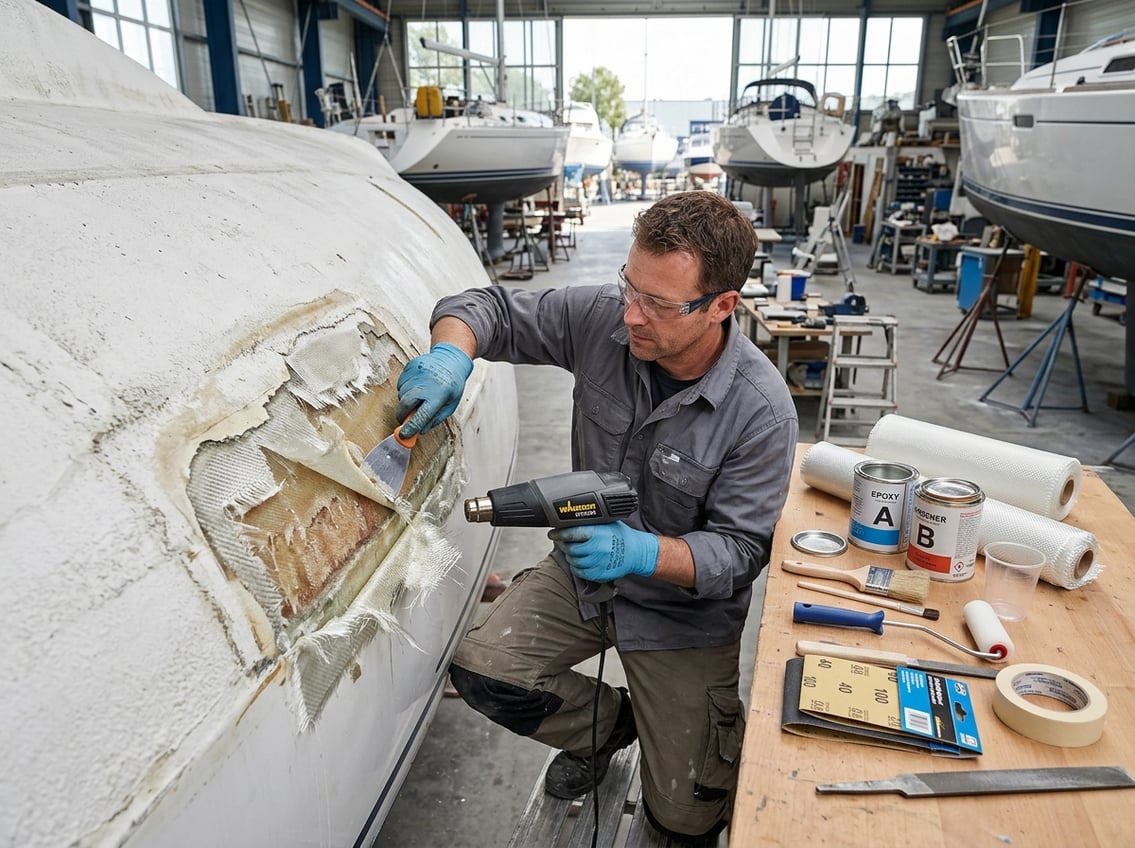
Boat delamination repair costs typically range from $30 for small DIY fixes to several thousand dollars for extensive professional repairs, with most jobs falling between $500 and $5,000 depending on the damage size and location. Understanding boat delamination repair costs helps you plan your budget and decide whether to tackle the work yourself or hire a professional. The final price depends on how much of your boat is affected, where the damage is located, and what materials are needed.
Your repair costs will vary based on several factors you can control. Catching delamination early through regular maintenance checks can save you hundreds or even thousands of dollars. Knowing when to handle repairs yourself and when to call in experts makes a big difference in both the cost and quality of the work.
Key Takeaways
- Delamination repair costs range from $30 for minor DIY work to over $5,000 for major professional repairs
- The extent of damage, location on your boat, and labor costs are the main factors that determine your final price
- Regular inspections and early repairs prevent small problems from becoming expensive major repairs
- Key Takeaways
- What Is Delamination in Boats?
- Common Signs and Detection Methods
- Materials Involved: Gelcoat, Fiberglass Mat, and Resins
- Extent of Delamination and Affected Areas
- Material Type and Accessibility
- Labor Requirements and Skill Levels
- Hidden Issues and Inspection Needs
- Minor Surface Repairs and Patching
- Mid-Range Structural Repairs
- Full Panel or Core Replacement
- Line-Item Cost Components
- Urban Versus Rural Markets
- Regional Labor Rates and Material Costs
- Climate and Environmental Effects
- When DIY Is Feasible
- Risks and Challenges of DIY Repairs
- Benefits of Hiring Professionals
- Choosing a Qualified Boat Repair Specialist
- Preventive Maintenance for Boat Owners
- Saving on Materials and Labor
- Planning Repairs for Cost Efficiency
- Addressing Issues Early to Avoid Escalating Costs
- What factors most influence the price of repairing hull delamination on a boat?
- How do professional shops estimate labor and material costs for delamination repairs?
- When is it more cost-effective to repair delamination versus replacing the damaged panel or section?
- How do repair costs differ between fiberglass, aluminum, and composite hull delamination?
- What is the typical price range for small spot repairs compared with full-section delamination remediation?
- How can I compare quotes from local fiberglass repair shops to ensure the scope and pricing are fair?
Understanding Delamination and Its Causes
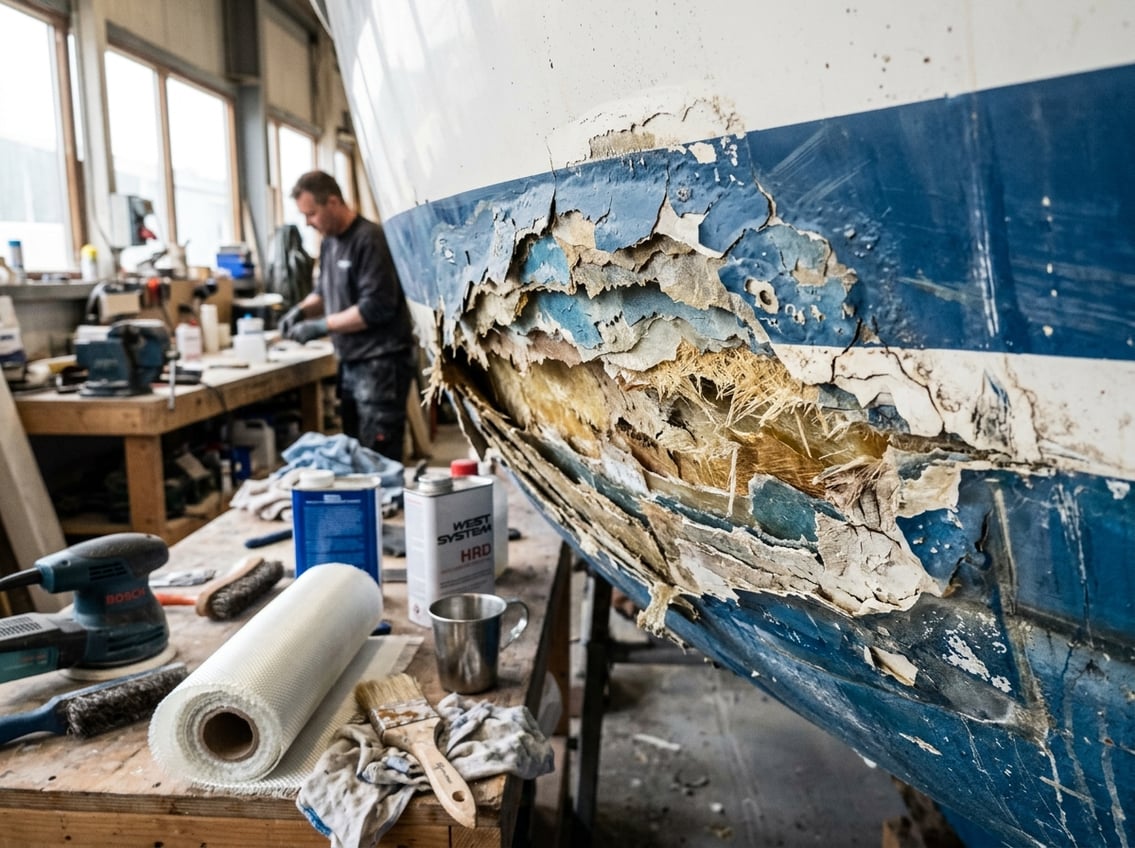
Delamination happens when the layers of your boat’s fiberglass structure separate from each other. This problem involves the gelcoat, fiberglass mat, and resins that make up your boat’s hull or deck, and recognizing the signs early can save you from expensive repairs.
What Is Delamination in Boats?
Delamination is the separation of layers in your boat’s fiberglass construction. Your boat is built like a sandwich, with multiple layers of fiberglass mat bonded together with polyester resin and covered with gelcoat on the outside.
When these layers pull apart, your boat loses structural strength. The separation can affect the hull’s integrity and create safety concerns if you don’t address it.
Water intrusion, poor initial bonding, impact damage, or thermal expansion commonly cause this separation. The extent of delamination ranges from small spots to large areas that need significant repair work.
Common Signs and Detection Methods
You can spot delamination by looking for blisters or soft spots on your deck and hull. Press on these areas and feel if the surface flexes more than it should.
Tap the suspected area with a coin or small hammer every 2 to 3 inches. A solid area makes a sharp sound, while delaminated sections sound dull or hollow.
Watch if the deck moves when you put load on fittings like stanchions. Movement indicates likely delamination beneath. You can also use moisture meters to check for problems, though readings need careful interpretation.
Pay attention to water behavior when it rains or when waves wash over your deck. Water pooling under fittings or on mounting hardware signals potential leaks that lead to delamination.
Materials Involved: Gelcoat, Fiberglass Mat, and Resins
Your boat’s structure consists of three main materials that work together. The gelcoat provides the colored outer layer and protects against water and UV damage.
Fiberglass mat forms the structural layers beneath the gelcoat. This material is made of woven or chopped glass fibers that create strength when combined with resin.
Polyester resin bonds the fiberglass mat layers together and hardens to create a solid structure. When the bond between these materials fails, delamination occurs and requires repair to restore your boat’s strength and prevent further damage.
Key Factors Influencing Repair Costs
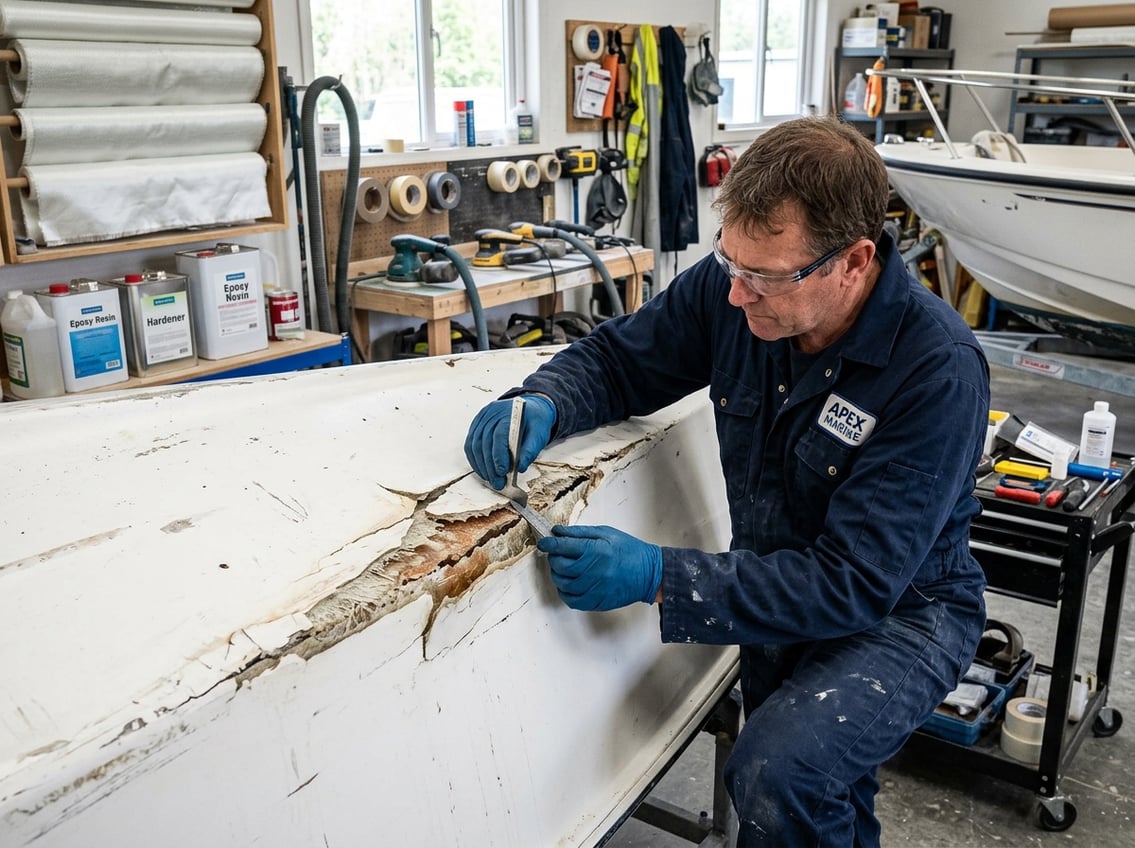
The price you pay for boat delamination repair depends on how much damage exists, what materials are needed, and how difficult the work is to complete. Labor costs and unexpected problems discovered during inspection also play major roles in your final bill.
Extent of Delamination and Affected Areas
The size and depth of delamination directly affects your repair costs. Small surface-level separations under 2 square feet might cost $150 to $350, while damage spanning 20 to 40 square feet can reach $3,000 to $6,600.
Delamination repair costs typically range from $3 to $45 per square foot depending on severity. Surface delamination only affects the outer gelcoat layer and remains relatively simple to fix. Deeper structural delamination reaches into the fiberglass layers and requires more extensive work.
Multiple affected areas increase costs faster than a single large section. Each separate repair zone needs its own preparation, bonding, and finishing. Hull bottom delamination usually costs more than deck or interior surfaces because it requires haul-out and involves more critical structural concerns.
Material Type and Accessibility
The specific materials in your boat’s construction determine which repair products you need. Fiberglass boats require polyester resin or epoxy systems, with epoxy typically costing 20 to 40 percent more but offering superior bonding strength.
Common repair materials include:
- Polyester resin and hardener ($25 to $150)
- Epoxy resin systems ($80 to $300)
- Fiberglass cloth and mat ($15 to $100)
- Gelcoat and color-matching compounds ($30 to $200)
Hard-to-reach areas like below waterlines, inside bilges, or behind fuel tanks add $50 to $1,200 in access and removal work. Technicians may need to remove interior panels, cut access hatches, or use specialized equipment to reach damaged zones. Boats with foam cores or honeycomb structures require more careful work than solid fiberglass layups.
Labor Requirements and Skill Levels
Most delamination repairs take 6 to 20 hours to complete properly. The work involves grinding away damaged material, drying the area, applying new resin and fiberglass, curing, and refinishing.
Skilled marine technicians charge $60 to $120 per hour for standard fiberglass work. Complex repairs requiring specialized expertise can cost $150 per hour or more. Your total labor bill typically represents 40 to 70 percent of your project cost.
Cure time between layers adds to the schedule but not always to labor hours. Multi-layer repairs may need several days to complete even though actual work time stays under 15 hours. Color-matching gelcoat demands additional skill and increases finishing labor by 2 to 6 hours.
Want to avoid costly fiberglass boat repair mistakes?
Learn how to inspect damage properly, decide when to DIY, and prevent expensive fiberglass problems before they start.
Hidden Issues and Inspection Needs
What appears as minor surface delamination often conceals more extensive damage underneath. Moisture trapped between layers can spread delamination beyond the visible area and may require complete section replacement rather than spot repairs.
Professional inspection adds $100 to $400 but helps you avoid incomplete repairs. Technicians use moisture meters, thermal imaging, or tap testing to identify hidden soft spots. Previous amateur repairs sometimes mask ongoing problems that increase your current project scope by 30 to 100 percent.
Potential hidden costs include:
- Additional adhesives and primers ($20 to $150)
- Structural reinforcement materials ($50 to $400)
- Core material replacement ($200 to $1,500)
- Extended moisture remediation ($100 to $800)
Regional price differences can add or subtract 10 to 15 percent from national averages. Coastal areas with high marine activity tend toward higher pricing, while inland regions may offer lower labor rates but charge more for material transport.
Typical Price Ranges and Cost Breakdown
Boat delamination repair costs depend on how deep the damage goes and how much area needs work. Small surface fixes might cost you under $100 if you do them yourself, while major structural work can run several thousand dollars with professional labor and materials.
Minor Surface Repairs and Patching
Small delamination spots that only affect the gelcoat or top layer of fiberglass are the least expensive to fix. DIY repairs can cost as little as $30 to $100 for materials like polyester resin, fiberglass mat, and basic tools.
Professional work on minor surface repairs typically starts around $500 for small patches. These repairs involve grinding out the damaged gelcoat, applying new resin and fiberglass layers, and color matching the finish.
The labor for these jobs usually takes 2-4 hours. Most shops charge $100 to $150 per hour for fiberglass work in coastal areas.
Mid-Range Structural Repairs
Damage that goes through multiple layers of the hull or deck falls into the mid-range category. Typical fiberglass boat repair costs range from $1,800 to $9,500 for these projects, with most jobs running $3,000 to $6,000.
These repairs require cutting out damaged sections and rebuilding layers with fiberglass mat and resin. The work is more complex because it affects the boat’s structural strength.
Per square foot pricing commonly runs $25 to $60 depending on access difficulty and material quality. Hard-to-reach areas cost more because they take longer to repair properly.
Full Panel or Core Replacement
Complete panel replacement becomes necessary when delamination spreads across large sections of the deck or hull. These are the most expensive repairs because they involve removing entire sections down to the core material.
Professional costs can exceed $10,000 for extensive work on larger boats. The job requires significant labor to strip away old fiberglass, replace or dry out core material, and rebuild multiple layers.
You might face 40+ hours of labor for major replacements. The process includes careful layup of new fiberglass mat, proper resin saturation, and finishing work to match existing surfaces.
Line-Item Cost Components
Understanding how repair shops calculate costs helps you evaluate estimates. Here’s what you typically pay for:
Labor Costs
- Hourly rates: $100-$150 per hour
- Diagnostic time: 1-2 hours
- Actual repair time varies by damage extent
Materials
- Polyester resin: $50-$150 per gallon
- Fiberglass mat and cloth: $30-$100
- Gelcoat and color matching: $75-$200
- Shops add 25-50% markup on materials
Additional Expenses
- Sanding and prep supplies
- Primer and paint materials
- Waste disposal fees
- Shop consumables
Regional Price Differences Across the U.S.
Boat delamination repair costs shift significantly based on where you live. Labor markets, material transport fees, and local weather patterns create price gaps that can range from 10% below to 28% above the national average.
Urban Versus Rural Markets
Urban coastal markets typically charge 15% to 25% more than rural inland areas for delamination work. Cities with busy marinas and high demand for marine services drive labor rates up. You’ll find skilled fiberglass technicians command premium hourly rates in places like Seattle, Boston, and Miami.
Rural areas often show lower labor costs by $20 to $40 per hour. However, you may face higher material delivery fees when specialty resins and marine-grade supplies need to travel longer distances. Some remote locations add $100 to $300 in shipping charges for epoxy systems and gelcoat.
The trade-off between lower hourly rates and higher material transport can sometimes balance out. A repair that costs $1,800 in a small lake town might run $2,200 in a major port city for the same square footage of damage.
Regional Labor Rates and Material Costs
Skilled marine and composites work in the Northeast runs 5% to 15% above the national average. Hourly labor rates in this region typically range from $80 to $150 for experienced fiberglass technicians.
Midwest pricing tends to align closely with national averages. You’ll find labor rates between $60 and $100 per hour in states like Michigan and Wisconsin. The South offers slightly lower material costs but similar labor pricing for common repairs.
West Coast markets show the widest variance. California and Washington state charge $90 to $120 per hour, while Oregon and inland areas may run $70 to $95 per hour. Material availability near major ports can reduce resin and cloth costs by 10% to 15% compared to landlocked states.
Climate and Environmental Effects
Saltwater environments accelerate delamination and create higher demand for repair services. Coastal states with year-round boating see steadier pricing, while seasonal markets in colder climates may offer 10% to 20% discounts during off-peak months.
Hurricane-prone regions like Florida and the Gulf Coast maintain larger pools of qualified repair technicians. This competition can moderate prices despite high demand. Cold-weather states face fewer delamination cases but may have limited specialists, pushing rates higher when repairs are needed.
Humidity and temperature extremes affect cure times and material selection. Hot, humid climates require specialized resins that cost $30 to $80 more per gallon. Cold-weather repairs need heated work spaces, adding $50 to $200 in facility charges for proper curing conditions.
DIY Versus Professional Repair Approaches
Deciding between doing the work yourself or hiring a professional depends on the damage extent, your skill level, and available tools. Small gelcoat repairs might suit a DIY approach, while structural delamination repair typically requires professional expertise.
When DIY Is Feasible
You can handle minor delamination repairs if the damage is small and surface-level. DIY fixes work well for isolated soft spots smaller than a few inches or minor gelcoat blisters.
You’ll need basic materials like polyester resin, fiberglass mat, sandpaper, and mixing tools. Small repair kits cost between $30 and $100 at marine supply stores.
Good candidates for DIY repair:
- Surface-level soft spots under 3 inches
- Minor gelcoat crazing or hairline cracks
- Small blisters that haven’t spread
- Non-structural deck areas
You need basic fiberglass skills and patience. The repair area must be accessible without removing major components. If you can sand, mix resin properly, and apply fiberglass mat in layers, you can handle these repairs.
Risks and Challenges of DIY Repairs
Improper repairs can make delamination worse and reduce your boat’s resale value. Mixing polyester resin incorrectly leads to soft spots that never fully cure.
This guide helps boat owners understand fiberglass damage clearly — what matters, what doesn’t, and when repairs are truly necessary, so small issues don’t turn into expensive mistakes.
See What Every Boat Owner Should Know →You might miss hidden damage underneath the visible problem. Delamination often spreads further than what you see on the surface. Without proper inspection tools, you could repair the surface while structural issues remain.
Common DIY mistakes include:
- Using too much or too little hardener in resin
- Trapping air bubbles in fiberglass mat layers
- Insufficient surface preparation
- Applying repairs in wrong temperature or humidity
Working with fiberglass materials requires proper safety equipment. You need respirators, gloves, and ventilation because resin fumes are harmful. Many boat owners underestimate the mess and time involved in proper preparation.
Benefits of Hiring Professionals
Professional technicians have specialized tools to find all delaminated areas, not just visible ones. They use moisture meters and tap testing to identify problem zones you might miss.
Professional boat repair services guarantee their work and often provide warranties. A qualified shop knows how to match gelcoat colors and achieve factory-quality finishes.
Professionals work faster because they handle these repairs regularly. What takes you multiple weekends might take them a few days. They understand how different fiberglass materials work together and cure properly.
Professional advantages:
- Access to marine-grade materials
- Experience with structural repairs
- Proper insurance and liability coverage
- Knowledge of boat-specific repair techniques
For repairs that affect hull integrity or are near the waterline, professional work prevents future water intrusion. They can also spot other maintenance issues during the repair process.
Choosing a Qualified Boat Repair Specialist
Look for shops with certifications and years of experience in fiberglass work. Ask to see examples of previous delamination repairs they’ve completed.
Get written estimates from at least three shops. The quote should list specific materials, labor hours, and warranty terms. Be wary of estimates significantly lower than others, as they might use inferior materials.
Check online reviews and ask other boat owners for recommendations. Visit the shop to see their workspace and equipment. A professional facility should be clean and organized with proper ventilation.
Ask about their repair process. They should explain how they’ll remove damaged material, dry the area, and rebuild layers. Request information about cure times and when you can use your boat again.
Verify they use marine-grade polyester resin and quality fiberglass mat. Some shops cut corners with automotive products that don’t hold up in marine environments.
Practical Tips for Cost Management and Prevention
Managing repair expenses starts with regular upkeep and smart decision-making about when and how to address delamination. Small changes in your maintenance routine and repair approach can significantly reduce your overall spending.
Preventive Maintenance for Boat Owners
Regular inspections help you catch delamination before it becomes expensive. Check your boat’s deck and hull every few months for soft spots, blisters, or areas where the gelcoat feels different when you press on it.
Keep your boat covered when not in use to protect it from UV damage and moisture. Both of these factors break down the bond between fiberglass layers over time.
Clean and wax your gelcoat at least twice per year. This creates a protective barrier that prevents water from seeping into small cracks. Pay special attention to areas around fittings and hardware where water tends to collect.
Store your boat properly during off-season months. Indoor storage is ideal, but if that’s not possible, use a quality cover that allows air circulation while keeping moisture out.
Saving on Materials and Labor
You can reduce your delamination repair cost by purchasing materials yourself rather than letting a repair shop mark them up. Epoxy resin, fiberglass cloth, and basic tools for minor repairs cost as little as $30 for small jobs.
Regional price differences can be significant, so get quotes from multiple repair shops in your area. Prices may vary by hundreds or even thousands of dollars for the same work.
Consider doing prep work yourself to reduce labor hours. Remove hardware, clean the area, and strip away loose material before the professional starts. Most shops charge $75 to $150 per hour for labor.
Schedule repairs during off-season months when many shops offer lower rates to fill their calendars. Winter and early spring often bring better pricing than peak boating season.
Planning Repairs for Cost Efficiency
Group multiple repairs together to save on labor costs. If you need hull delamination repair in several areas, having them done at once is more economical than separate trips.
Get detailed written estimates that break down materials and labor separately. This helps you compare quotes fairly and understand where your money goes.
Ask about warranty coverage on the repair work. A slightly higher upfront cost with a solid warranty often saves money compared to cheaper work that fails within a year.
Plan for the extent of delamination by having professionals assess the full scope before starting. Hidden damage discovered mid-repair leads to unexpected costs.
Addressing Issues Early to Avoid Escalating Costs
Small patches of delamination that cost $500 to fix today can turn into $5,000 problems within a year or two. Water spreads through core materials quickly once it gets inside.
Check areas around through-hull fittings and deck hardware regularly. These spots develop delamination issues first because they create pathways for water entry.
Don’t ignore soft spots or unusual sounds when you walk on your deck. These warning signs indicate that layers are separating and the problem is active.
Address cosmetic gelcoat cracks immediately, even if they seem minor. These cracks allow water to reach the fiberglass layers underneath, starting the delamination process. A $50 gelcoat repair today prevents a major structural issue tomorrow.
Frequently Asked Questions
Repair pricing depends on damage size, hull material, and labor rates in your area. Understanding how shops calculate estimates helps you evaluate quotes and decide between repair and replacement.
What factors most influence the price of repairing hull delamination on a boat?
The extent of the damage is the biggest factor in determining your repair cost. A small patch of delamination measuring a few square inches costs far less than widespread separation across multiple feet of hull.
The location of the damage also affects your final bill. Hard-to-reach areas like the bilge or sections near bulkheads require more labor time and specialized access, which drives up costs.
Material quality plays a role in pricing too. Higher-grade resins and fabrics cost more upfront but provide better durability and longevity for your repair.
Labor rates vary significantly by region and shop reputation. Experienced technicians charge more per hour, but their expertise often results in better quality work that lasts longer.
How do professional shops estimate labor and material costs for delamination repairs?
Most shops start with a physical inspection to measure the delaminated area and assess how deep the damage goes. They check whether the core material is wet or degraded, which affects the scope of work needed.
Shops typically calculate labor by estimating hours required for each step. This includes removing damaged material, drying the area, applying new layers, and finishing the surface.
Material costs include resins, fiberglass cloth, core replacement materials, and finishing products. Shops add these to their labor estimate along with a markup for overhead and profit.
Many professionals provide itemized quotes that break down labor hours, materials, and any additional services like painting or gelcoat matching. This transparency helps you understand where your money goes.
When is it more cost-effective to repair delamination versus replacing the damaged panel or section?
Repair makes financial sense when the delamination covers less than 30% of a panel and the surrounding structure remains sound. Small isolated areas almost always cost less to fix than replace.
Replacement becomes more economical when delamination is widespread or the core material has deteriorated throughout the section. Cutting out and replacing an entire panel can actually be faster and cheaper than trying to repair extensive damage.
You should consider replacement if the delamination keeps recurring in the same area. This indicates a deeper problem with water intrusion or poor initial construction that repair alone won’t solve.
The age and value of your boat matter too. Investing in extensive repairs on an older, lower-value vessel might not make sense compared to replacement or even selling the boat.
How do repair costs differ between fiberglass, aluminum, and composite hull delamination?
Fiberglass delamination repair is the most common and typically the most affordable option. Most marine repair shops have extensive experience with fiberglass work, and materials are readily available.
Aluminum boats don’t experience delamination in the same way as fiberglass, but they can have issues with corroded cores in composite deck sections. These repairs often require specialized welding skills and cost more per hour.
Composite hulls using advanced materials like carbon fiber or Kevlar require specialized knowledge and expensive materials. Repair costs for these boats run significantly higher than traditional fiberglass.
The availability of skilled technicians in your area affects pricing too. Aluminum and advanced composite repairs may require shipping your boat to a specialist, adding transportation costs to your bill.
What is the typical price range for small spot repairs compared with full-section delamination remediation?
Small delamination repairs covering a few square inches can cost as little as $30 for DIY materials. Professional repairs for minor spots typically start around $500 for labor and materials.
Medium-sized repairs covering one to two square feet generally range from $800 to $1,500. This includes removing the damaged area, replacing core material if needed, and refinishing the surface.
Full-section repairs requiring extensive work on large areas can cost $2,000 to $5,000 or more. These jobs involve significant labor hours and substantial amounts of materials.
Complex structural repairs on critical areas like the hull bottom can exceed $10,000 depending on the boat size and damage extent. These repairs essentially rebuild entire sections of your vessel.
How can I compare quotes from local fiberglass repair shops to ensure the scope and pricing are fair?
Get at least three written estimates from different shops to establish a baseline for your area. Make sure each quote covers the same scope of work so you’re comparing apples to apples.
Ask each shop to break down their quote into labor hours, hourly rate, materials, and any additional fees. This itemization lets you see exactly what you’re paying for and spot any unusual charges.
Check if the quotes include surface finishing and paint or gelcoat matching. Some shops provide bare repair pricing and charge extra for cosmetic finishing, which can add hundreds of dollars.
Request references and check reviews from previous customers who had similar repairs done. The cheapest quote isn’t always the best value if the work quality is poor.
Verify that each shop’s estimate includes warranty coverage for their work. A shop that stands behind their repairs with a written warranty demonstrates confidence in their workmanship.

Warren is the founder of BoatGenesis and brings practical experience in fiberglass boat repair, marine equipment testing, and powerboat building. He has worked on a range of repair and restoration projects and now focuses on creating clear, research-based guides to help boat owners avoid costly mistakes and make smarter maintenance decisions. Learn more about Warren.