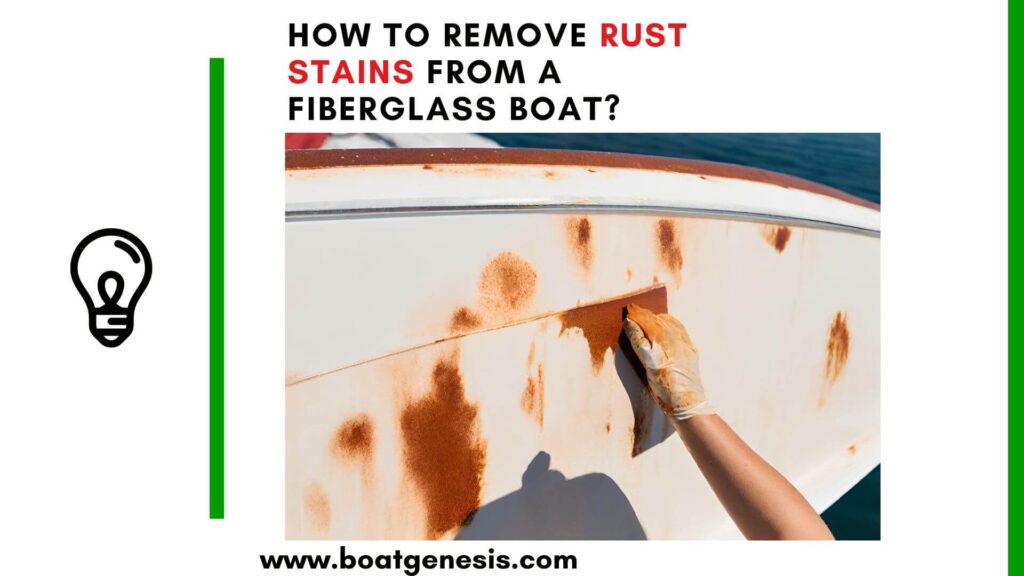
Removing rust stains from fiberglass boats is something every boat owner faces sooner or later. One day, your hull looks spotless, and the next — orange streaks everywhere. It’s frustrating, but here’s the good news: you don’t need to haul the boat out or call a marine detailer.
With the right products and a bit of patience, you can tackle rust stain removal on fiberglass yourself, right at the dock.
Rust stains on fiberglass usually come from metal hardware, anchor chains, or steel fittings sitting in contact with the gel coat. The iron in the metal oxidizes, and those orange particles work their way into the surface. The longer you leave them, the deeper they go — so acting early makes the whole job much easier.
This guide walks you through every removal method, from quick kitchen fixes to more serious treatments for stubborn stains. We’ll also cover what NOT to do, because a few common mistakes can damage your gel coat permanently.
Key Takeaways
- Start mild — lemon juice or white vinegar works on fresh, light rust stains
- For deeper stains, oxalic acid products like Bar Keepers Friend are your best bet
- Always rinse thoroughly after using any acid-based cleaner
- Wet sanding (400 grit) helps open up deeply etched stains before applying a rust remover
- Finish every job with a polishing compound and wax to protect the gel coat
- Never use steel wool or harsh abrasives — they scratch fiberglass and make things worse
- Prevention is easier than cure: rinse metal hardware regularly and apply rust inhibitors
- Key Takeaways
- Why Do Rust Stains Appear on Fiberglass?
- How to Remove Rust Stains from Fiberglass Boats
- Tackling Really Severe Rust Stains
- Common Mistakes to Avoid
- How to Prevent Rust Stains in the Future
- Quick Reference: Rust Stain Removal Methods at a Glance
- Conclusion
- Frequently Asked Questions
- 1. Will rust stains permanently damage my fiberglass?
- 2. Can I use household bleach to remove rust stains?
- 3. Is Bar Keepers Friend safe on fiberglass gel coat?
- 4. How do I remove rust stains left by an anchor chain?
- 5. Will wet sanding damage my fiberglass?
- 6. How often should I wax my boat to prevent rust stains?
- 7. Can I use CLR on fiberglass?
Why Do Rust Stains Appear on Fiberglass?
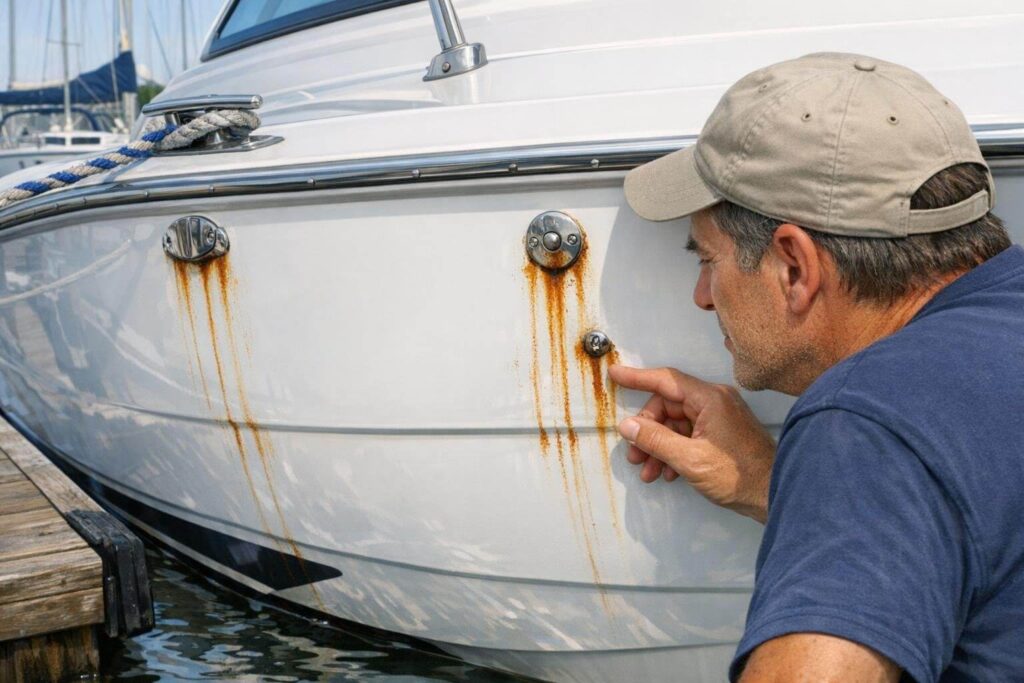
Fiberglass itself doesn’t rust — it’s a composite material made from glass fibers and resin. But the metal components on your boat absolutely do. Anchor chains, cleats, railings, screws, and fishing hardware are all common culprits.
When iron-based metals corrode, they release tiny particles of iron oxide. These particles land on the gel coat and bond to the surface.
Saltwater speeds this process up considerably, which is why boats in marine environments see more staining than those used in freshwater.
Here’s a quick breakdown of the stain types you’ll encounter:
Want to avoid costly fiberglass boat repair mistakes?
Learn how to inspect damage properly, decide when to DIY, and prevent expensive fiberglass problems before they start.
| Stain Type | Appearance | Difficulty | Best Treatment |
|---|---|---|---|
| Surface rust | Light orange tinge | Easy | Lemon juice or white vinegar |
| Moderate rust | Dark brown patches | Medium | Oxalic acid paste (Bar Keepers Friend) |
| Deep etched rust | Pitted, dark staining | Hard | Wet sanding + phosphoric acid |
| Anchor chain stains | Wide streaks, dark | Medium–Hard | Oxalic acid + soft scrub brush |
How to Remove Rust Stains from Fiberglass Boats
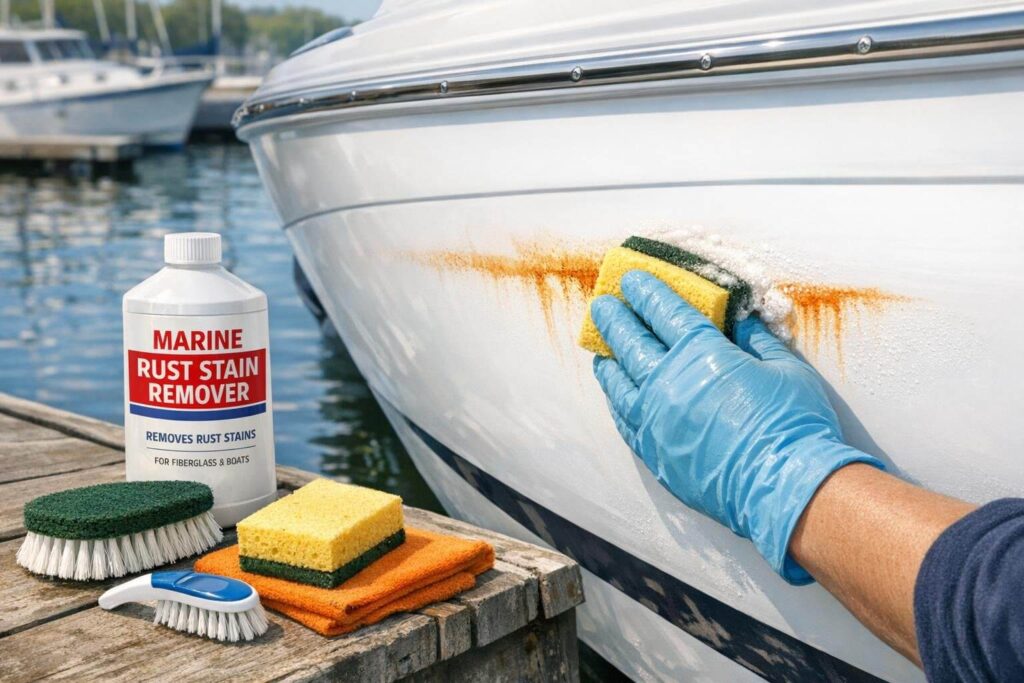
The method you choose depends on how bad the staining is. Always start with the mildest option and step up only if needed. This approach protects your gel coat and keeps you from doing more harm than good.
Method 1: Lemon Juice and Salt (For Light Stains)
Lemon juice and salt is one of the best ways for removing rust stains from fiberglass boats.
This is your first line of attack for fresh, surface-level rust marks. You likely have both ingredients at home right now.
- Squeeze fresh lemon juice directly onto the stain
- Sprinkle a pinch of table salt over the juice
- Let it sit for 5–10 minutes
- Scrub gently with a soft cloth or non-abrasive sponge
- Rinse with clean water
The citric acid in the lemon dissolves the iron oxide while the salt provides very mild abrasive action. It won’t work on deep stains, but for anything fresh it’s surprisingly effective.
Method 2: White Vinegar (For Moderate Stains)
White vinegar is a step up from lemon juice. The acetic acid is a bit more aggressive and works well on stains that have been sitting for a week or two.
- Pour white vinegar directly onto the stained area
- Let it soak for 10–15 minutes
- Scrub with a soft-bristle brush
- Rinse thoroughly with fresh water
For extra stubborn spots, soak a cloth in vinegar and lay it over the stain for 20–30 minutes before scrubbing.
Method 3: Oxalic Acid Paste — Bar Keepers Friend (For Stubborn Stains)
Bar Keepers Friend, Bon Ami, and similar oxalic acid-based cleansers are where most rust stain removal happens in practice. These products combine mild abrasives with oxalic acid — one of the most effective rust-dissolving compounds available.
- Wet the stained area lightly with water
- Sprinkle or apply the cleanser directly to the stain
- Work it into a paste with a damp cloth
- Leave it on for 5–10 minutes
- Scrub gently with a soft brush in circular motions
- Rinse completely — oxalic acid residue can etch your gel coat if left behind
You can find more detailed guidance on using oxalic acid safely in West Marine’s boat care guides, which cover a range of cleaning scenarios for different hull types.
Method 4: Phosphoric Acid / Naval Jelly (For Deep, Etched Stains)
Naval jelly contains phosphoric acid and is the heavy-duty option for stains that have fully etched into the gel coat. Use this sparingly and carefully.
- Apply a thick coat of naval jelly to the stain using a brush
- Leave it on for 10–15 minutes — watch the clock on this one
- Scrub gently and rinse thoroughly
- Immediately neutralize the area with a baking soda and water solution (1 tablespoon of baking soda per cup of water)
- Rinse again with fresh water
Do not leave phosphoric acid on fiberglass longer than directed. It will start attacking the gel coat itself if given too much time.
Tackling Really Severe Rust Stains
If you’ve tried the methods above and the stain is still there, it has likely etched deep into the gel coat. At this point, you need a two-step approach: mechanical removal followed by chemical treatment.
This guide helps boat owners understand fiberglass damage clearly — what matters, what doesn’t, and when repairs are truly necessary, so small issues don’t turn into expensive mistakes.
See What Every Boat Owner Should Know →Step 1: Wet Sanding
Wet sanding removes the top layer of stained gel coat and opens up the surface so cleaning solutions can penetrate deeper.
- Use 400 grit wet/dry sandpaper
- Keep the surface wet while you sand — this prevents heat build-up and reduces scratching
- Sand only the stained area using light, even pressure
- Do not over-sand. You only want to remove the stained layer, not dig into the fiberglass beneath
Step 2: Apply Rust Remover Paste
After wet sanding, apply an oxalic acid paste or naval jelly as described above. The sanded surface will absorb the treatment more effectively and the stain should lift.
Step 3: Polish and Protect
Once the stain is gone, the gel coat in that area will look dull from sanding. Restore the finish with these steps:
- Apply a rubbing compound to remove fine scratches left by the sandpaper
- Follow up with a polishing compound to restore the gloss
- Finish with a marine-grade wax or gel coat sealant to protect the surface
Common Mistakes to Avoid
Knowing what works is half the job. Knowing what to avoid is the other half. These are the mistakes that can turn a simple cleaning job into a costly repair:
- Steel wool: Leaves behind tiny iron particles that create brand new rust stains. Never use it on fiberglass.
- Bleach: Doesn’t remove rust stains and can discolor or degrade gel coat over time.
- Dry sanding: Generates heat and creates deeper scratches than wet sanding. Always keep the surface wet.
- Leaving acid on too long: Any acid product — even lemon juice — can etch gel coat if left too long. Set a timer.
- Skipping the wax: After any cleaning or sanding, the gel coat is exposed. Wax seals and protects it. Don’t skip this final step.
How to Prevent Rust Stains in the Future
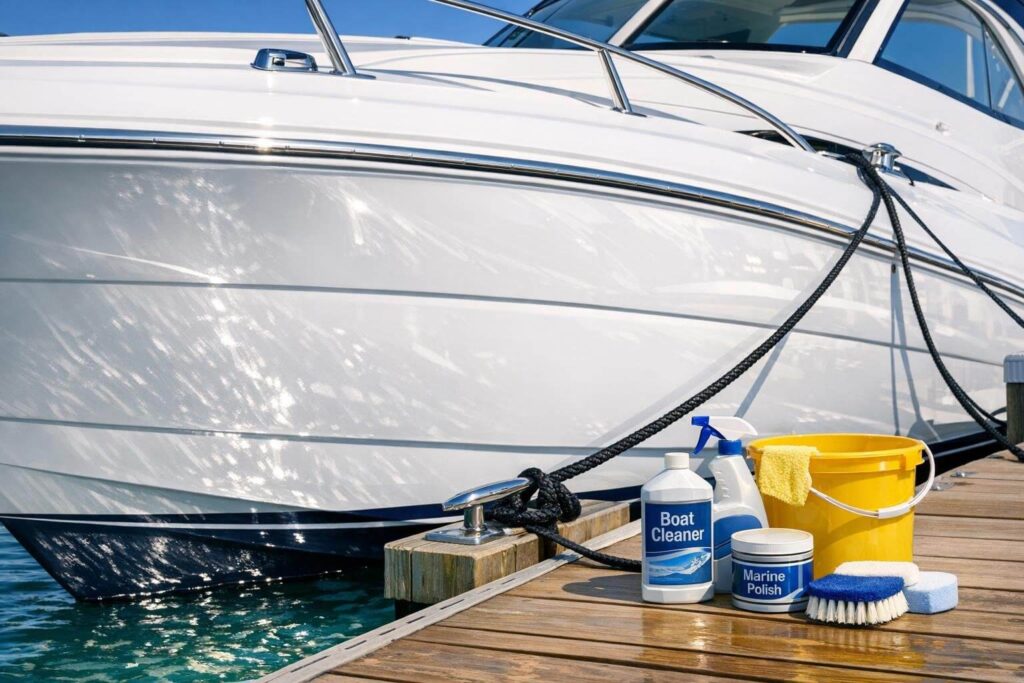
The best rust stain is the one that never forms. A few simple habits can keep your gel coat looking clean all season long.
- Rinse metal hardware after every trip, especially in saltwater. Salt accelerates corrosion dramatically.
- Apply anti-corrosion spray (like Boeshield T-9 or Corrosion-X) to metal fittings, cleats, and anchor chains regularly.
- Use stainless steel or marine-grade hardware wherever possible. For marine use, look for 316-grade stainless — not all stainless resists corrosion equally.
- Store anchor chains in a dry, ventilated locker and check them regularly for early signs of rust.
- Wax your hull regularly. A good coat of marine wax creates a barrier that makes it much harder for rust particles to bond to the gel coat.
The BoatUS Foundation’s guide on fiberglass care covers seasonal maintenance routines that can significantly reduce staining and oxidation buildup over time.
Quick Reference: Rust Stain Removal Methods at a Glance
| Method | Key Ingredient | Wait Time | Rinse Required? |
|---|---|---|---|
| Lemon + Salt | Citric acid | 5–10 min | Yes |
| White Vinegar | Acetic acid | 10–15 min | Yes |
| Bar Keepers Friend | Oxalic acid | 5–10 min | Yes (thorough) |
| Baking Soda Paste | Mild abrasive | 5 min | Yes |
| Naval Jelly | Phosphoric acid | 10–15 min | Yes + neutralize |
| Wet Sanding (400g) | Mechanical abrasion | N/A | Yes |
Conclusion
Removing rust stains from fiberglass boats is one of those jobs where patience and the right approach matter more than money or effort. You don’t need expensive marine detailers or specialist equipment for most stains — just the right cleanser, a soft brush, and some time.
Start mild. Work up slowly. Rinse well. Always finish by protecting the gelcoat with a fresh coat of wax. Those three habits will keep your hull looking sharp season after season.
The sooner you tackle a stain, the easier it comes off. So next time you spot an orange streak on the hull, don’t wait for the weekend — grab the lemon juice and get started.
Frequently Asked Questions
Here are some of the most common questions and answers about the topic of removing rust stains from fiberglass boats.
1. Will rust stains permanently damage my fiberglass?
Not usually, as long as you act before the stain etches deep into the gel coat. Surface rust stains are cosmetic and come off cleanly. If left for months, deep staining becomes very difficult to remove without aggressive sanding. The sooner you treat it, the better.
2. Can I use household bleach to remove rust stains?
No. Bleach is not effective on rust stains and can cause additional discoloration on gel coat. Rust stains are iron oxide — you need an acid to dissolve them, not a bleach. Stick to citric acid, acetic acid, or oxalic acid products.
3. Is Bar Keepers Friend safe on fiberglass gel coat?
Yes, when used as directed. Apply it as a paste, scrub gently, and rinse thoroughly. Don’t leave it on for extended periods — oxalic acid can etch the gel coat if it sits too long. It’s one of the most trusted rust removers among boat owners for good reason.
4. How do I remove rust stains left by an anchor chain?
The chain itself needs cleaning separately — soaking it in white vinegar or a commercial rust remover works well. For the stains it leaves on the hull and deck, treat with oxalic acid paste. On non-skid decking, use a soft brush to get into the texture.
5. Will wet sanding damage my fiberglass?
Not if you’re careful. Use 400 grit (nothing coarser), keep the surface wet, and use light, even pressure. The goal is to remove the stained layer of gel coat, not sand down to the glass fibers. Always follow wet sanding with polish and wax.
6. How often should I wax my boat to prevent rust stains?
Most marine wax manufacturers recommend waxing every 3–6 months, depending on sun exposure and whether the boat lives in saltwater. A quality carnauba or polymer wax creates a barrier that significantly reduces staining over time.
7. Can I use CLR on fiberglass?
CLR is not specifically formulated for fiberglass and can be too harsh for gel coat at full strength. If you try it, dilute it and rinse very quickly. Products designed for marine use — like Star Brite Rust Stain Remover or Bar Keepers Friend — are much safer choices.

Warren is the founder of BoatGenesis and brings practical experience in fiberglass boat repair, marine equipment testing, and powerboat building. He has worked on a range of repair and restoration projects and now focuses on creating clear, research-based guides to help boat owners avoid costly mistakes and make smarter maintenance decisions. Learn more about Warren.