Restoring a boat requires removing old paint, varnish, and oxidation from various surfaces. The best orbital sanders make this work faster and more effectively than hand sanding alone.
These power tools use circular sanding motions to smooth wood and fiberglass. They avoid leaving visible scratch patterns that other sanders often create.
Orbital sanders work well for boat restoration because they balance speed with control, which matters when working on curved surfaces and delicate areas. Random orbital sanders add a spinning motion to their orbit, which helps prevent swirl marks on your boat’s surface.
They come in corded and cordless versions with different pad sizes to match different jobs. A 5-inch pad handles most boat restoration tasks, while smaller 3-inch models reach tight corners and curved sections.
The dust collection system is the most important feature to consider when choosing an orbital sander for boat work. Boat paint and fiberglass create harmful dust that you need to control.
We researched and tested twelve orbital sanders to find the ones that perform best for boat restoration projects.
Best Orbital Sanders for Boat Restoration Work
You need a reliable orbital sander to remove old paint, smooth rough surfaces, and prepare your boat for refinishing. The right sander will save you time and give you professional results on fiberglass, wood, and gelcoat surfaces.
Below is our full list of the best orbital sanders for boat restoration work.
1. SKIL 5″ Random Orbital Sander
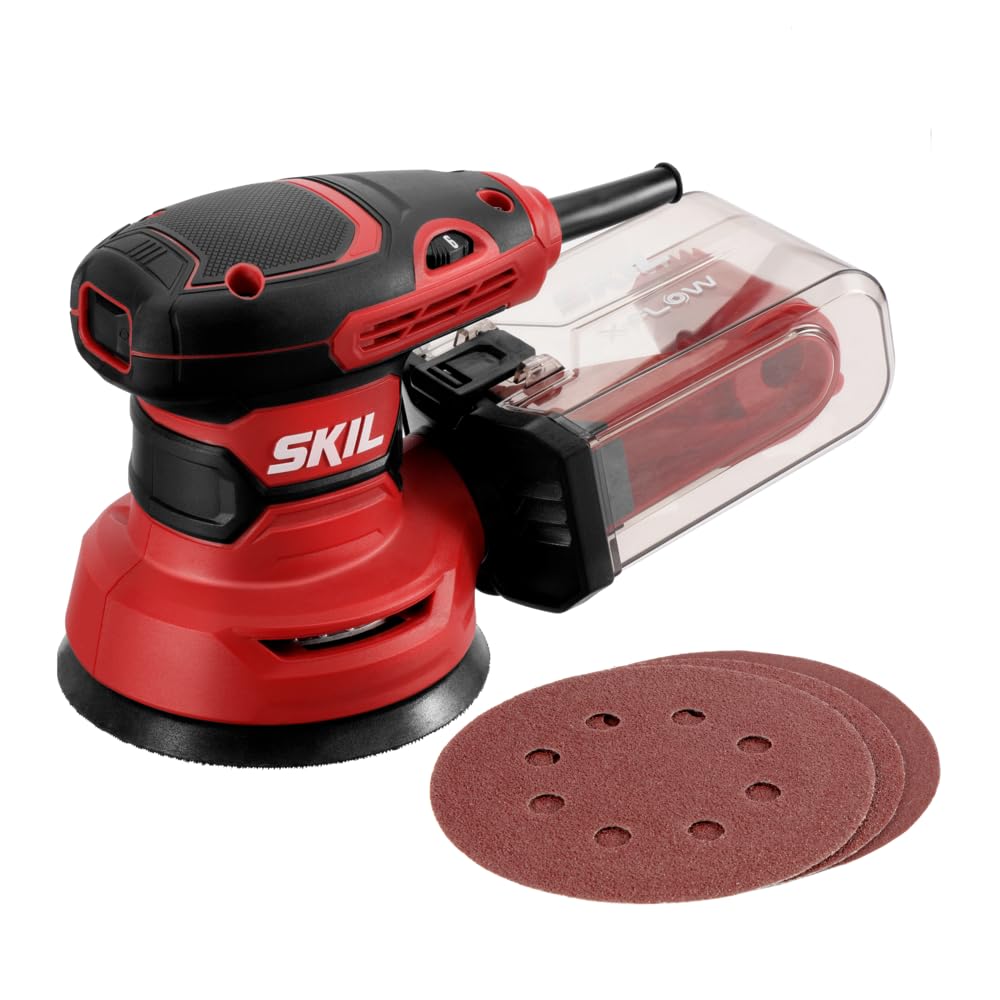
This sander delivers solid performance for boat restoration work at a budget-friendly price. You’ll want to connect a shop vacuum for better dust control.
Pros
- Works smoothly with minimal vibration, which helps you sand for longer periods without hand fatigue
- Variable speed control lets you adjust power based on whether you’re working on wood, fiberglass, or metal boat surfaces
- Compact size makes it easy to maneuver in tight spots around boat hardware and curved surfaces
Cons
- The dust box doesn’t seal well and tends to leak particles during use
- The included dust container fills up quickly on larger boat restoration projects
This sander earns its place on a 22-foot sailboat restoration. The soft rubber grip and balanced weight distribution make a noticeable difference during long sessions — fatigue sets in much later than with cheaper tools, and the reduced vibration is something you appreciate after a few hours on the hull.
The variable speed dial is genuinely useful when moving between materials. Lower settings suit gelcoat work where control matters more than aggression, while the higher end handles old varnish and paint on wood transoms without the motor laboring under load.
Dust collection is the one honest weakness. The clear container is handy for monitoring fill levels, but dust tends to escape from the seams during use — not ideal in a boat yard or enclosed shop. Connecting a shop vacuum through the built-in port resolves this completely, and at that point it becomes a non-issue.
The pad attachment system is tool-free, which sounds like a small thing until you’re burning through multiple grits prepping a hull and swapping sheets every few minutes. The rectangular profile also earns its keep on a boat — it gets into corners, around cleats, and along rails where a round orbital simply can’t reach.
For the price, it’s a capable and well-thought-out tool for fiberglass and wood boat work. Just factor in an external vacuum from the start rather than relying on the onboard dust box.
2. DEWALT 20V MAX Orbital Sander
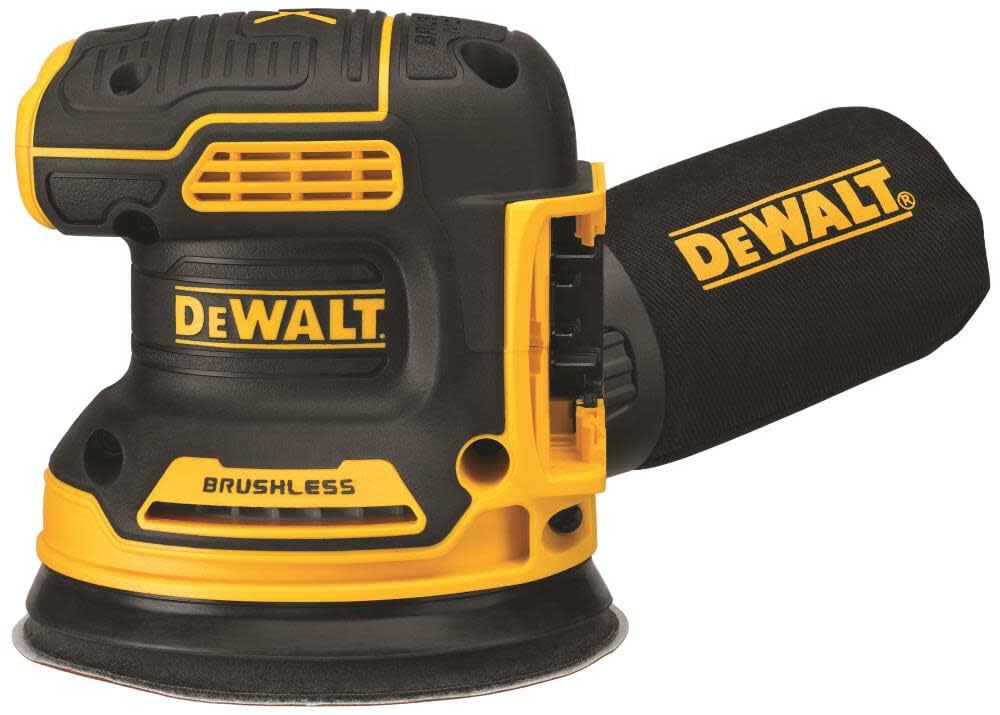
This cordless sander delivers the power you need for boat restoration without the hassle of cords getting in your way.
Pros
- Brushless motor runs longer and more efficiently than older sanders
- Variable speed from 8,000 to 12,000 OPM gives you control for different tasks
- Low profile design lets you reach tight spots on boat surfaces
Cons
- Battery and charger cost extra since they’re sold separately
- Dust collection works better with DEWALT’s vacuum systems than standard shop vacs
- At over two pounds, it feels heavier than corded models during long sessions
Working on a 20-foot sailboat hull, the cordless design proves its worth immediately — no extension cords, no hunting for marina outlets, just freedom to move around the boat as needed.
The speed range is genuinely useful. Lower settings work well for finish work on varnished wood, while the top end (12,000 OPM) handles old paint removal on transoms without hesitation. Speed transitions are smooth, and the rubber grip stays comfortable even after a few solid hours on the deck.
Sandpaper swaps are quick — the hook-and-loop system means peeling off the old disc and pressing on a new one, no tools needed.
Dust collection follows the same story as most sanders in this class: the bag works, but connecting a proper dust collector gets noticeably better results. The sealed switch holds up well against fiberglass dust, which matters on a boat.
Battery life is tied to what you’re running. A 5.0Ah DEWALT pack delivers around 45 minutes of steady work at medium speeds — enough for a solid session, though having a spare on hand is the smarter move for a full day’s work.
3. ZFE Random Orbital Air Sander
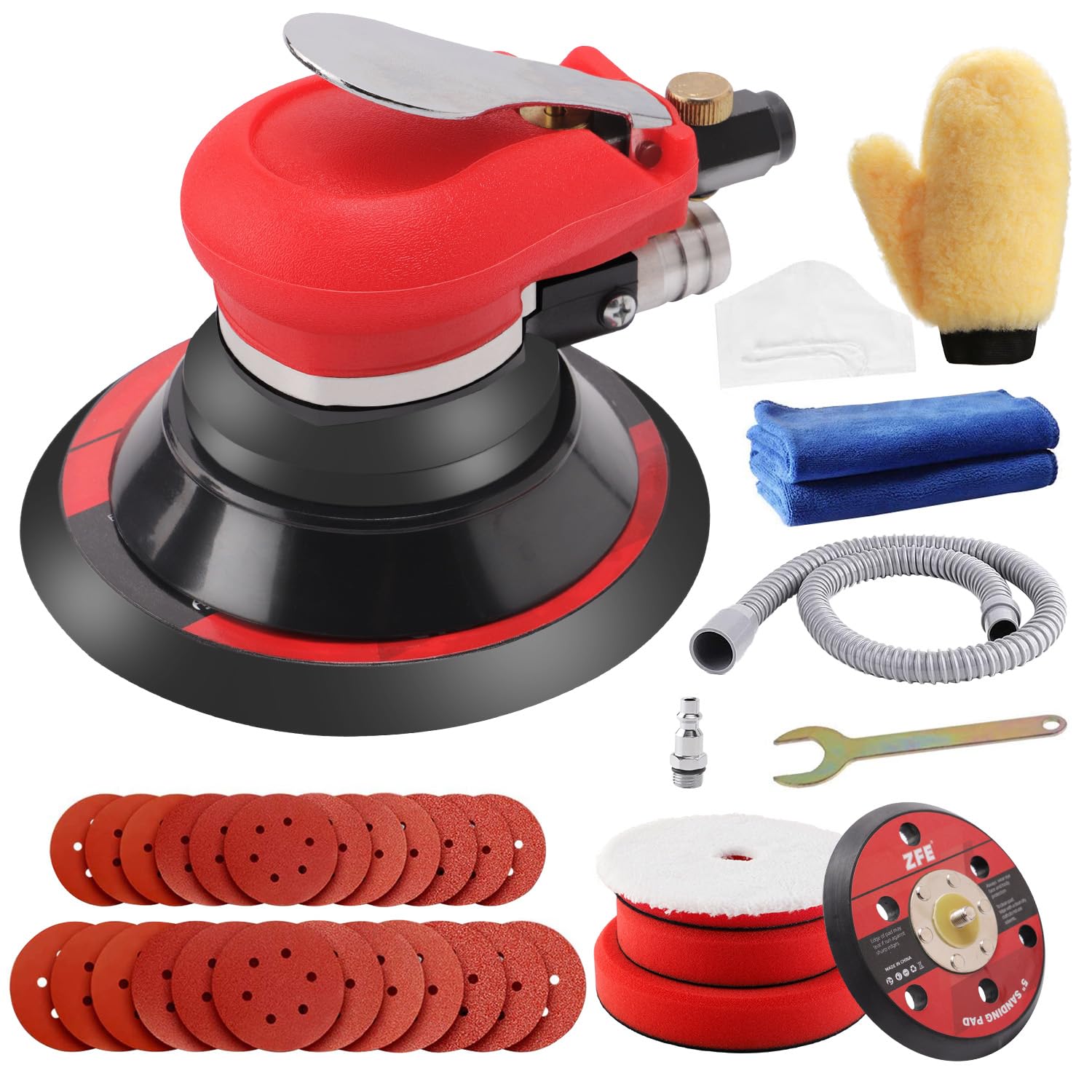
This pneumatic sander offers solid performance for boat restoration at a budget-friendly price. You’ll need a good air compressor to keep it running smoothly.
Pros
- Comes with both 5-inch and 6-inch backing plates plus tons of accessories to get started right away
- Lightweight design makes it easy to handle during long sanding sessions on your boat
- Speed control lets you adjust from gentle polishing to aggressive material removal
Cons
- The dust collection bag system doesn’t work very well and fails to catch most debris
- Requires a powerful air compressor since it consumes quite a bit of air during operation
- Some units may fail quickly, with a few stopping after minimal use
On gelcoat smoothing and paint removal, this air sander does the job well. It’s comfortable to hold during extended sessions, and the two backing plate sizes cover both open flat areas and tighter curved sections of a hull.
The adjustable speed dial earns its place — higher settings strip old paint and varnish efficiently, while lower speeds work nicely for final smoothing before applying new coatings. The random orbital action leaves a clean finish with no visible scratch patterns.
Skip the included dust bag and go straight to a shop vacuum. The bag design lets most dust escape, which is a real concern when sanding fiberglass or old bottom paint.
Air supply matters with this tool. It pulls more than you’d expect for its size, and a small pancake compressor won’t keep up — you’ll spend more time waiting for the tank to refill than actually sanding. A compressor that delivers steady, consistent pressure makes a real difference.
The accessory kit is a solid bonus — various grits, polishing pads, and cleaning cloths are all included, so you can get started without a separate shopping run. As with most pneumatic tools, test it thoroughly when it arrives.
4. DEWALT 5-Inch Orbital Sander Kit
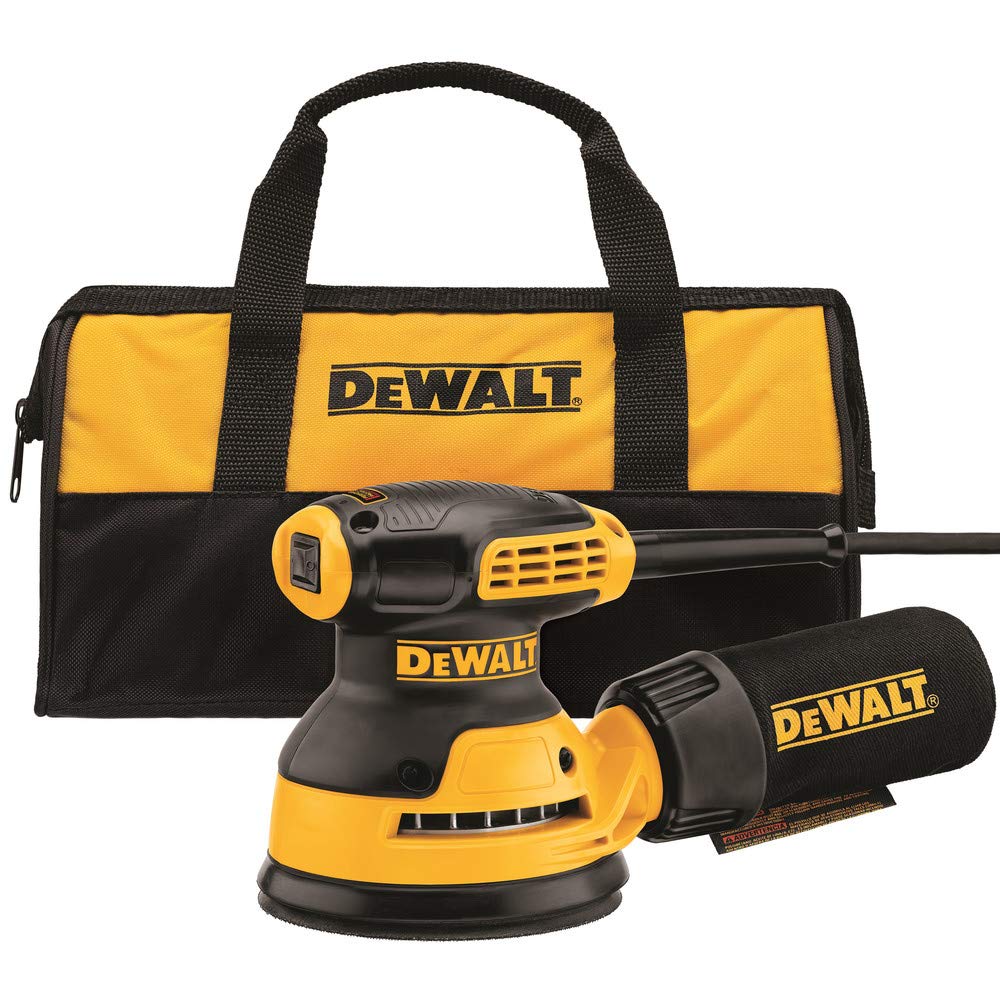
This sander gives you reliable power and comfort for boat restoration at a price that won’t break your budget.
Pros
- The shorter body design lets you work in tight spaces around boat hulls and rails
- Strong dust collection system keeps your workspace cleaner than most sanders in this range
- Low vibration makes it comfortable to use during long restoration sessions
Cons
- No variable speed control limits your options on delicate fiberglass work
- A few units have motor reliability issues after extended use
- Single speed means you can’t slow down for finishing touches
The 3-amp motor handles old varnish and paint removal without struggling, and power stays consistent even under pressure on stubborn spots.
The compact profile is immediately noticeable — it gets into corners and around hardware where bulkier sanders can’t reach. Dust collection is a genuine strength here. The bag locks on with one hand and catches most debris, and switching to a shop vacuum through the dust port brings it close to dust-free during heavy deck sanding.
Vibration is well managed. The counterweight system and rubber grip keep hands comfortable through long sessions — several hours on gunwales without much fatigue is a reasonable expectation.
The one real limitation is the fixed single speed. It works fine for most boat restoration tasks, but without the ability to dial down, you’ll need a careful hand around thin gelcoat or detailed trim work where too much aggression causes damage.
5. Dong Cheng 5-Inch Orbital Sander
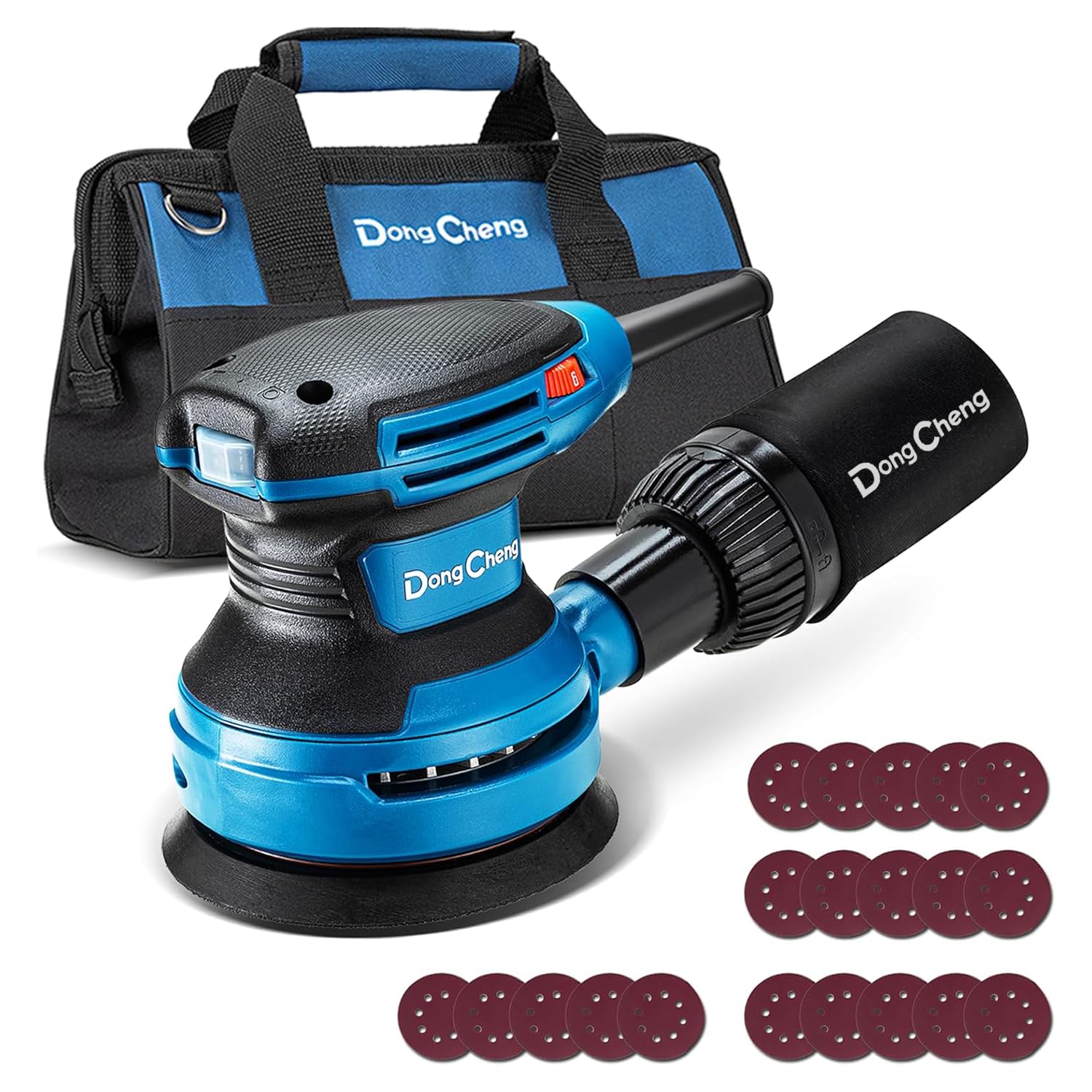
This sander delivers solid performance at a budget-friendly price point. It makes a smart choice if you need reliable power without breaking the bank.
Pros
- Variable speed control lets you adjust from 8,000 to 12,800 orbits per minute for different sanding tasks
- Dust collection system works better than expected, keeping your workspace noticeably cleaner
- Comes with everything you need including 20 sandpaper discs and a tool bag
Cons
- Included sandpaper wears out faster than premium brands
- Some vibration comes through during extended use despite the balanced design
- The dust bag needs frequent emptying on larger restoration projects
The 380-watt motor on this Dong Cheng sander gives you enough power to handle tough boat gel coat and old paint layers.
You can feel the difference when you dial up the speed for stripping work or drop it down for finish sanding between primer coats.
The hook-and-loop pad lets you swap sandpaper quickly when you need to change grits.
The 5-inch size covers enough surface area to move your project along without being too heavy to control in tight spots around cleats or rails.
At just over 3 pounds, you can work for a reasonable amount of time before fatigue sets in.
The rubber grip helps when you work on vertical surfaces or overhead areas.
The dust port fits standard shop vacuum hoses if you want better collection than the included bag provides.
6. ZFE Pneumatic Orbital Sander
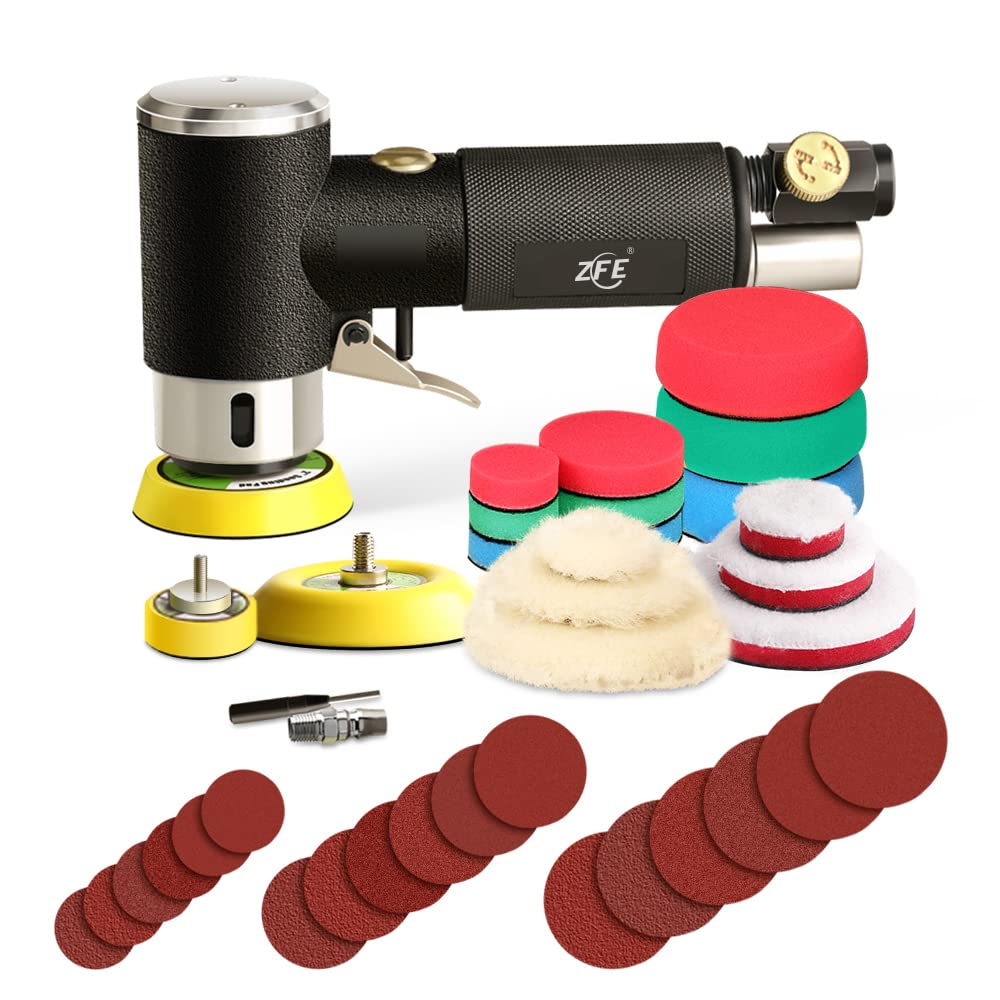
This air-powered sander gives you solid performance for boat restoration at a budget price. You’ll need an air compressor to run it.
Pros
- Comes with everything you need including three different backing plate sizes and plenty of pads
- The compact size lets you work in tight spots around boat hardware and curves
- Runs smoothly at 15000 RPM with less vibration than you’d expect at this price
Cons
- Replacement pads can be hard to find at local stores
- You need to give it a bump sometimes when running at lower speeds
- Some quality control issues reported with threading on backing plates
The ZFE pneumatic sander impressed me right out of the box with how much stuff comes included.
You get three backing plates in different sizes, which means you can switch between detail work on small areas and larger sections without buying extra accessories.
I used the smallest pad to get into corners around boat cleats and the larger ones for broad hull sections.
This tool feels solid in your hand during long sanding sessions.
The weight sits around 2.3 pounds, which is light enough to use overhead without your arm getting tired.
The speed control dial works well, though you’ll need to tap the trigger occasionally to get it spinning again when you turn it down low.
Running this sander requires an air compressor, so factor that into your setup if you don’t already own one.
It consumes air efficiently compared to some other pneumatic tools I’ve tested.
The double-rotation action creates a smooth finish on gelcoat and wood surfaces.
You should know that finding replacement pads locally might be challenging.
The included accessories will last you through several projects, but plan to order extras online when you run low.
A few units have had threading problems with the backing plates, so test everything when it arrives.
Buying Guide
When choosing an orbital sander for boat restoration, you need to consider several key factors.
The right tool will make your work faster and produce better results.
Power and Speed
Check the motor power, which is measured in amps.
Most quality orbital sanders range from 2 to 3 amps.
Higher amperage means more power for removing old paint and varnish.
Variable speed settings let you adjust the tool for different tasks.
You can use lower speeds for delicate work and higher speeds for heavy material removal.
Pad Size and Shape
The size of the sanding pad affects how much area you can cover at once.
Common sizes include:
| Pad Size | Best For |
|---|---|
| 1/4 sheet | Detail work and tight spaces |
| 1/3 sheet | Medium-sized areas |
| 1/2 sheet | Large, flat surfaces |
Smaller pads work better for curved boat surfaces and corners.
Larger pads are efficient for flat decks and hulls.
Dust Collection
Good dust collection keeps your work area clean and protects your lungs.
Look for sanders with built-in dust bags or ports that connect to a vacuum.
A sealed dust system works best for boat restoration because marine paint dust can be harmful.
Ergonomics and Weight
You will hold the sander for long periods during restoration work.
Choose a model that feels comfortable in your hand and is not too heavy.
Rubber grips reduce vibration and make the tool easier to control.
A well-balanced sander reduces arm fatigue.
You should also check out my recommended best respirators for fiberglass work here.

Warren is the founder of BoatGenesis and brings practical experience in fiberglass boat repair, marine equipment testing, and powerboat building. He has worked on a range of repair and restoration projects and now focuses on creating clear, research-based guides to help boat owners avoid costly mistakes and make smarter maintenance decisions. Learn more about Warren.