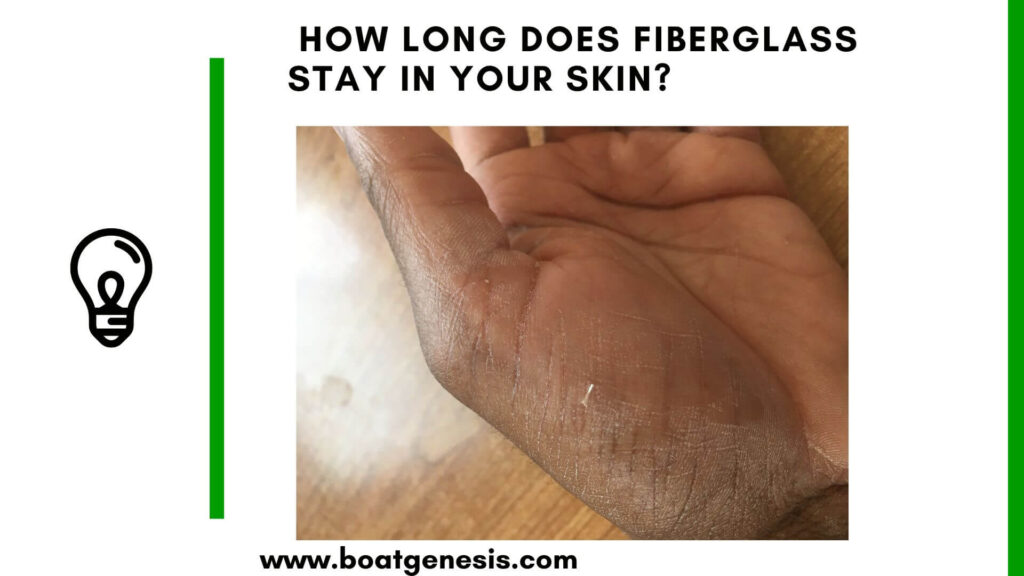
If you’ve been working on your boat and now feel that unmistakable prickling sensation, you’re probably wondering how long you’ll be dealing with fiberglass embedded in your skin—and more importantly, how to get rid of it.
I’ve been there countless times while doing gelcoat repairs and hull work. The good news? Fiberglass doesn’t stay in your skin permanently, but understanding what’s happening and how to properly remove it can save you days of discomfort.
In most cases, fiberglass particles will work their way out of your skin naturally within 3–14 days. However, with the right removal techniques, you can eliminate most fibers within hours and significantly reduce irritation.
Let me walk you through everything you need to know based on years of hands-on fiberglass work.
- What Happens When Fiberglass Gets in Your Skin
- How Long Fiberglass Actually Stays in Your Skin
- Recognizing Fiberglass Exposure: Symptoms to Watch For
- How to Remove Fiberglass from Your Skin: Step-by-Step
- Prevention: The Best Medicine for Fiberglass Exposure
- What NOT to Do When You Have Fiberglass in Your Skin
- Special Considerations for Boat Owners
- Frequently Asked Questions
- 1. How long does fiberglass stay in your skin if you don't remove it?
- 2. Can fiberglass permanently stay in your skin?
- 3. Will fiberglass eventually dissolve in your skin?
- 4. Is it dangerous to leave fiberglass in your skin?
- 5. Does sweating help remove fiberglass from skin?
- 6. Can I use Vaseline or oil to remove fiberglass?
- 7. What's the difference between fiberglass irritation and an allergic reaction?
- 8. How can I wash fiberglass work clothes without contaminating my washing machine?
- The Bottom Line
What Happens When Fiberglass Gets in Your Skin
Fiberglass isn’t actually “glass” in the traditional sense—it’s made from extremely fine glass fibers, often just 5–25 micrometers in diameter. That’s thinner than a human hair.
When you’re sanding gelcoat, cutting fiberglass cloth, or grinding fiberglass resin, these microscopic shards become airborne and settle on exposed skin. The fibers are rigid and have sharp ends, which allow them to penetrate the outer layer of your skin (the epidermis).
Why Fiberglass Causes So Much Irritation
Your skin reacts to fiberglass as a foreign invader, triggering:
- Mechanical irritation – The sharp fibers physically poke and scratch your skin
- Inflammatory response – Your immune system sends blood flow to the area, causing redness and swelling
- Histamine release – This causes the intense itching sensation
Unlike a splinter that stays in one place, fiberglass particles are so small they can migrate slightly within your skin layers, which is why the irritation sometimes feels like it’s moving or spreading.
How Long Fiberglass Actually Stays in Your Skin
The timeline depends on several factors:
Typical Timeline for Natural Removal
- Surface fibers: 1–3 days
- Embedded fibers: 5–14 days
- Deep penetration (rare): Up to 3 weeks
Factors That Affect Duration
Depth of penetration – Fibers that only touch the skin surface are removed much faster than those driven deeper by pressure or rubbing.
Particle size – Finer fiberglass dust may be expelled faster, while larger fiber fragments can take longer.
Want to avoid costly fiberglass boat repair mistakes?
Learn how to inspect damage properly, decide when to DIY, and prevent expensive fiberglass problems before they start.
Location on body – Thicker skin (palms, soles) retains fibers longer than thin skin (forearms, neck).
Your skin’s natural turnover rate – Your epidermis completely renews itself every 28–40 days, naturally pushing foreign particles outward. If you’re younger or have faster cellular turnover, fiberglass may exit faster.
Whether you continue exposure – If you keep working with fiberglass without proper protection, you’re continuously adding new particles.
Recognizing Fiberglass Exposure: Symptoms to Watch For
Not sure if what you’re experiencing is actually fiberglass? Here are the telltale signs:
Immediate Symptoms (Within Hours)
- Prickling or stinging sensation
- Visible tiny fibers protruding from skin (use a magnifying glass)
- Redness at contact points
- Mild to intense itching
Delayed Symptoms (12–48 Hours)
- Small raised bumps or rash
- Increased itching, especially when warm or sweating
- Dry, irritated patches
- Continued sensation of “something under the skin”
When to Seek Medical Attention
While fiberglass skin exposure is rarely serious, see a doctor if you experience:
- Severe swelling or spreading rash
- Signs of infection (pus, increasing pain, fever)
- Respiratory symptoms (coughing, wheezing, shortness of breath)
- Eye exposure with vision changes or severe pain
- Symptoms lasting more than 2 weeks despite treatment
How to Remove Fiberglass from Your Skin: Step-by-Step
Don’t just wait it out—you can actively remove most fiberglass particles right away.
Step 1: Don’t Rub or Scratch
I know the itching is intense, but rubbing drives fibers deeper into your skin. Resist the urge.
Step 2: Use the Tape Method (Most Effective)
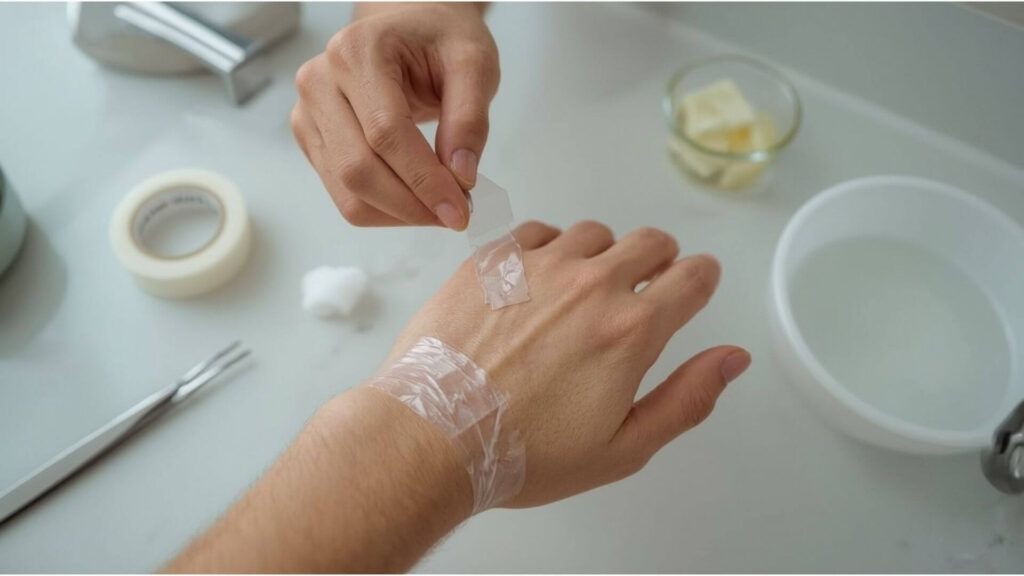
This is the single best technique for removing surface fiberglass:
- Use a strong adhesive tape like duct tape or quality masking tape
- Press firmly onto the affected area
- Peel away slowly in the direction opposite to fiber entry
- Repeat 3–5 times with fresh tape sections
- Examine the tape—you should see tiny fibers stuck to the adhesive
Pro tip: Some boat owners swear by using a sticky lint roller for larger areas like forearms.
Step 3: Rinse with Cold Water
- Use cold or lukewarm water (never hot—it opens pores and drives fibers deeper)
- Rinse for at least 2–3 minutes
- Don’t use a washcloth initially—it can embed fibers
- Pat dry gently; don’t rub
Step 4: Take a Shower (The Right Way)
- Wait 10–15 minutes after initial rinsing
- Use lukewarm water
- Apply a mild soap or body wash
- Let the water run over the area without scrubbing
- After a few minutes, you can gently wash with your hands
- Rinse thoroughly
Step 5: Apply Soothing Treatment
After removing the bulk of fibers:
- Apply hydrocortisone cream (0.5% or 1%) to reduce inflammation [affiliate opportunity: hydrocortisone cream]
- Use aloe vera gel for cooling relief [affiliate opportunity: pure aloe vera gel]
- Consider an anti-itch lotion with calamine
- Apply a cold compress for 10–15 minutes if swelling occurs
Step 6: Monitor and Repeat
Check the area the next day. If you still see protruding fibers or feel irritation, repeat the tape method.
==>> Read my full guide about removing fiberglass from skin here!
Prevention: The Best Medicine for Fiberglass Exposure
After dealing with embedded fiberglass a few times, you learn that prevention beats treatment every time.
Essential Protective Gear
For any fiberglass work on your boat:
- Long-sleeve cotton or synthetic shirt (loose-fitting to prevent friction)
- Long pants (tuck into boots if grinding underneath)
- Nitrile or latex gloves – not fabric gloves, which trap particles
- Safety glasses or goggles
- Respirator or N95 mask rated for fine particles
- Hat or hood if working overhead
Work Area Best Practices
- Work in a well-ventilated area
- Use a vacuum sander when possible to capture dust.
- Wet-sand when appropriate to minimize airborne particles
- Set up a plastic barrier if working indoors
- Keep a separate set of “fiberglass clothes” that don’t mix with regular laundry
After-Work Protocol
- Before removing protective gear, use compressed air or a vacuum to remove dust from clothing
- Remove clothing outside your living space if possible
- Wash fiberglass work clothes separately in cold water
- Shower immediately, starting with cold water
- Use a fingernail brush to clean under nails where fibers hide
- Wash work area and tools before storing
What NOT to Do When You Have Fiberglass in Your Skin
From experience and mistakes, here’s what makes things worse:

This guide helps boat owners understand fiberglass damage clearly — what matters, what doesn’t, and when repairs are truly necessary, so small issues don’t turn into expensive mistakes.
See What Every Boat Owner Should Know →Don’t use hot water immediately – This opens your pores and allows fibers to penetrate deeper.
Don’t use a rough washcloth or loofah right away – These abrasive materials can break fibers into smaller pieces and embed them further.
Don’t scratch or pick at your skin – This damages your skin barrier and increases infection risk.
Don’t apply moisturizer before removing fibers – Oil-based products can trap fibers against your skin.
Don’t ignore respiratory symptoms – Inhaled fiberglass is more serious than skin contact.
Special Considerations for Boat Owners
Fiberglass Resin vs. Fiberglass Cloth
If you’re doing boat repairs, you’re likely exposed to both:
Uncured resin can cause chemical burns in addition to fiber irritation. If you get resin on your skin, remove it immediately with a resin-safe hand cleaner, then wash thoroughly.
Cutting or sanding cured fiberglass creates the most airborne particles—this is when respiratory and skin protection is most critical.
Common Boat Repair Scenarios
Hull repairs – You’re often working in confined spaces where fiberglass dust has nowhere to go. Always wear full protection.
Gelcoat sanding – Produces extremely fine dust that settles everywhere. Set up proper ventilation.
Deck work – Overhead work means particles fall directly onto exposed skin. Cover your neck and use a hat.
Frequently Asked Questions
1. How long does fiberglass stay in your skin if you don’t remove it?
If you do nothing, fiberglass particles will naturally work their way out as your skin cells regenerate, typically within 7–14 days. However, you’ll experience ongoing irritation during this period. Active removal can eliminate most fibers within 24–48 hours and significantly reduce discomfort.
2. Can fiberglass permanently stay in your skin?
No, fiberglass cannot permanently remain in your skin. Your body treats it as a foreign object and will naturally push it out through the normal skin renewal process. Unlike some materials, fiberglass doesn’t integrate into tissue or cause long-term embedding.
3. Will fiberglass eventually dissolve in your skin?
No, fiberglass is made of glass fibers that don’t dissolve or break down in the human body. The fibers must be physically expelled through your skin’s natural shedding process or removed mechanically.
4. Is it dangerous to leave fiberglass in your skin?
For most people, fiberglass in the skin is uncomfortable but not dangerous. The main risks are secondary infection from scratching and prolonged irritation. However, if you experience severe symptoms, spreading rash, or respiratory issues, seek medical attention.
5. Does sweating help remove fiberglass from skin?
Sweating can actually make fiberglass irritation worse in the short term because moisture and salt can increase the sensation. However, normal bathing after light exercise may help loosen some surface particles. Don’t deliberately try to sweat out fiberglass—use proven removal methods instead.
6. Can I use Vaseline or oil to remove fiberglass?
While some people recommend using petroleum jelly or baby oil before showering, this method is controversial. The theory is that oil helps fibers slide out, but it can also trap particles against your skin. The tape method is more reliable and has better results.
7. What’s the difference between fiberglass irritation and an allergic reaction?
Fiberglass irritation is a physical reaction caused by sharp particles penetrating skin—it’s mechanical, not allergic. True allergic reactions to the resins used with fiberglass (like epoxy or polyester resin) produce different symptoms: widespread rash, hives, or swelling beyond the contact area. If you suspect an allergic reaction, discontinue exposure and consult a doctor.
8. How can I wash fiberglass work clothes without contaminating my washing machine?
Wash fiberglass-exposed clothing separately in cold water with minimal agitation. Run an empty rinse cycle after to clear any remaining particles. Some boat owners keep dedicated work clothes and wash them by hand. Never wash fiberglass clothes with regular family laundry.
The Bottom Line
Getting fiberglass in your skin is an annoying but manageable occupational hazard of boat ownership and repair. While the particles will naturally exit your skin within 1–2 weeks, you don’t have to suffer through it.
The key takeaways:
- Most fiberglass works its way out in 3–14 days naturally
- Active removal with tape can eliminate fibers in 24–48 hours
- Prevention through proper protective gear is always easier than treatment
- Serious symptoms are rare but warrant medical attention
After years of fiberglass work, I can tell you that respecting the material and protecting yourself properly makes all the difference. That twenty seconds it takes to put on gloves and a long-sleeve shirt will save you a week of itching.
While having fiberglass in your skin can be uncomfortable and irritating, it’s usually not a serious health concern.
Have you dealt with fiberglass in your skin? What removal method worked best for you? Share your experience in the comments below.

Warren is the founder of BoatGenesis and brings practical experience in fiberglass boat repair, marine equipment testing, and powerboat building. He has worked on a range of repair and restoration projects and now focuses on creating clear, research-based guides to help boat owners avoid costly mistakes and make smarter maintenance decisions. Learn more about Warren.